Karina Before the Goddess: High School Ji-min Was Just a Regular Human, and That Might Be the Point
Archive photos of AESPA's Karina before fame are circulating again—and they're beautifully, almost painfully ordinary.
- Archive photos of AESPA's Karina from her high school days show her as Ji-min—unremarkable, unaware, refreshingly normal.
- Every frame is unperformed: elevator mirror selfies, yearbook shots, classroom boredom, late-night calls—nothing suggesting she'd become a global icon.
- The power of these photos isn't that they reveal some hidden truth; it's that they prove even future goddesses started as just people, busy being teenagers without fanfare or strategy.
There's something about looking at a future icon in their pre-icon era that hits different. Karina, whose name now commands global attention, used to be Ji-min. These photos are from that time. She's in school uniforms, dorm rooms, classrooms. She's not glowing. She's not posing for posterity. She's just seventeen, sixteen, fifteen—doing the work of being young.
The fact that these are resurfacing now, years into her AESPA career, feels less like revelation and more like archaeology. Like we're digging through sediment to find the person she used to be, the one who had no idea she'd become the person she is.
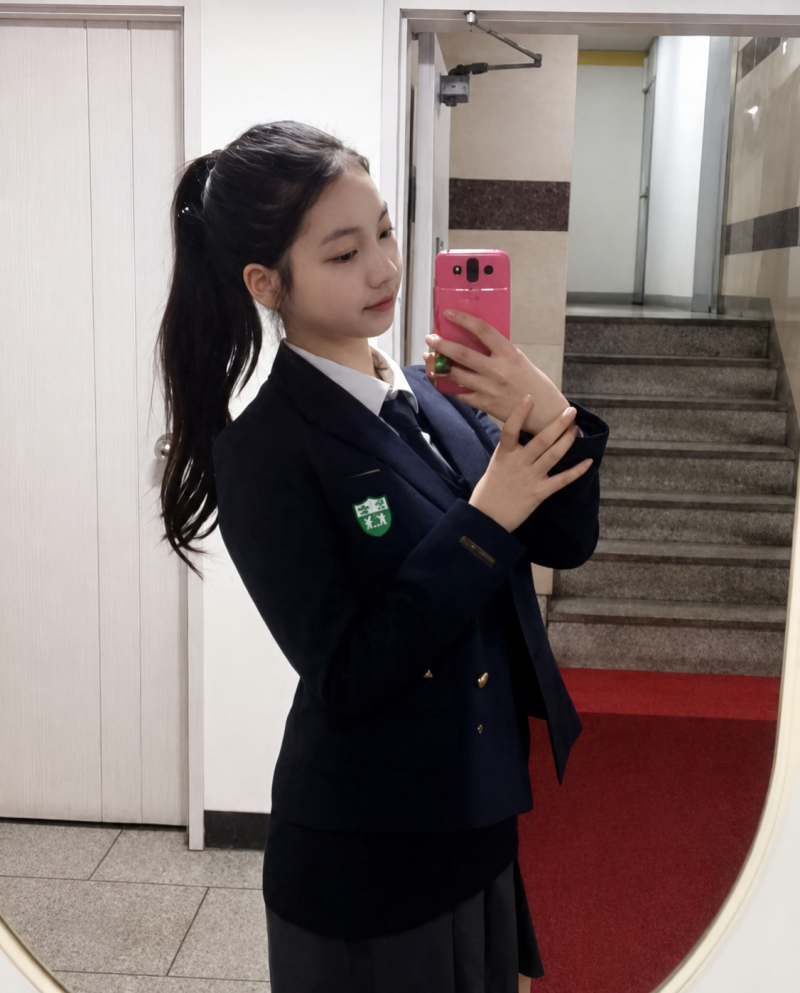
There's an elevator mirror selfie first. School uniform. Side profile. No filter, no strategy. The line of her face reads clear even in the flat light of a hallway mirror. But there's no awareness of being extraordinary—just a girl checking what she looks like before class. That's the dangerous thing about these photos. They're too normal to romanticize.
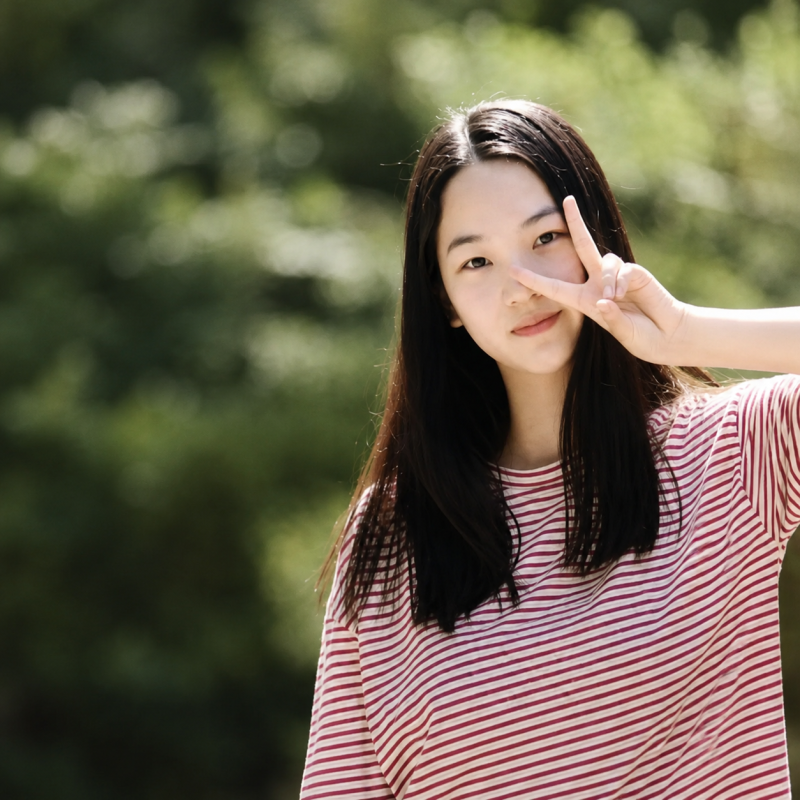
The yearbook shot is next. 'Ji-min' is printed right there, no last name, just the given name under a photo of a high schooler in a striped tee making a peace sign. This is exactly what every yearbook has: kids being kids, nothing more. But knowing what comes after makes every pixel feel loaded with irony. She had no script. No idea the script was coming.
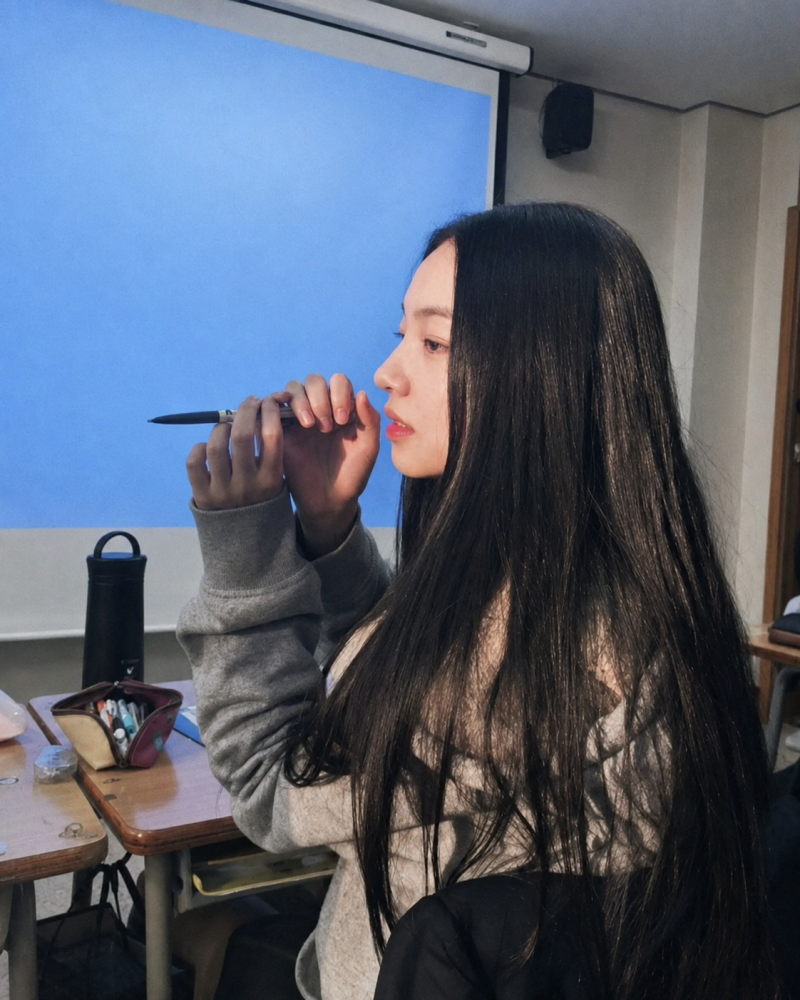
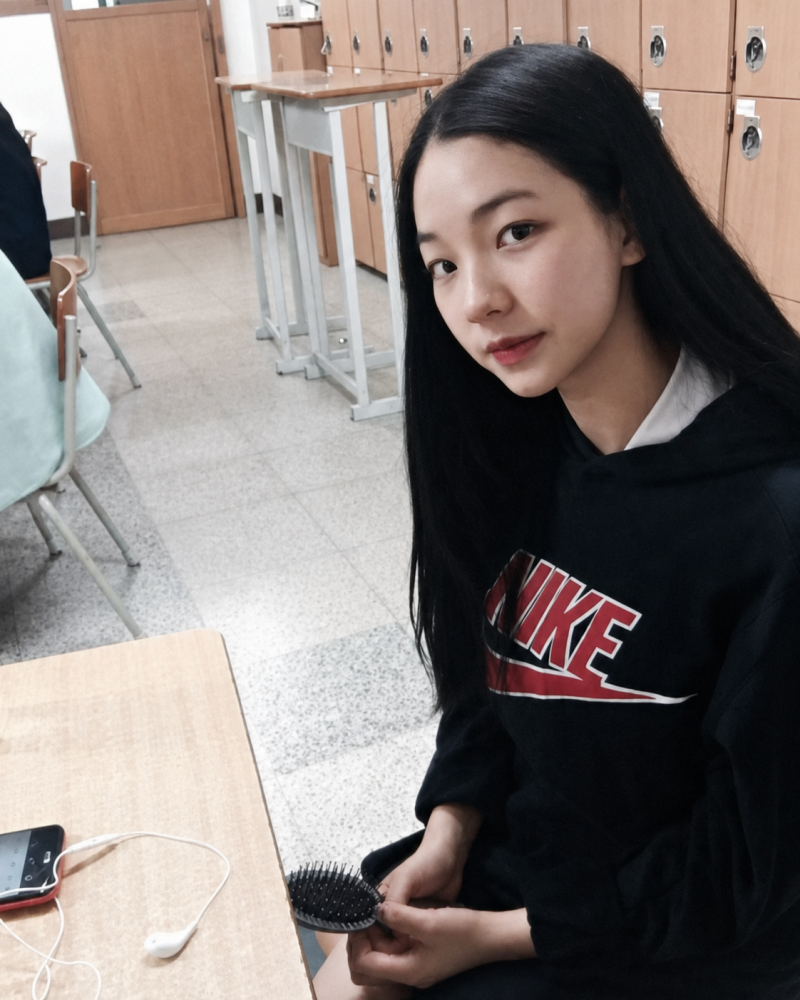
Classroom shots follow. Black Nike hoodie in one, leaning casual against a storage locker. In another, she's sitting during study hall, pen in hand, expression tired in the way only study hall exhaustion can achieve. These aren't curated. These are what happens when you're a teenager trying to get through the day and someone happens to catch it on film.
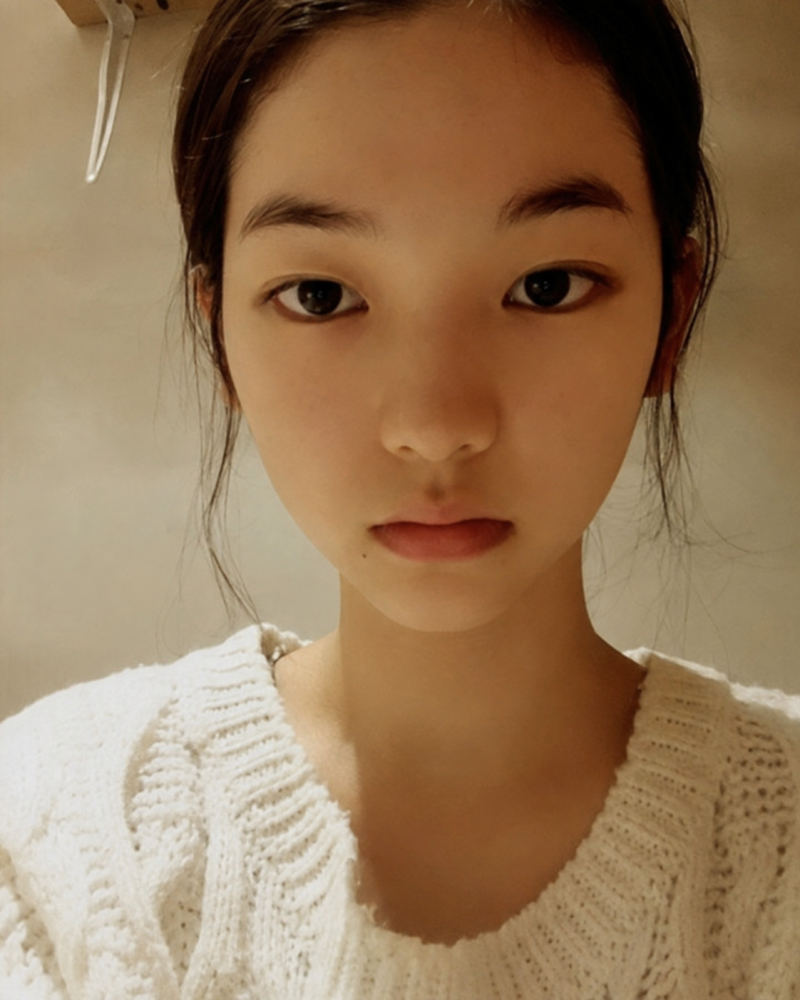
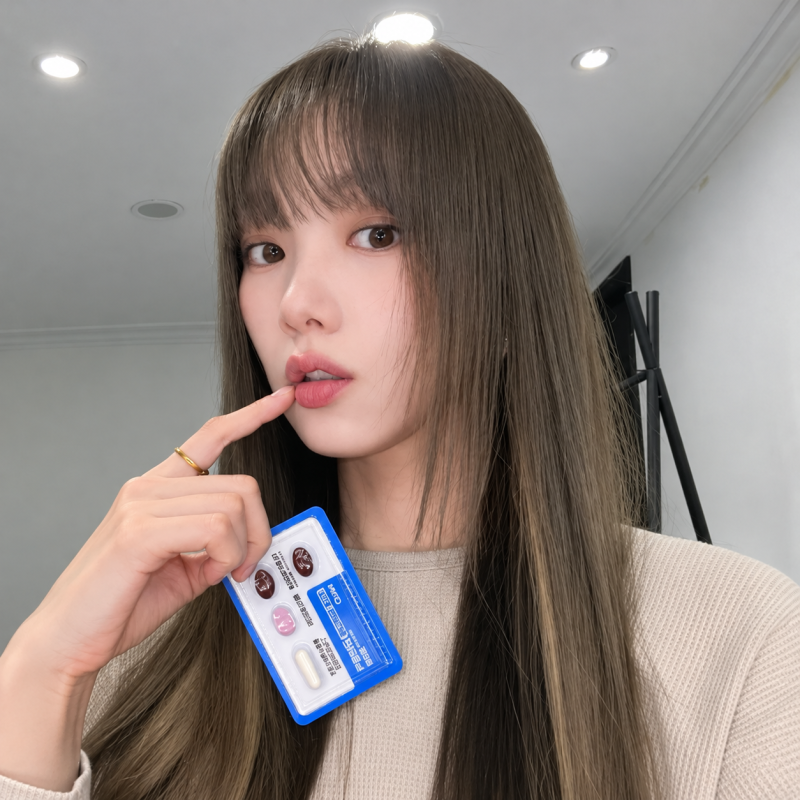
Closeup selfies come next—one with minimal makeup, white knit, staring straight at the lens. Her bone structure is already evident, already sharp. But there's no performance happening. No 'idol' face being tested. Just a face at rest.
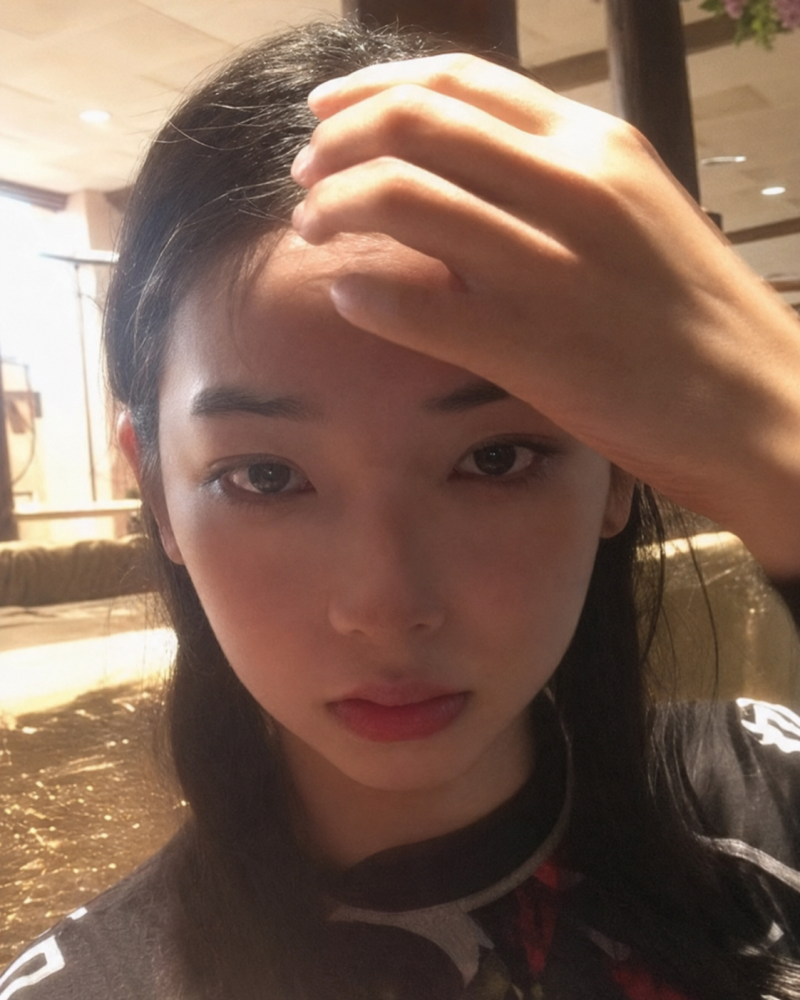
Then another: same hoodie, hand on forehead, expression caught between exhaustion and laughter. The difference between this and the staged closeups you see in beauty campaigns is almost mathematical—there's actual feeling in this one.
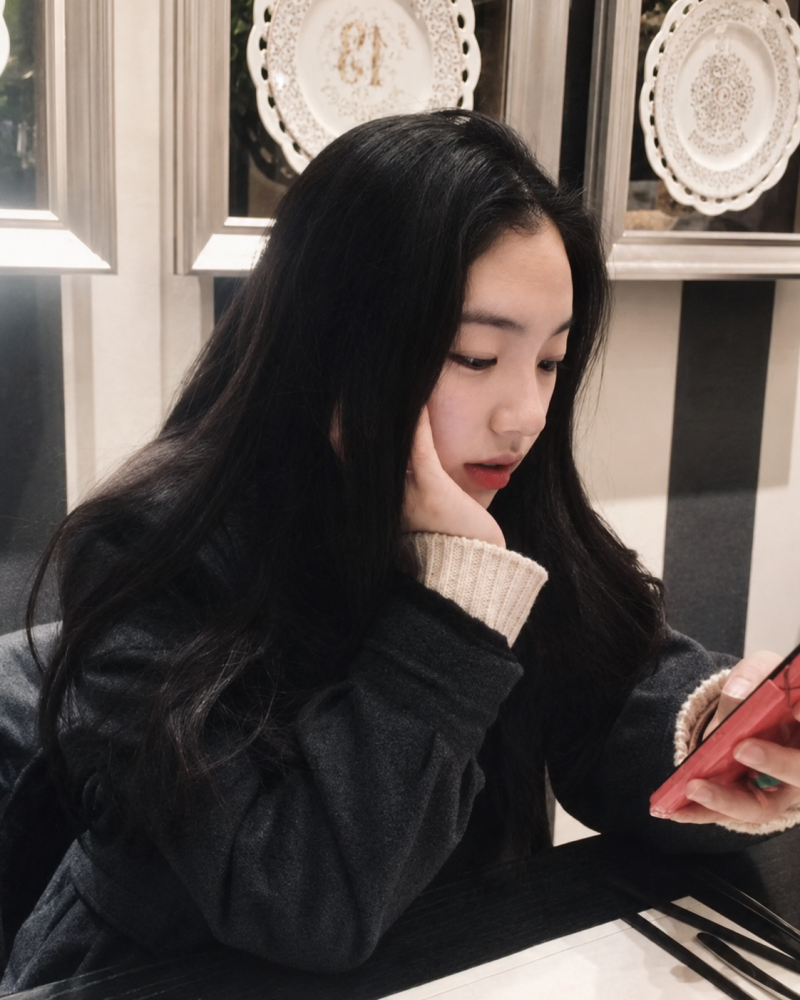
Café lighting changes the mood entirely. Black tee, lost in thought, phone in hand. The frame captures her looking away from the camera, which sounds simple until you realize: she's not aware of being looked at. In every strategic photo from her career, there's always some awareness. Here, there's none.
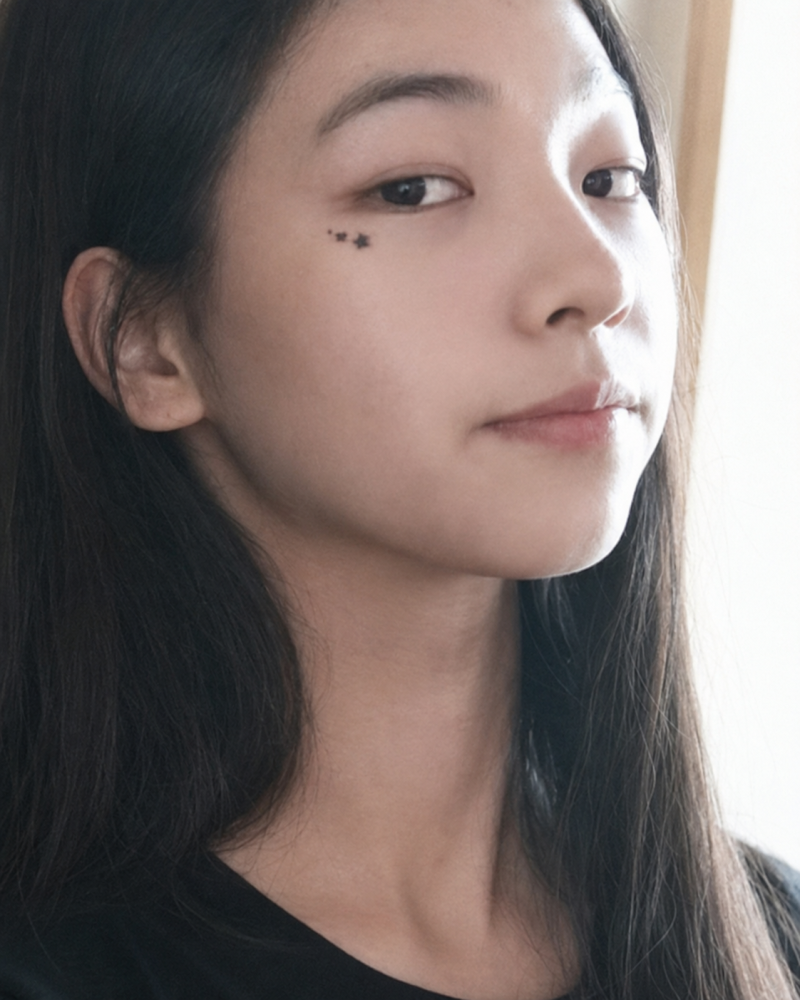
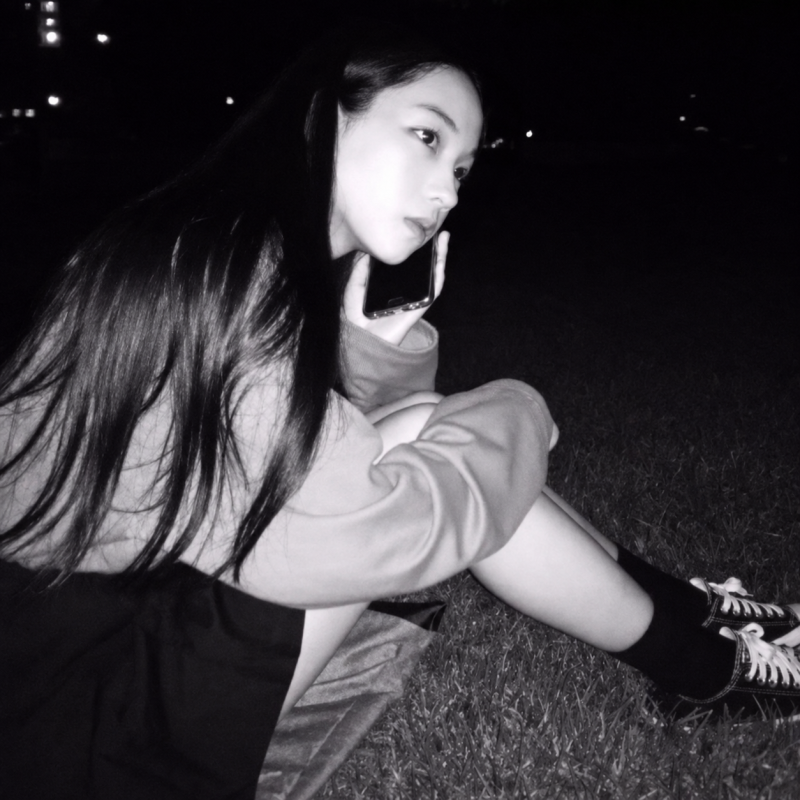
The nighttime shots are moody in a way that has nothing to do with filter or editing. Grayscale tone, sitting in grass, phone to ear like she's having an actual conversation rather than posing for content. The mundanity of it is almost stunning.
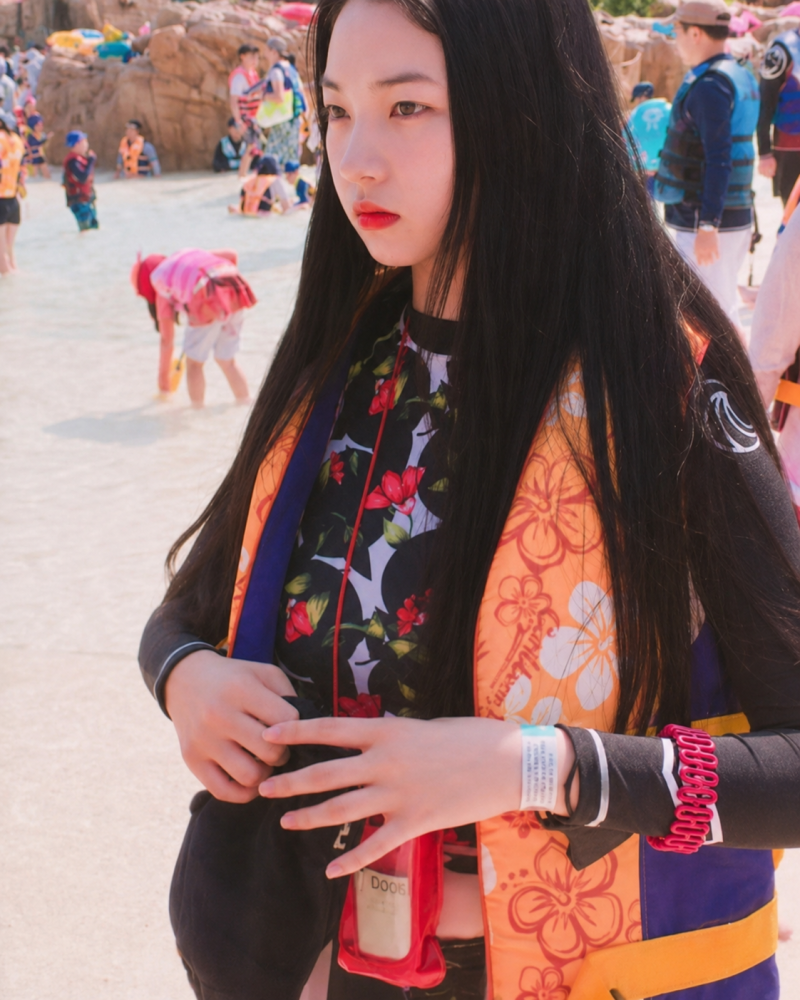
Then the waterpark moment—rash guard with floral print, multiple bracelets, expression caught mid-moment. She's not performing 'girl at waterpark.' She's just existing in the outfit, in the moment, in the particular boredom-mixed-with-anticipation that precedes any summer activity.
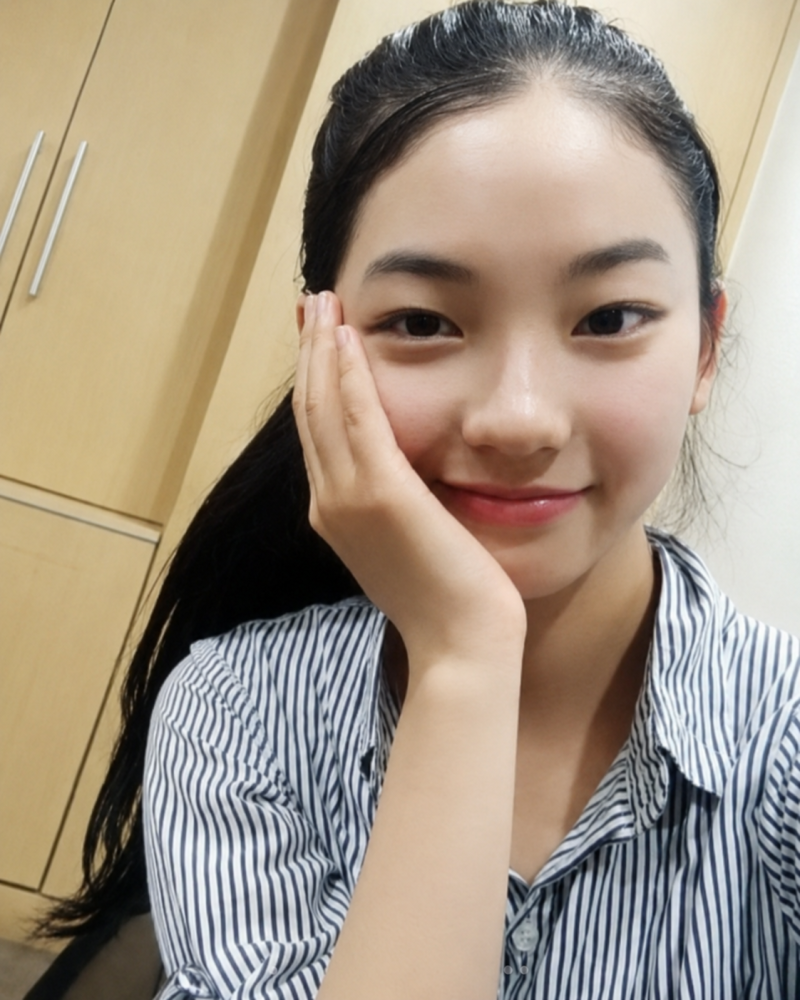
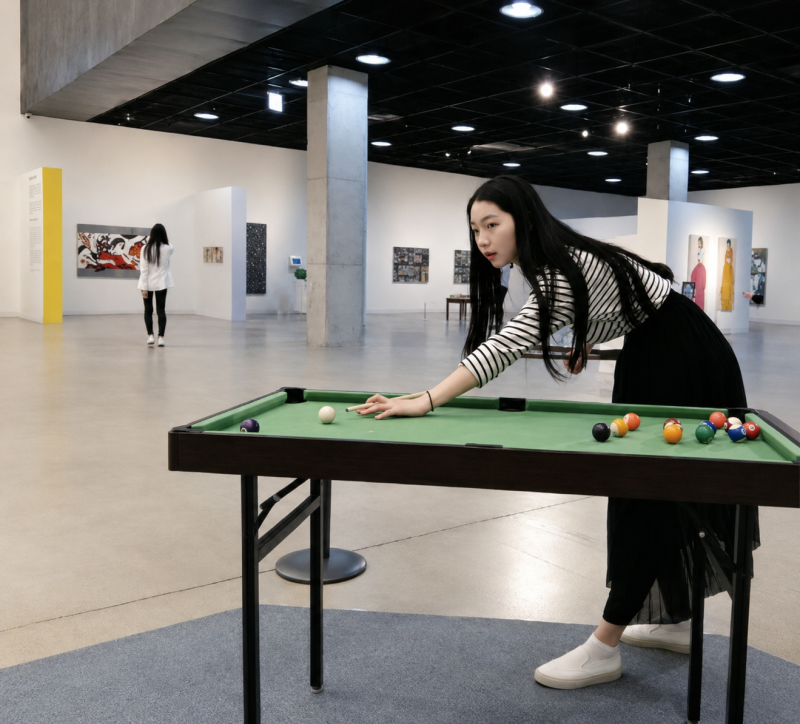
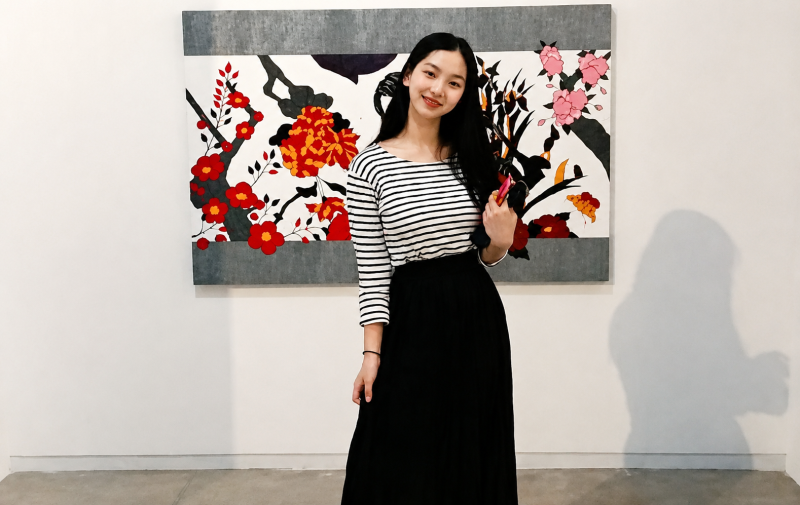
Exhibition space photos close it out. Striped top, black long skirt in one, posing in front of abstract art. Then a floral background with a peace sign, the exact kind of moment that fills teenage Instagram feeds everywhere. She's still not 'being Karina.' She's still just being Ji-min.
Here's what hits hardest: these photos exist in a timeline where she's just a person. No contracts, no choreography, no fanbase waiting. She's preparing for college applications. She's worried about exams. She's taking selfies because teenagers take selfies, not because she's building a personal brand.
Now, years later, with the name changed and the role crystallized and the world watching—looking back at these photos hits different. They become proof that even the most polished performers started as just...people. Unaware they were about to become icons. Wearing school uniforms and not knowing that thousands would later study these exact frames for hints about the person she'd become.
It's the kind of archaeology that makes you reconsider what 'before fame' actually means. Not a hidden darker self or a secret struggle. Just a kid, being a kid, in real time. The rest came later.
"The dangerous thing about these photos is they're too normal to romanticize. She had no script. No idea the script was coming."