Chae Su-bin at 12 Years: Same Face, Four Completely Different Wardrobes
12 years acting, and people still swear her face hasn't aged. Maybe it's the bones, or maybe it's how she treats each role like an entirely different person—including how she dresses for it.
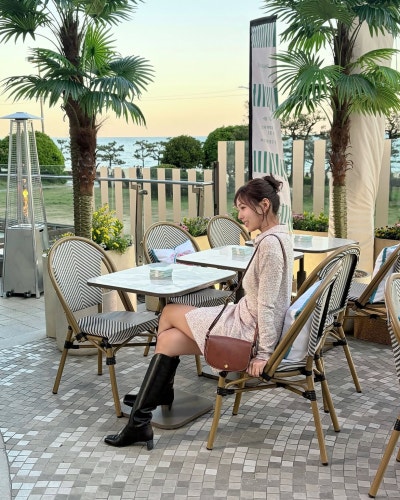
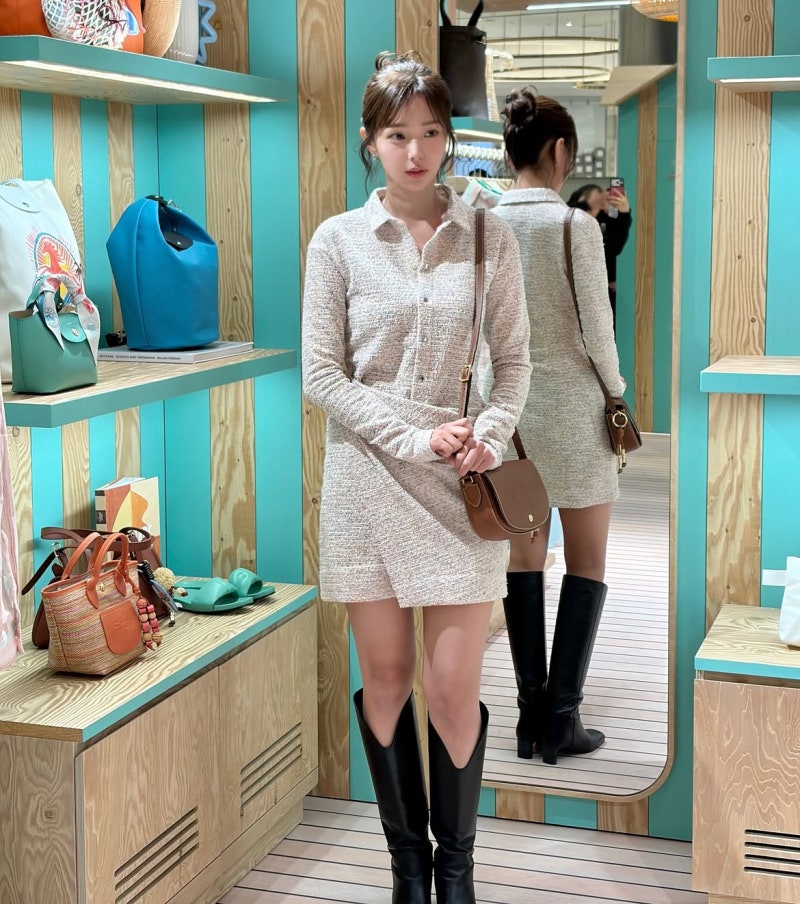
- Oatmeal tweed, black boots, Longchamp saddle—structure that whispers, doesn't shout
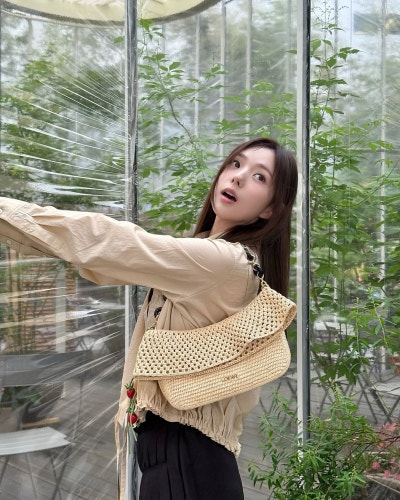
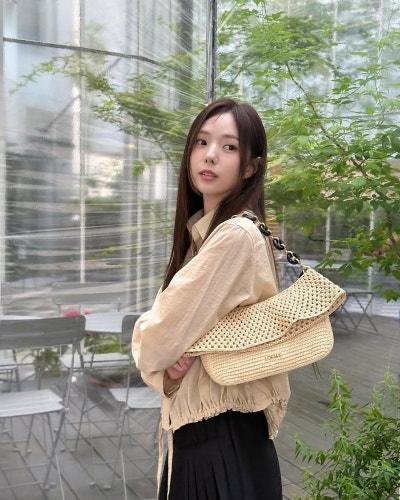
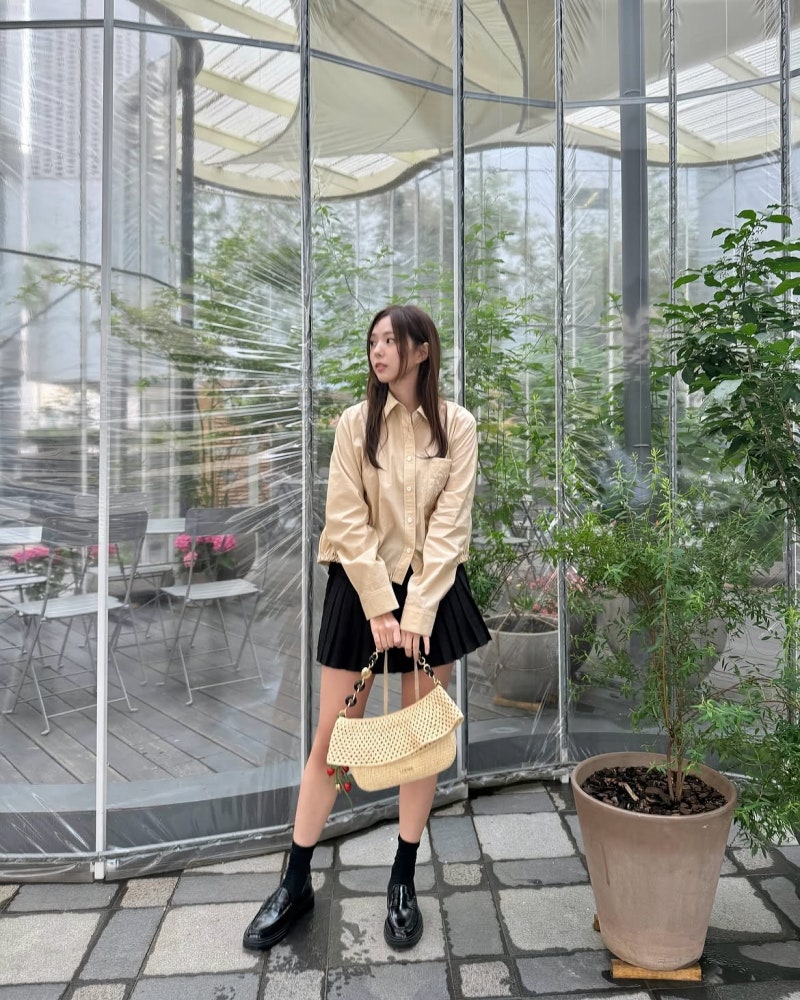
- Greenhouse green with Loewe raffia while arms reach like she's floating through humidity
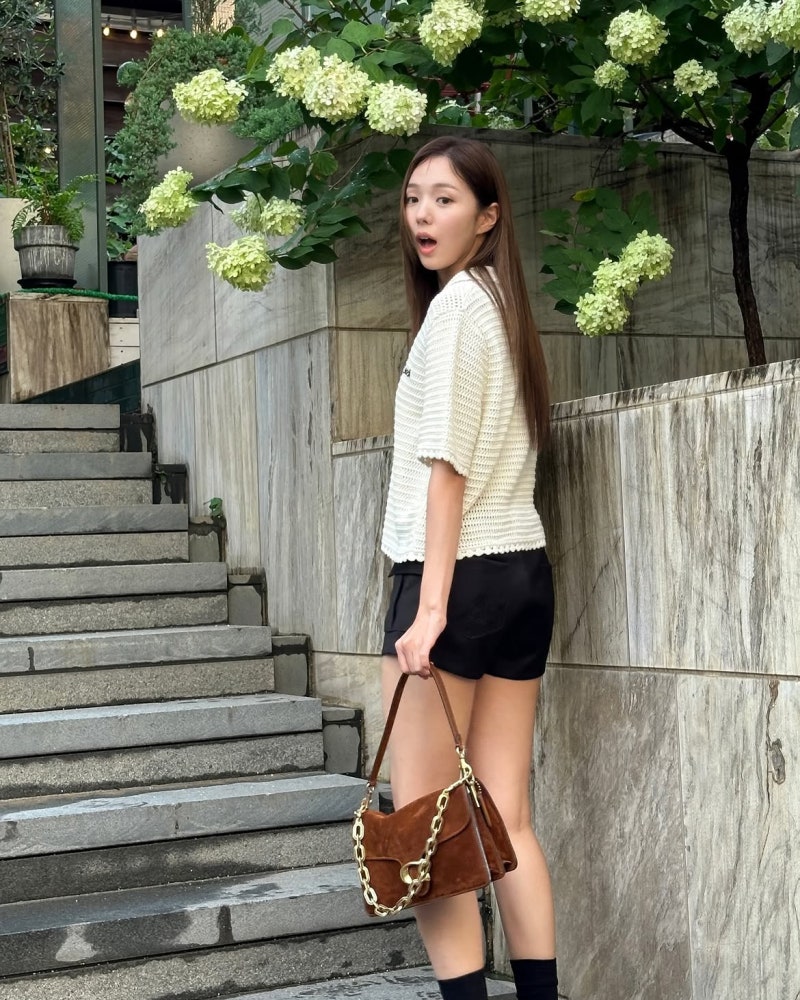
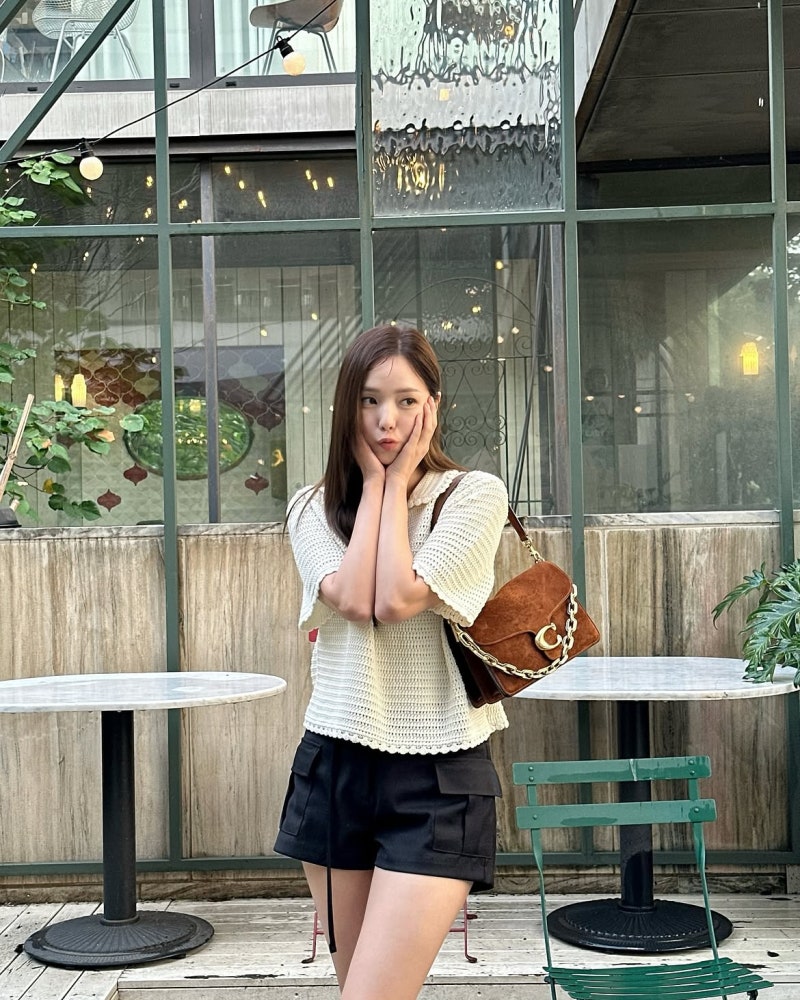
- Ivory crochet knit in a cafe where suede bag and flower-light do all the mood work
Twelve years into her career, and every time Chae Su-bin shows up, someone says: 'Wait, your face is exactly the same.' Started in 2013 in a play, then lightning-strike breakthrough in 'Blue House'—main character role her first year. That was risky casting that worked. Since then, she's been everywhere: 'Moonlit Drawn by Clouds' (that Joseon romance that everyone watched), then 'Traitor,' 'I'm Not a Robot,' all these genre pivots that felt natural because she has something few actors get—total comfort inside a character's mind. Last year 'From Now On, Showtime' on Netflix did 33 countries at #1—she played a sign-language interpreter with no dialogue, pure physical acting. Now she's prepping 'Charge Me Up' on Netflix and the 10-year 'Moonlit' reunion special coming to KBS. Meanwhile, her outfits tell a separate story about someone who understands that dressing is character work too.
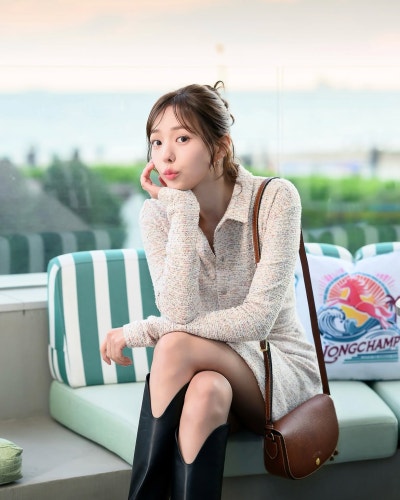
Oatmeal tweed dress—structured like a shirt collar, snaps all down the front, tiny rib knit that catches light in subtle ways. That's the kind of piece you throw on and look immediately put-together. Black long boots ground it. Crossbody brown saddle bag with that Longchamp signature rigid silhouette, gold lock catching just enough light. But here's the frame: Longchamp's La Plage popup, mint-striped, summery-retro, and she's leaning against a display with this patient, expectant expression. That beach-house mood bleeding through the styling makes the outfit feel like it belongs somewhere, not just to someone. The neutrals (oatmeal, brown, black) let the background do half the storytelling. One piece that works this hard means you're not dressing—you're listening.
Switch: long loose hair (not that put-together bob from before), beige button-shirt layered with matching crop overshirt, black pleated skirt below. This is greenhouse moment—greenery crowding the frame, tropical humidity in the air. Loewe raffia bag with crochet knit and black chain strap is where the eye actually lands, because everything else is tone-on-tone. She's reaching out with arms spread like she's playing with the humidity itself, one leg extended like she's barely touching ground. Loafers, socks—the prep just balances the chaos of plants around her. In another frame: she's on stone steps with hydrangeas bleeding blue overhead, and the Loewe bag is doing the work. This is styling that trusts negative space.
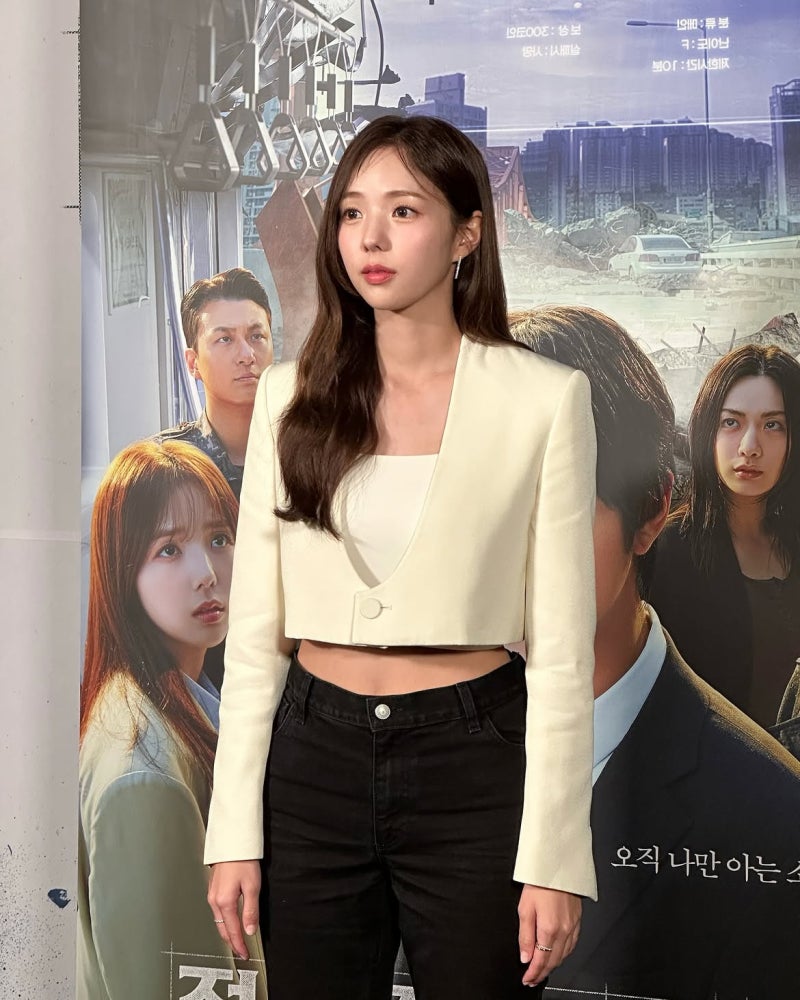
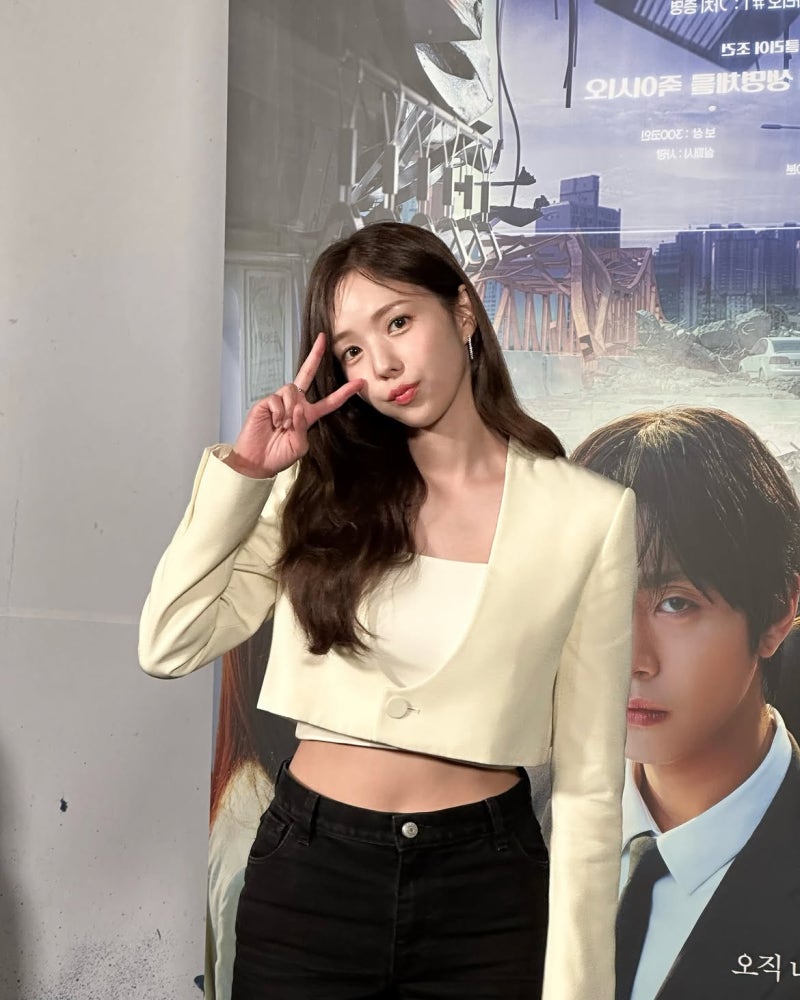
Cream crop bolero jacket—tiny buttons, high waistline, completely structured. White shirt under, black denim below. One gold earring for the entire statement. Event setting, poster for 'Omniscient Reader's Viewpoint' visible behind her, V-pose, laughing. She's not trying to make the outfit do anything; the outfit is just there supporting her presence. That's rare—most people dress to be seen, she dresses to be comfortable being seen. The bolero jacket alone could look runway-stern; on her it reads as 'I showed up ready.'
Last: ivory crochet knit with mesh holes, short sleeves, summery in the way that melts into fall. Black cargo shorts for that edge. Black socks with sandals. And the Coach Tabby bag in tan suede with gold chain—that's the anchor. She's in a cafe with picture windows stretching down both directions, hands framing her face, eyes wide and delighted like she just had the best realization. Hydrangeas blooming indigo behind her, and the whole scene has this romantic-but-not-trying-too-hard feeling that matches exactly. Another frame: she's on steps with those same flowers overhead, turned, looking back. The suede bag is doing so much work here—it's the only weight in an otherwise air-light palette.
Four looks. Tweed-and-structure meets greenhouse-breeze meets event-ready meets cafe-romance. And somehow, this is someone who shows up in character work and goes inside the person—you forget she's acting. Off-camera, she seems to approach dressing the same way: not armor, just presence. A bag here, a shirt there, and suddenly you see the entire world she's stepped into.
"She doesn't dress to be seen; she dresses to be comfortable being seen."