
She Went to a Model Audition Just to Meet Her Favorite Singer. Instead, She Became an Icon: Kim Ha-neul Masters Three Kinds of Ease
The first-love archetype proves she has always known something about quiet confidence—and now she is teaching the rest of us.
- White thin hoodie + black leggings + sunset backdrop: when sportswear becomes spontaneous poetry.
- Black ruffle blouse over gray tweed skirt: texture and tailoring in a quiet hotel room.
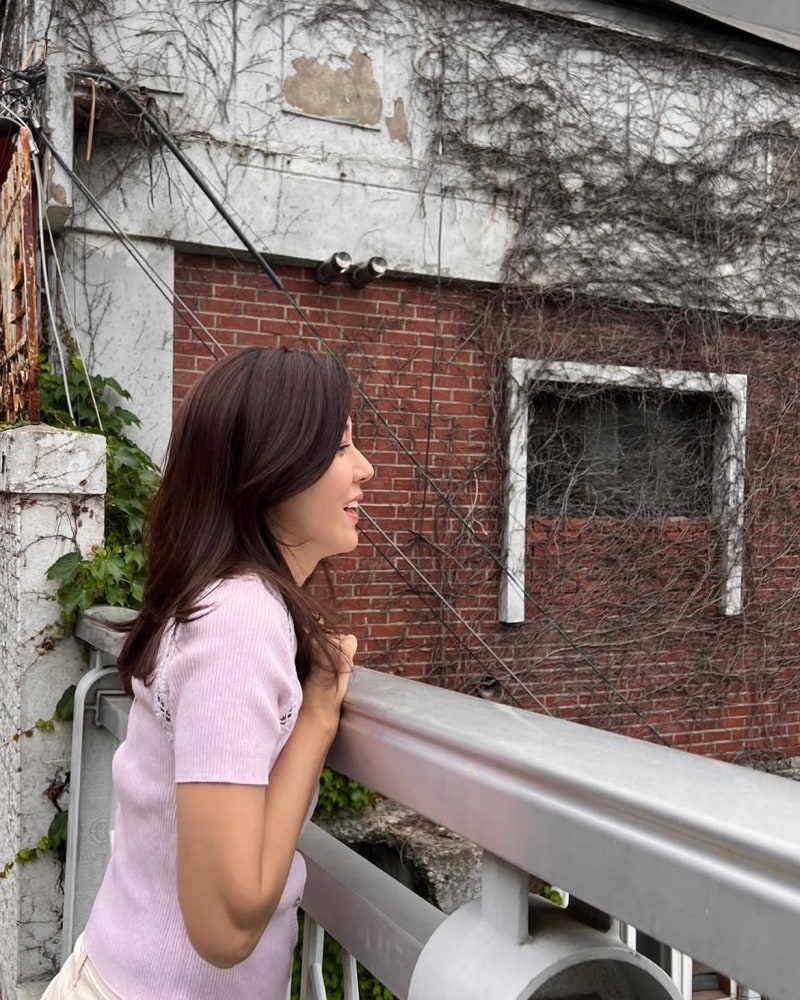
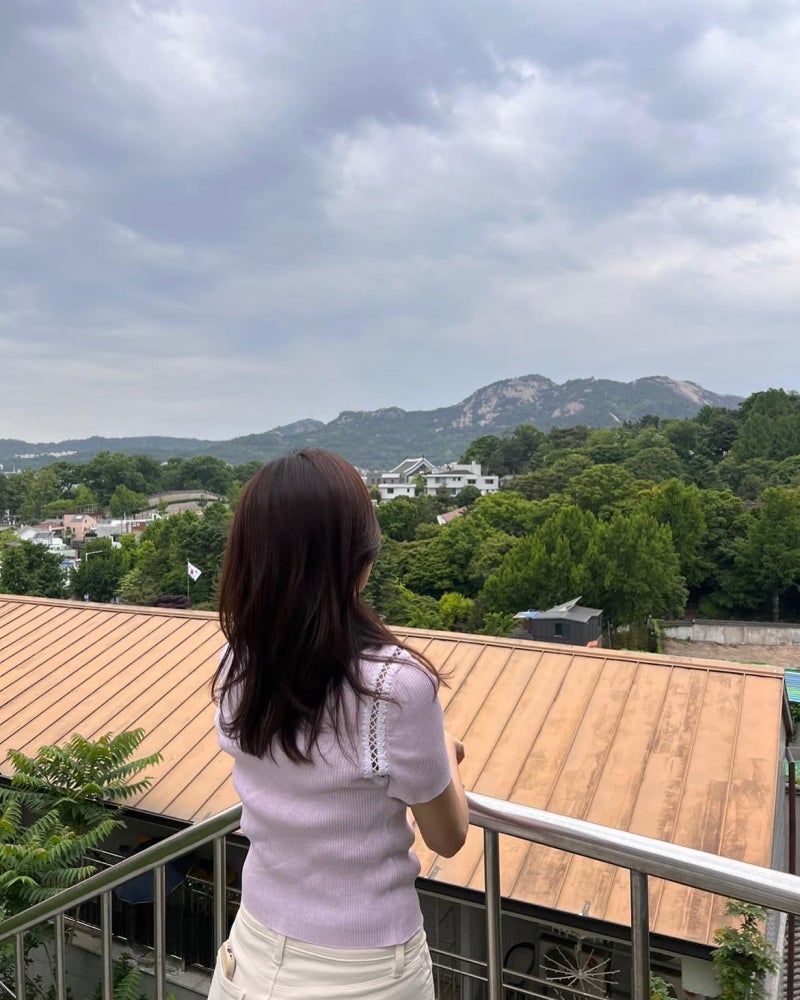
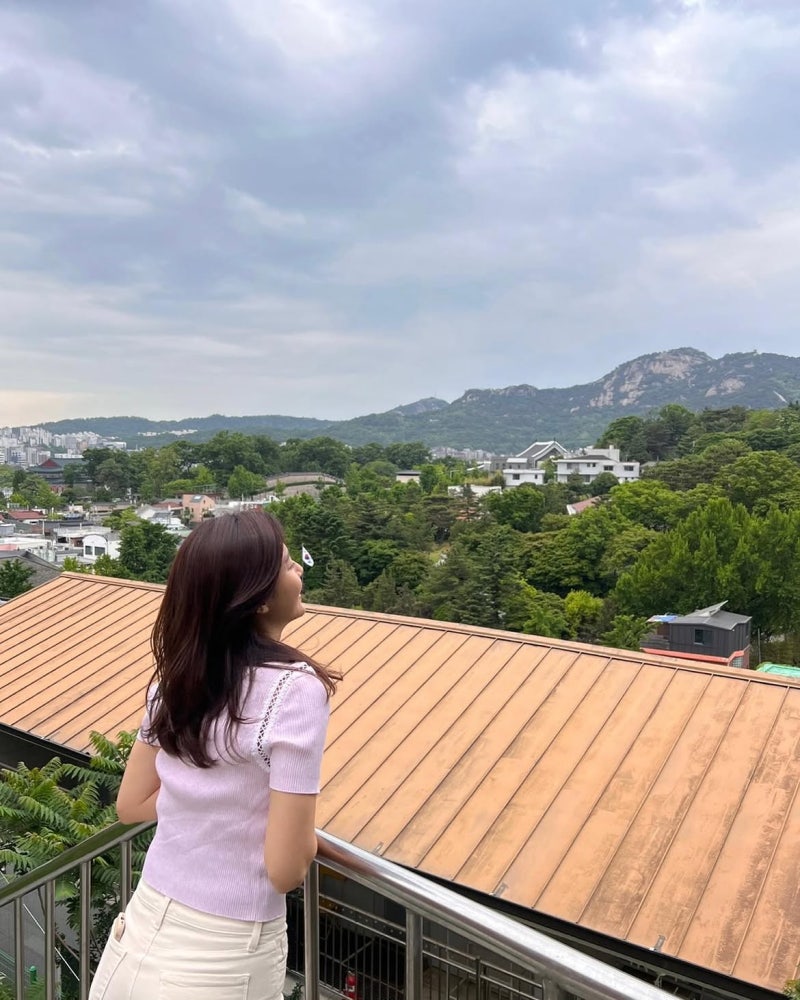
- Lavender knit with lace detail over ivory trousers: blending seamlessly into a historic Seoul alleyway.
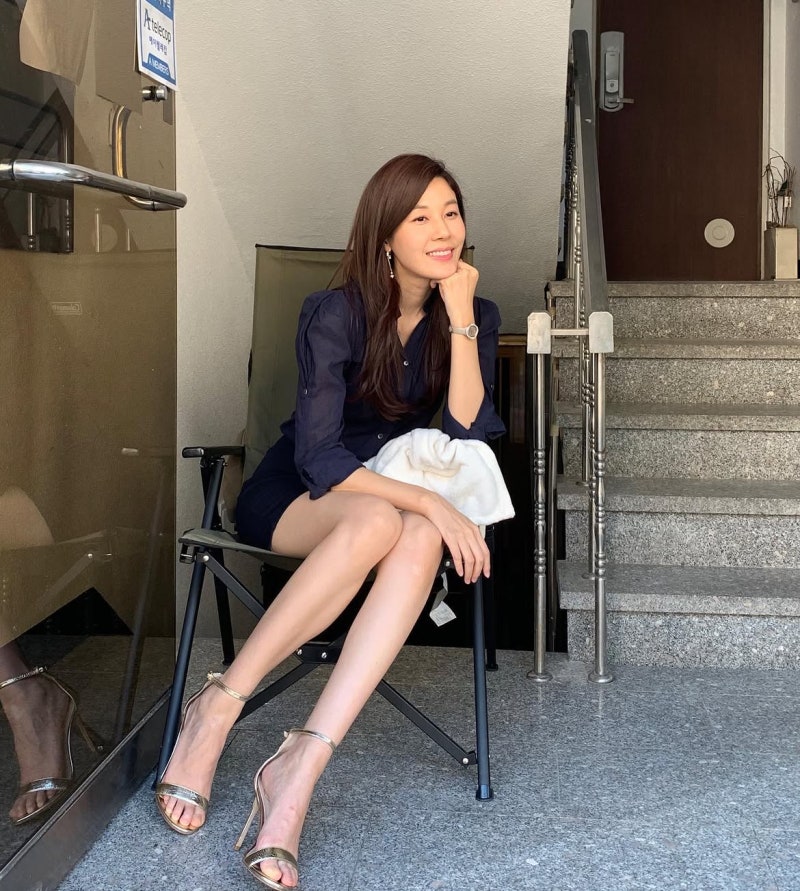
Once there was a high school girl who wanted so badly to meet her favorite musician that she walked into a modeling audition thinking it might create that chance. The audition changed her life in the way she never anticipated. By 1996, she was a face in print advertising. By 2000, she had moved into acting and brought a luminous clarity to the television drama "Sympathy." The rom-com "My Sister's Boyfriend" made her a name everyone wanted on their screen. She earned laurels as the romantic lead, but it was her role in "The Air" that redefined her entirely—suddenly she was not just beautiful, she was funny, nuanced, capable of holding your attention with comedy as much as heartbreak.
The role in the film "Blind" brought her Best Actress honors, and the thriller format proved she had never been limited to swooning heroines at all. These days she appears on variety shows, acts in television dramas with unexpected genre mixes, and somehow makes every shift feel natural. As summer settles into its warmest stretch, three recent outfits show her in full command of different temperatures—emotional and otherwise.
**White Cropped Hoodie on the Han River at Golden Hour**
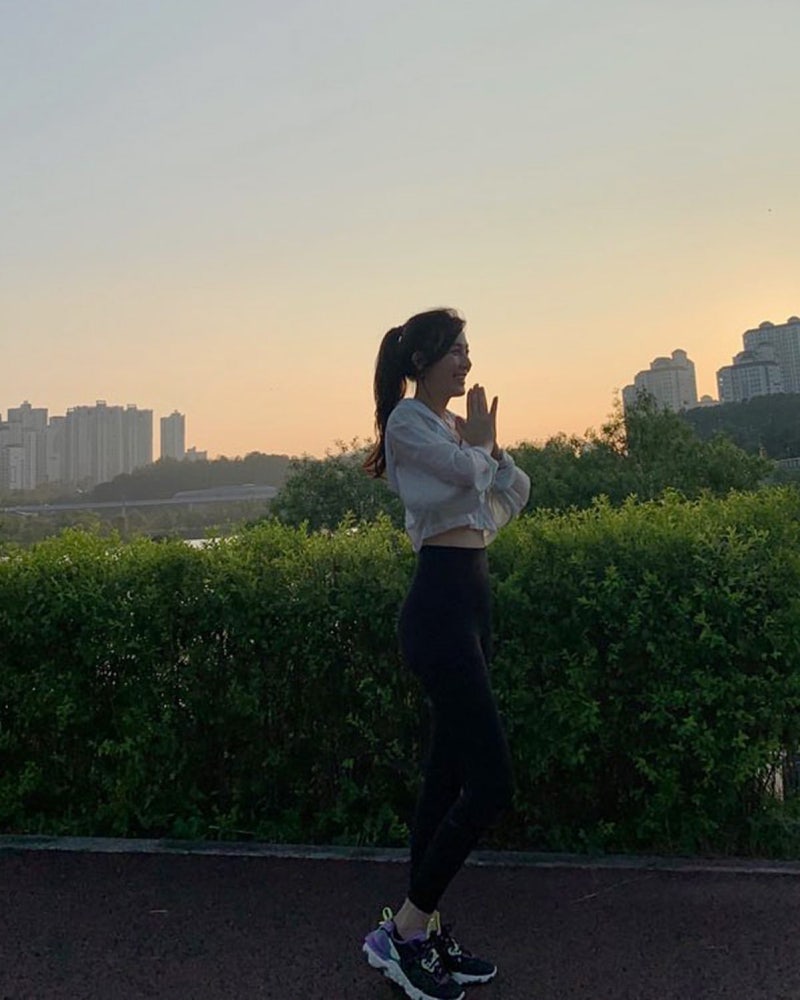
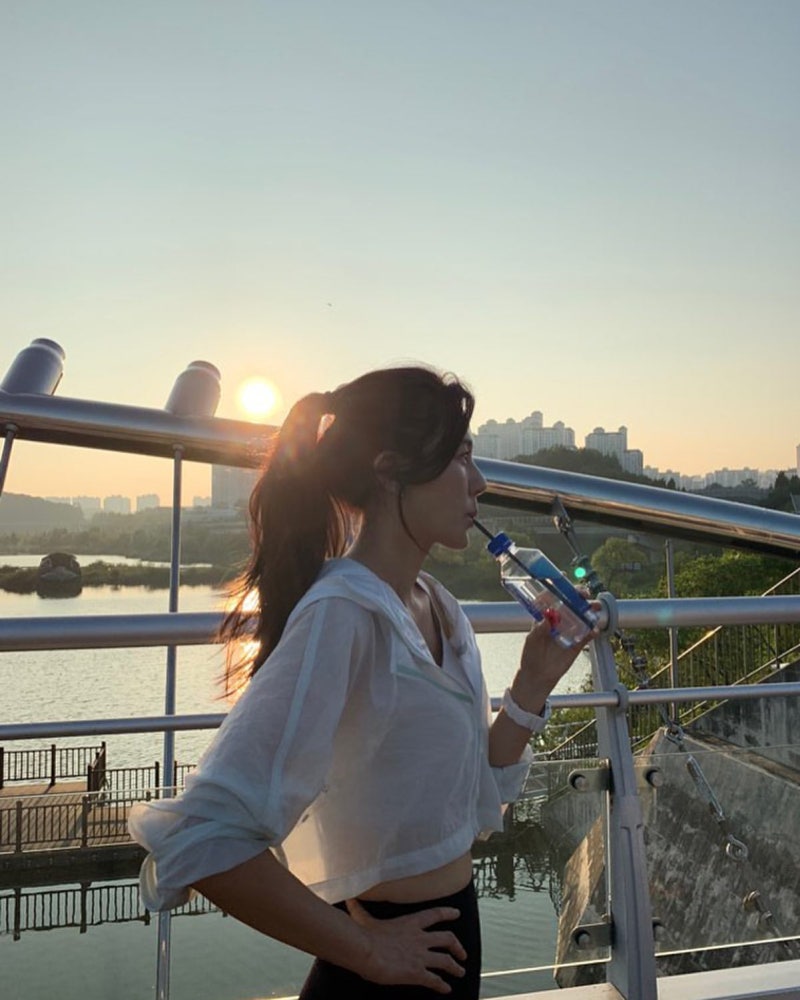
What you wear to run, or at least to look like you might run, matters. She chose an oversized white cropped hoodie so thin it is nearly translucent—the kind of piece that breathes with you rather than against you. Black leggings below create a clean silhouette while her hair sits swept up into a high ponytail. On her feet, sneakers with just enough color surprise to prevent the monochrome from feeling sterile. The real drama happens in the setting: a twilight hour along the Han River, the sky turning coral and amber, the water catching the dying light. She holds a water bottle like a talisman and gazes at the view—not for the camera, but for herself. Somehow the running clothes become a fashion statement the moment they encounter that golden hour landscape. This is what comfort looks like when it is genuinely lived rather than performed. Her expression—that clear, open, slightly awestruck gaze—does more work than any tailored garment could.
**Formal Separation in a Hotel Room Mirror**
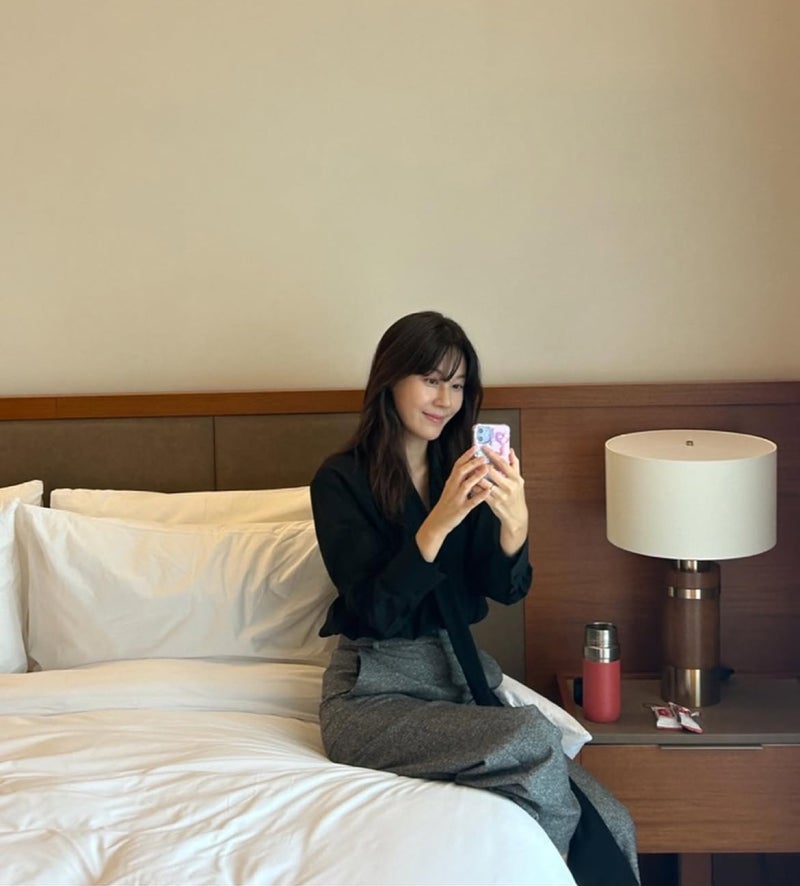
The mood shifts completely. A black ruffle blouse—the kind with texture and movement in the fabric—pairs above a gray tweed skirt that falls almost to the ankles. The ruffles introduce femininity where tweed might otherwise feel severe. A delicate crossbody strap finishes the composition. She is looking at herself in the reflection of a hotel room mirror, an intimate moment made public, and the timber-toned wood paneling around her seems to warm the entire palette. This is not a casual outfit; this is considered, composed, the kind of thing you wear when you have somewhere important to be. Yet it is also vulnerable in its restraint—no logos, no flashy hardware, just quiet tailoring that trusts in its own construction. The tweed alone does the season-shifting work here, introducing texture and period detail without requiring explanation.
**Lavender Knit and Pale Trousers in Historic Seoul Alleyways**
For the third look, the palette opens up. A lavender ribbed short-sleeve knit with lace detailing sits above ivory-toned trousers—a soft, almost springlike combination that somehow works in late summer when the light hits it correctly. The pairing feels neither too casual nor too formal, instead occupying that rare middle ground of effortless pulled-together. The backdrop is everything: brick buildings, tiled roofs, green mountains visible beyond residential layers, narrow alleyways lined with boutiques and restaurants. She leans against wooden railings, smiling at something unseen, and the pale color palette seems to dissolve into the neighborhood itself—belonging rather than standing out. This combination works precisely because it does not demand attention; instead, it fits like an extension of the calm, walkable, human-scaled environment surrounding it.
The throughline across all three is a refusal to oversell. Her running outfit breathes. Her hotel look speaks through construction rather than decoration. Her neighborhood stroll honors the setting by staying understated. Whether she is chasing endorphins, attending business, or simply walking, the clothes become part of the moment rather than the entire moment themselves. That luminous quality people have commented on her whole career—that clearness, that lack of pretense—it shows up in how she dresses too. She trusts that the wearer matters more than the wear-er's outfit, and because she trusts it, we believe it too.
"She trusts that the wearer matters more than the wear-er's outfit, and because she trusts it, we believe it too."