24-Hour Spin Energy: How Jeon Hye-bin's Hokkaido Wardrobe Proves Chameleon Dressing at Its Peak
From the variety show that gave her a spinning nickname to prestige dramas to brand-new cable hits—this actress with the face that never ages knows how to dress for every era, every setting, everywhere.
- One vertical-striped dress reads fresh by day, sophisticated at night
- Cobalt horn-rims + striped shirt = the casual editorial power move
- A structured tweed jacket tells an entirely different story than travel wear
Back in 2003, she was dancing on variety shows so relentlessly that people started calling her the "24-hour spinning" girl. That nickname stuck because it was accurate—the energy, the commitment, the refusal to stop moving. Later, when she pivoted to acting, every character she inhabited seemed to have a completely different face attached. The corporate manager in The Legend. The jealous villain in Another Miss Oh. That's the kind of actress people call a chameleon.
In recent years, Jeon Hye-bin became the lead in Esquire, playing an ambitious late-blooming lawyer with intellectual swagger. She picked up a new prestige drama. She's still doing the work. And somewhere along the way, she landed in a conversation about something else entirely: style. How is she at this point in her career, having played dozens of characters, somehow still described as having a "preservative beauty"? The answer might be simpler than everyone thinks. She doesn't stay still. She keeps spinning—just differently now.
These recent Hokkaido photos show exactly what that means.
① Striped dress jumping off brick walls
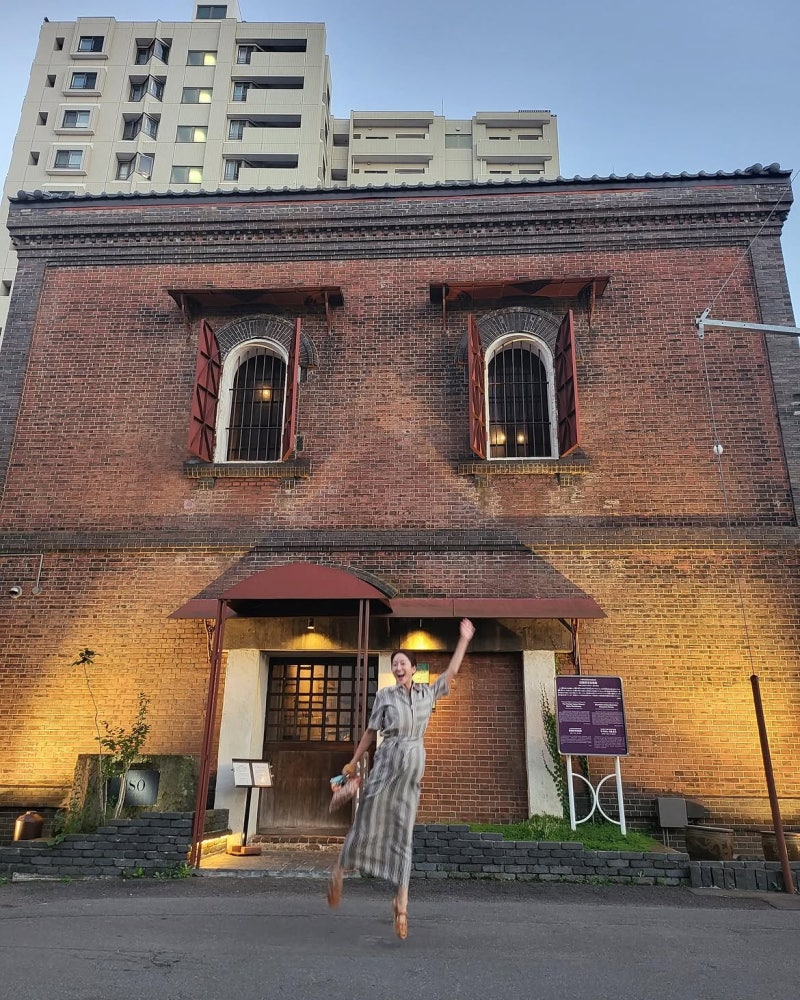
First image: she's caught mid-jump in front of what looks like a brick row house. Wearing a vertical-striped dress that falls to her feet, the stripes catch her movement—fluid, animated, alive. The stripes aren't bold; they're restrained. But because of the way the fabric moves, they read as dynamic.
Her footwear matches the tone: mules in the same color family. The whole thing keeps moving with her. Her expression is joyful—completely unselfconscious. This is the photograph of someone who knows the trip is temporary and is determined to be present for all of it. The brick building, the daylight, the moment—she's not performing for any of it. She's just existing brilliantly in it.
② Night walk in the same dress, different energy
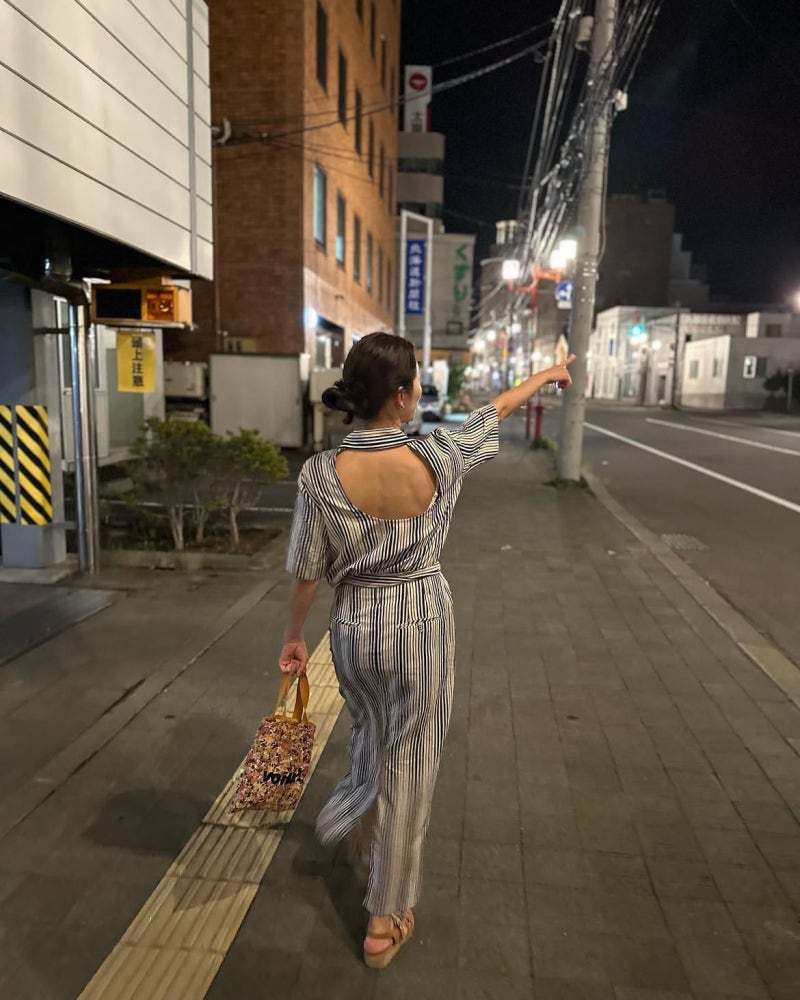
Then night falls, and she's in the same striped dress from a different angle. This time we see the open back—a subtle slit that suggests sexiness without announcing it. She's carrying a small beaded tote in multiple colors, which is exactly the kind of accessory that could read as costume-y but instead reads as playful.
Night photography always does something different to your proportions and energy. The same dress that felt fresh and summery at midday suddenly feels sophisticated. She understands this intuitively. The expression shifts. The posture changes. It's the same outfit; it's a completely different vibe.
The art of traveling with minimal luggage is understanding that each piece can transform. One dress, two lighting conditions, two entirely different stories. That's the economy of style.
③ Otaru canal in a striped shirt, cobalt sunglasses
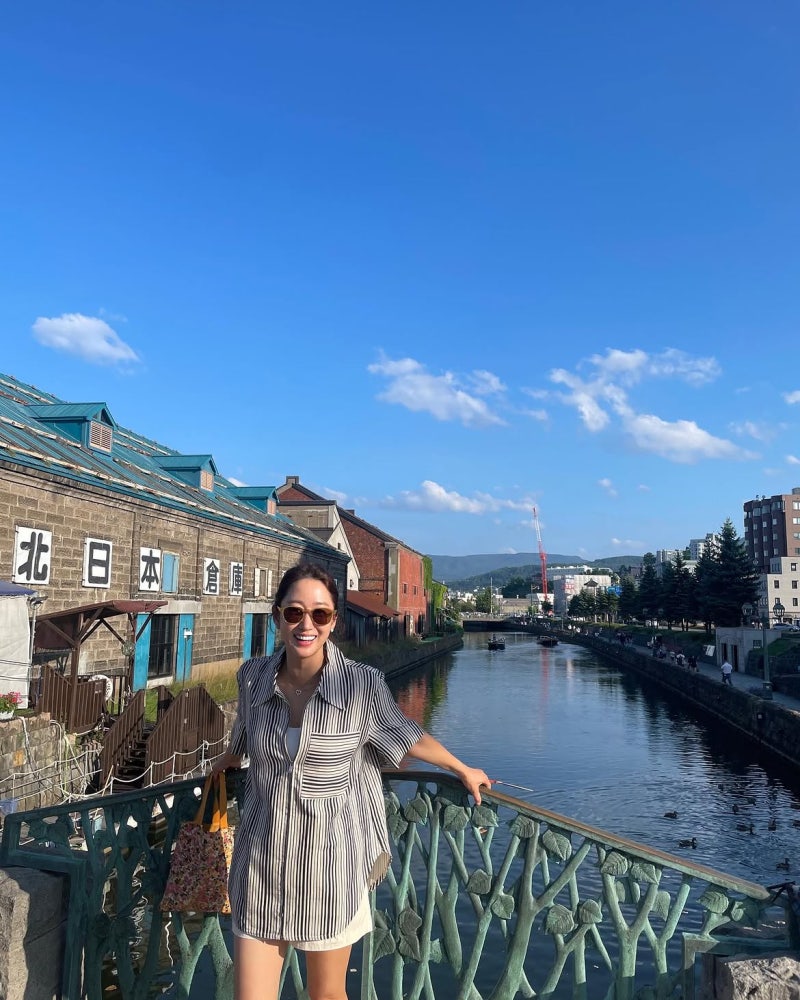
Next location: an actual canal lined with historic buildings. She's switched to a short-sleeve striped shirt (similar color palette to the dress, but bolder and more graphic). This version is purely casual. Pocket detail at the chest keeps it structural. Then: oversized horn-rimmed sunglasses in a warm yellow tone.
Those sunglasses are doing four things at once. They reference a specific vintage era (1980s-ish). They add color warmth against the blue water. They make the whole outfit feel editorial without trying. They give her permission to look anywhere without feeling self-conscious about being seen.
This is the Hokkaido daytime move: structured casual, confident proportions, one accessory that rewires everything. The same tote from the night-walk appears again—she wasn't going to cart multiple bags through a trip. She chose one good thing and committed to it.
④ Art fair pivot: cobalt tweed jacket announces your arrival
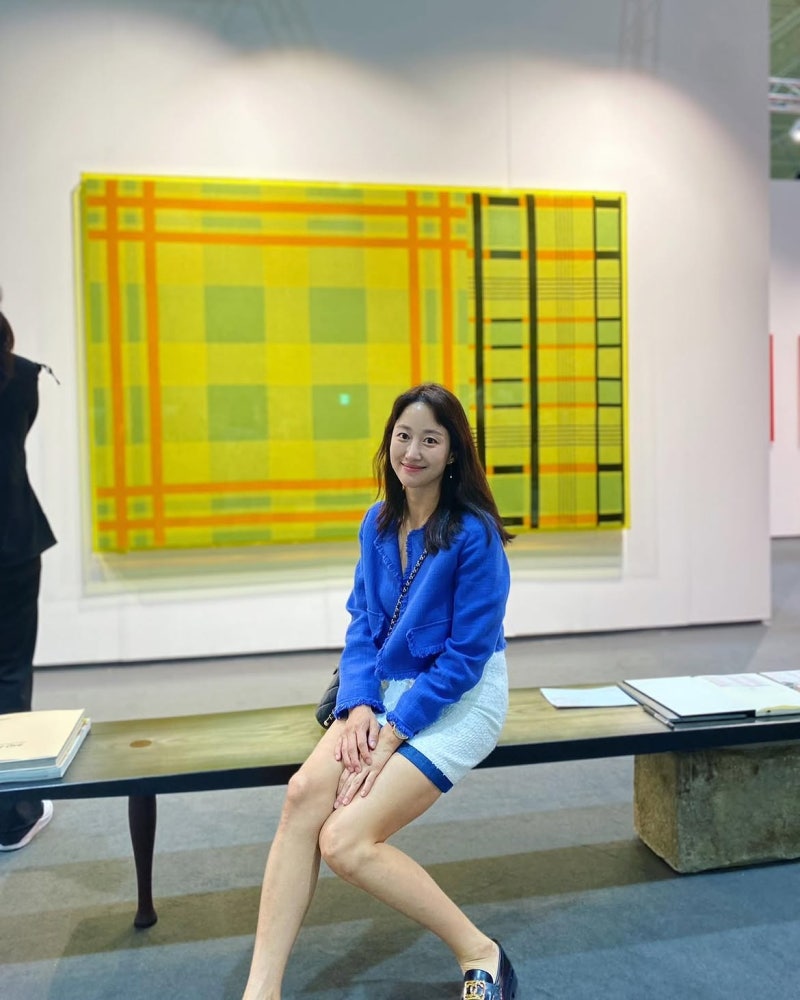
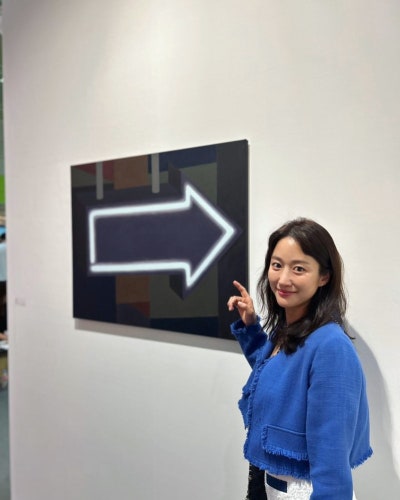
Now we jump to an entirely different setting: an art fair with colorful installation art as backdrop. And suddenly she's in a structured cobalt-blue tweed jacket with a frayed edge and decorative buttons. The silhouette is classic—fitted, tailored—but the texture is contemporary. It's what happens when a designer takes a grandmother's idea and makes it interesting.
Underneath: black. Paired with: a white tweed mini skirt. The combination is high-contrast and deliberate. This is no longer travel wear. This is arrival wear. This is a statement.
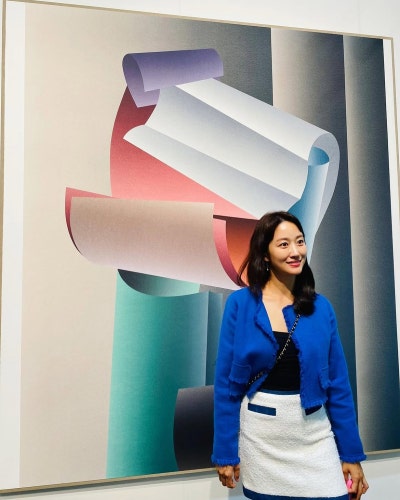
She's carrying a chain-strap shoulder bag and wearing structured loafers. Every element says: "I know exactly what I'm doing, and I've committed to it completely." The blue-and-white color scheme means she reads as sophisticated against the chaotic installation art behind her, but she's not competing with it. She's coexisting with it. The clothing is quiet enough to let her face be the story.
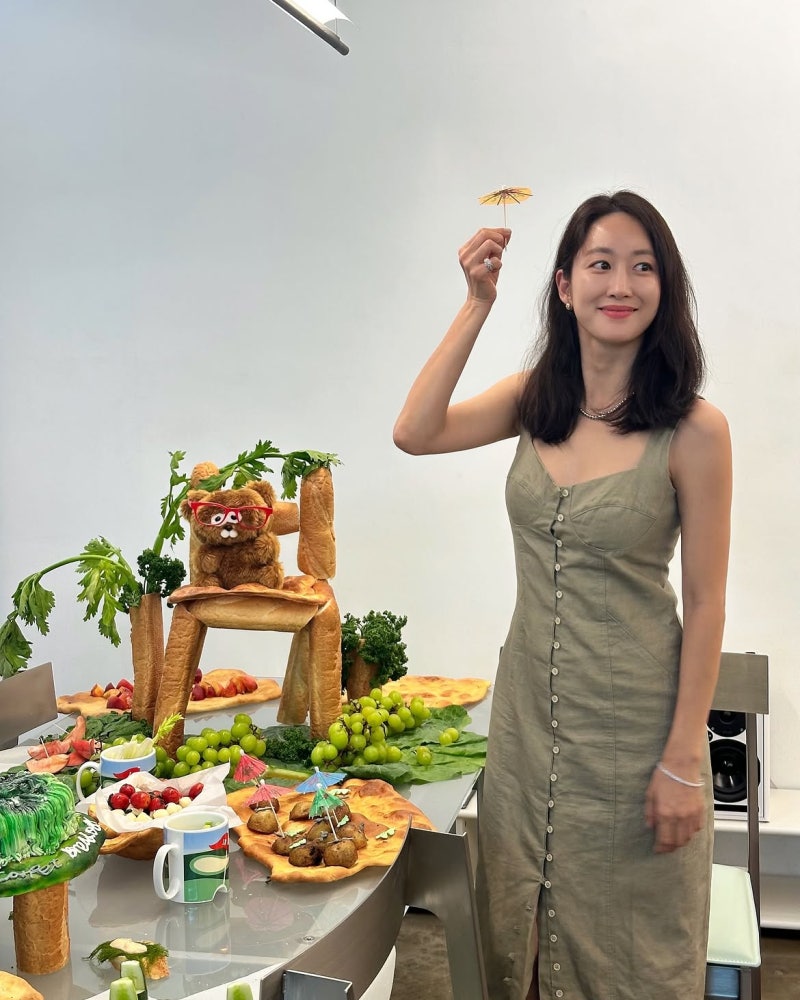
⑤ End note: olive sleeveless dress, minimal, transitional
The final look is a departure. Olive-khaki sleeveless dress with a button front detail. No pattern, no texture play—just clean lines and a color that sits between summer and fall. Delicate silver chain necklace and thin bracelet.
This is the dress code for letting go. For standing in a space and saying: "I'm ready for what's next." The rest of her style journey on this trip was about transformation and movement. This last look is about stillness. Permission to move into a different season, a different energy.
From brick walls to hotel lobbies to art installations to seasonal thresholds—Jeon Hye-bin's Hokkaido archive is a masterclass in understanding that style isn't a fixed thing. It's a response to context, light, energy, and where you are in your own story at any given moment. She's played dozens of characters over her career. She's inhabited completely different faces. And now she's showing us that off-camera, she's still doing the same thing. She's spinning—just dressed for all the different directions now.
"The art of traveling with minimal luggage is understanding that each piece can transform. One dress, two lighting conditions, two entirely different stories."