From Samsung to Journalist to Actress: This Late-Bloomer Actress Dresses Like Someone With Three Lives
Jin Ki-joo took the scenic route to acting—and her wardrobe shows someone who's lived enough to know what actually matters. Here's how she layers, edits, and shows up.
- Navy V-neck vest + multi-stripe shirt with deliberate layering + light denim = intelligent precision
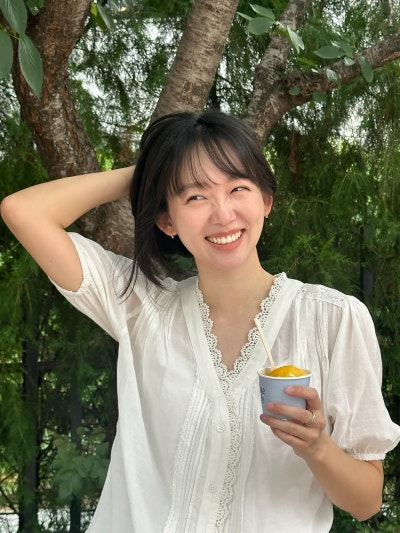
- White lace-trimmed blouse + puffed sleeves under tree light = romantic stillness
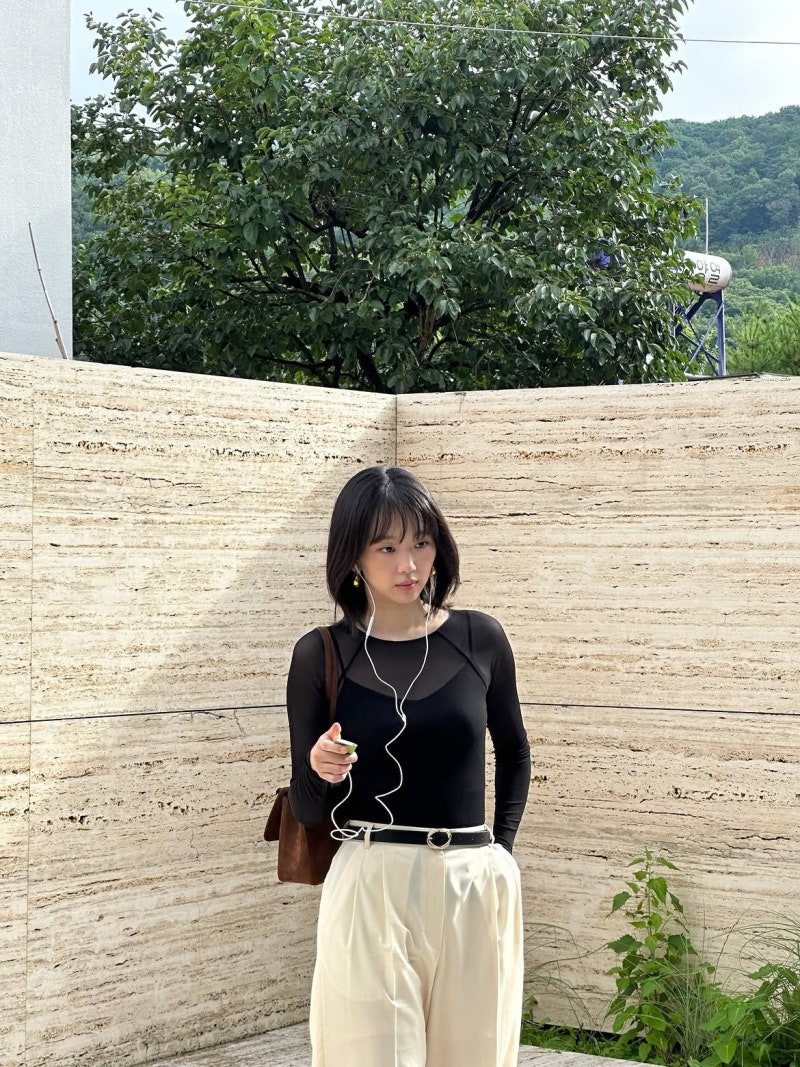
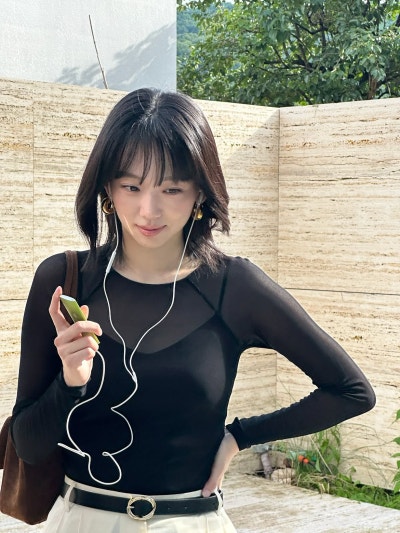
- Black mesh top + ivory wide-leg slacks + brown suede bag = urban sophistication
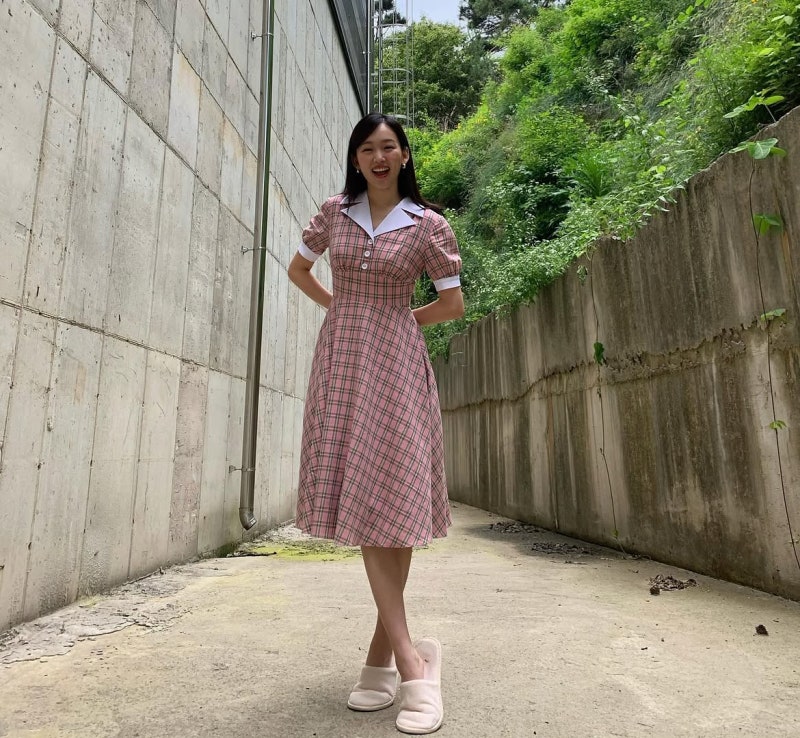
Career pivots are one thing, but this actress has rewritten the whole resume. She started at Samsung—not just any job, but IT consulting in one of Korea's biggest companies. Three years in, she got the itch and quit. Then she decided what she really wanted was journalism, and she studied for the media civil service exam hard enough to get into a broadcast network. Lasted a few months before she walked away again. Those are three very different professional identities before she even landed on acting. But here's the thing: she didn't fail at those jobs. She just kept finding out what she actually wanted, and when the pillar under her feet shifted, she jumped.
The turning point came through a modeling competition with 2,600 applicants. She won. That became the doorway to acting, and she took it seriously from day one. Broke through with Second Summer at Age 20, then swept the New Year Film Festival with Little Forest as Best New Actress. The kicker came with Undercover High School and the MBC Drama Awards Best Actress trophy, which meant the industry had collectively agreed she was no longer the newcomer. Then came Caught Red-Handed on Netflix—this intense political thriller that proved she could carry a global production. This is someone who has lived multiple career arcs in what most people consider a linear path.
Navy Knit Vest Layered: The Strategic Overlap
First look is from the press conference for Caught Red-Handed, and it's almost a masterclass in what happens when you understand that layering is about rhythm, not just texture. Center piece is a navy V-neck knit vest that's fitted enough to show shape but structured enough to hold a room. Below the vest is a multi-stripe shirt with collar sharp enough to cut glass, and she's deliberately pulled the collar up and out—so the stripes are visible as a layer, not buried. The shirt sleeves have that slight puff that brings volume into an otherwise streamlined silhouette.
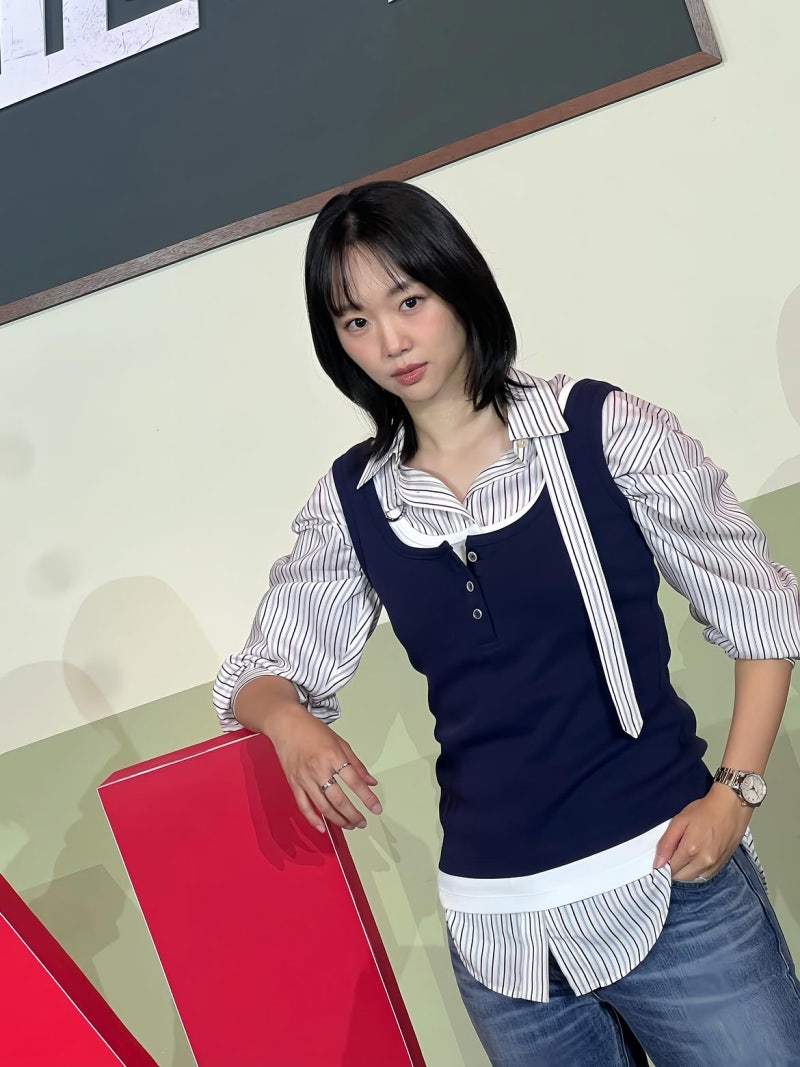
Here's where it gets interesting: she's let the striped shirt drop past the vest hem, so there's this visible break in fabric lengths and textures. It's not accidental—it's the kind of intentional layering that only works if you understand proportion and line. Below is light-wash denim that breathes space into the busy upper half. The contrast between pattern-heavy above and simple below is what makes the whole thing work instead of reading as visual noise.
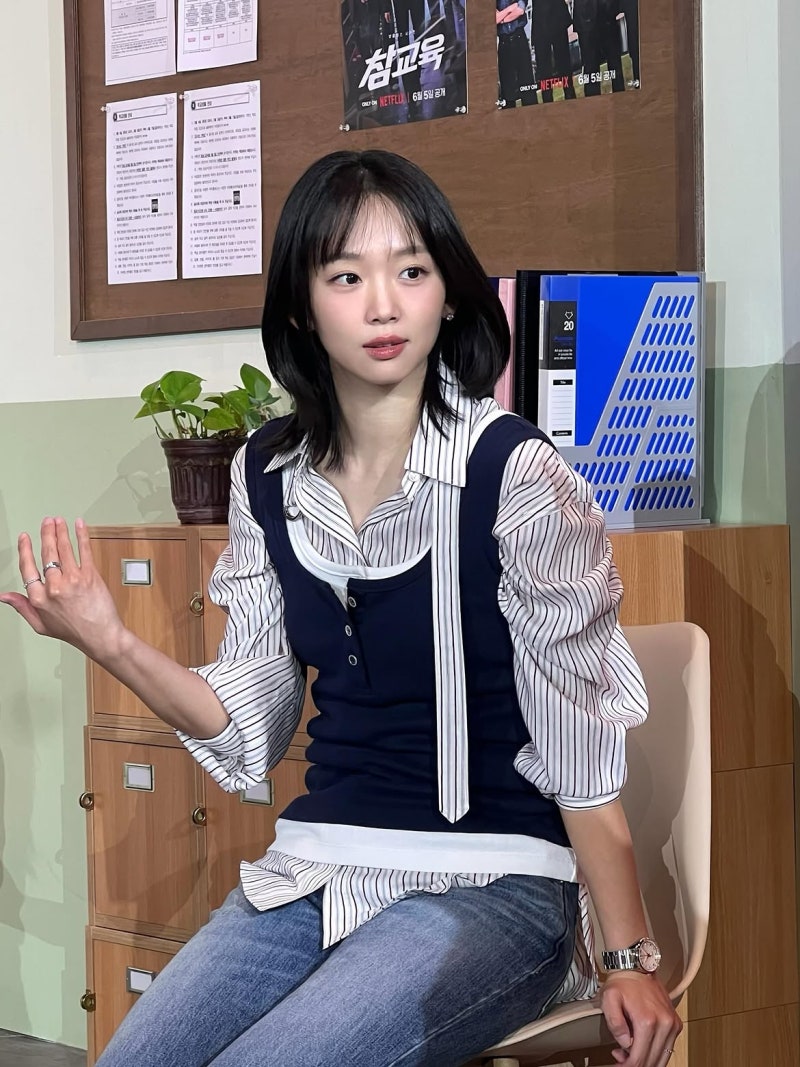
Light denim at the bottom proves that when your upper half is this active, you need somewhere to let the eye rest. A metal bracelet watch—just one—sits at the wrist like punctuation. This is the outfit that says I thought about this.
White Lace Blouse Summer: Romantic Clarity
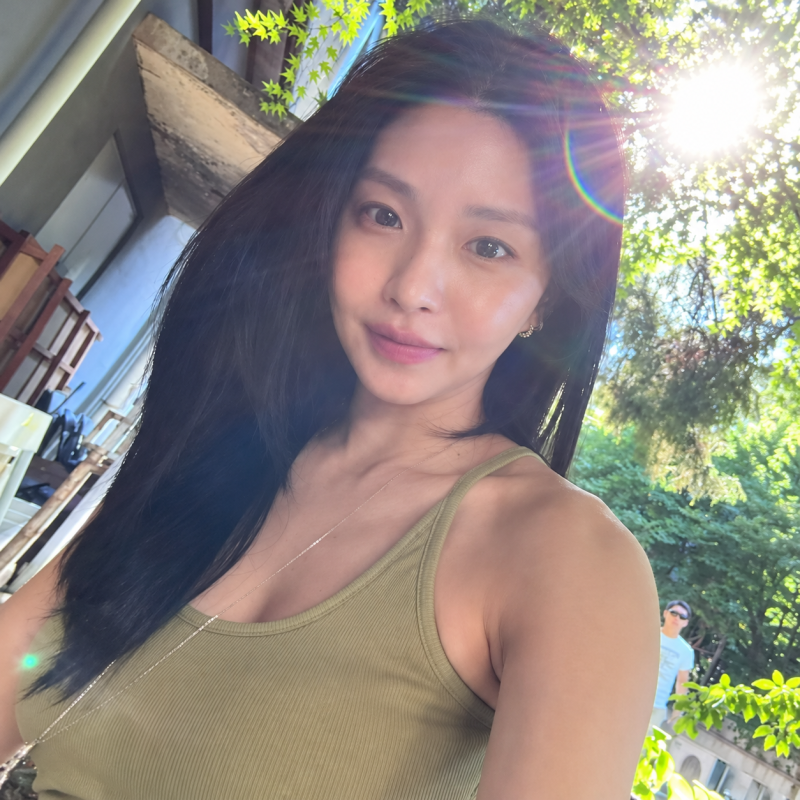
Second look has her under a tree with daylight streaming through leaves, wearing a white lace-trimmed blouse that's all romance and zero trying. The V-neck is traced in lace, and the front has fine pin-tucks that catch light when she moves. Short puffed sleeves with shirring at the cuff add volume without weight, and the whole thing is soft in a way that doesn't need explanation. This is linen, this is breathing room, this is summer done with intention.
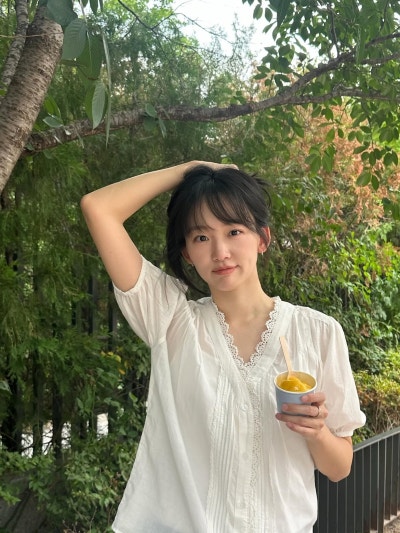
It's a single piece that carries an entire mood. No heavy jewelry, no competing prints, just the knowledge that a good blouse on the right day under the right light is enough. This is the dress-up of doing nothing, the effort it takes to not try.
Black See-Through and Ivory Slacks: The Serious Moment
Final look brings the mood down completely. Thin black mesh top, the kind that lets you see through but doesn't announce it—just a whisper of transparency. Below is ivory wide-leg slacks that sit sharp and clean. This is not casual. This is the outfit for something that requires presence. The contrast between dark above and light below creates this vertical pull that makes her frame look like it goes on for days.
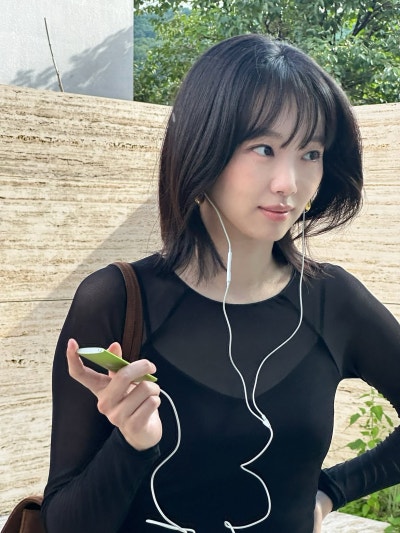
The top is tucked, which is important detail. She's not letting the mesh float—it's anchored at the waist, which means the transparency becomes intentional rather than accidental. A brown suede shoulder bag in a warm tone stops the black-and-ivory from becoming too stark. Round-buckle belt adds that one touch of hardware. This is someone saying: my aesthetic includes soft things and hard things, and I know how to put both in one outfit.
Why She Can Wear Three Completely Different Outfits and Still Be Herself
After jumping between three career paths before 30, Jin Ki-joo's got a thing about understanding context and showing up appropriately. The layered navy-and-stripe moment was about communicating intelligence. The white lace was about softness. The black-and-ivory was about control. Each one required a different energy, and she delivered three different outfits that still somehow read as coming from the same woman. That's what happens when you've lived enough to know that consistency isn't about wearing the same thing. It's about understanding your own scale and applying it to whatever the moment asks for. After gaming the system three times already, fashion is probably the easiest code she'll ever crack.
"Consistency isn't about wearing the same thing. It's about understanding your own scale and applying it to whatever the moment asks for."