
Minimalism That Speaks: Seo Ye-Ji's Black-and-White Two-Look Philosophy
Street-cast from Spain and thrust into acting with only three months' commitment, Seo Ye-Ji built a career on bold, singular character choices. Off-screen, her style follows the same rule: subtract color, add texture, and let precision do all the talking.
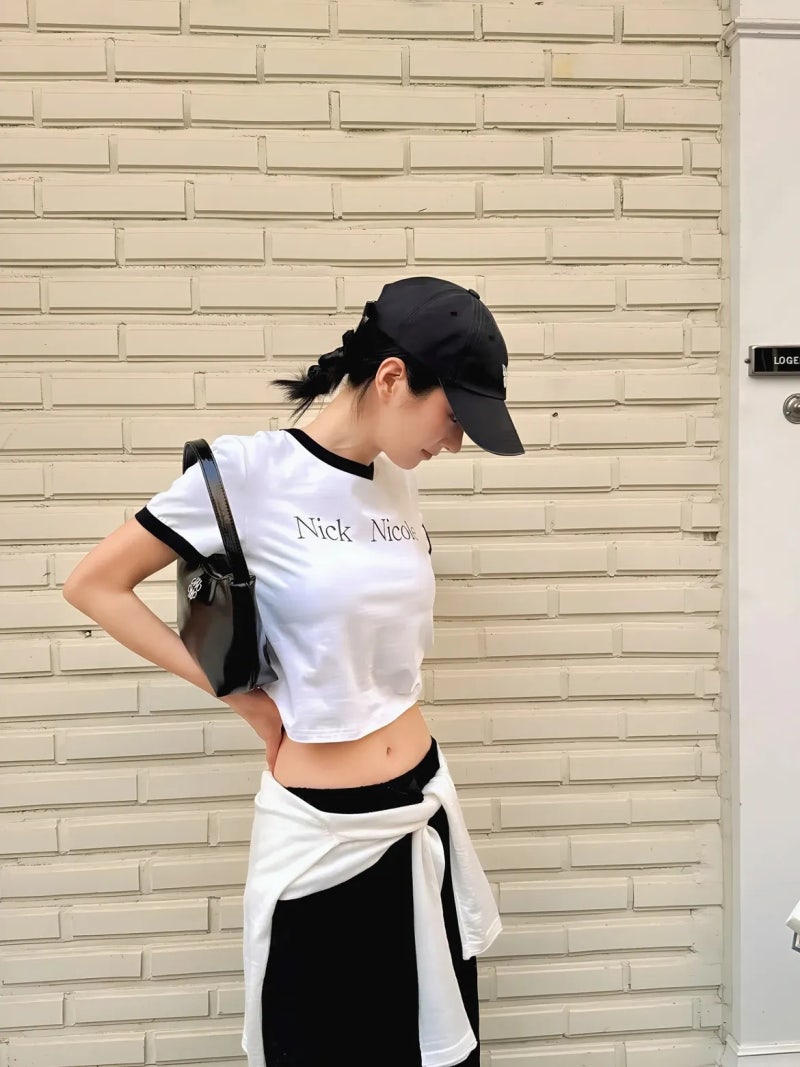
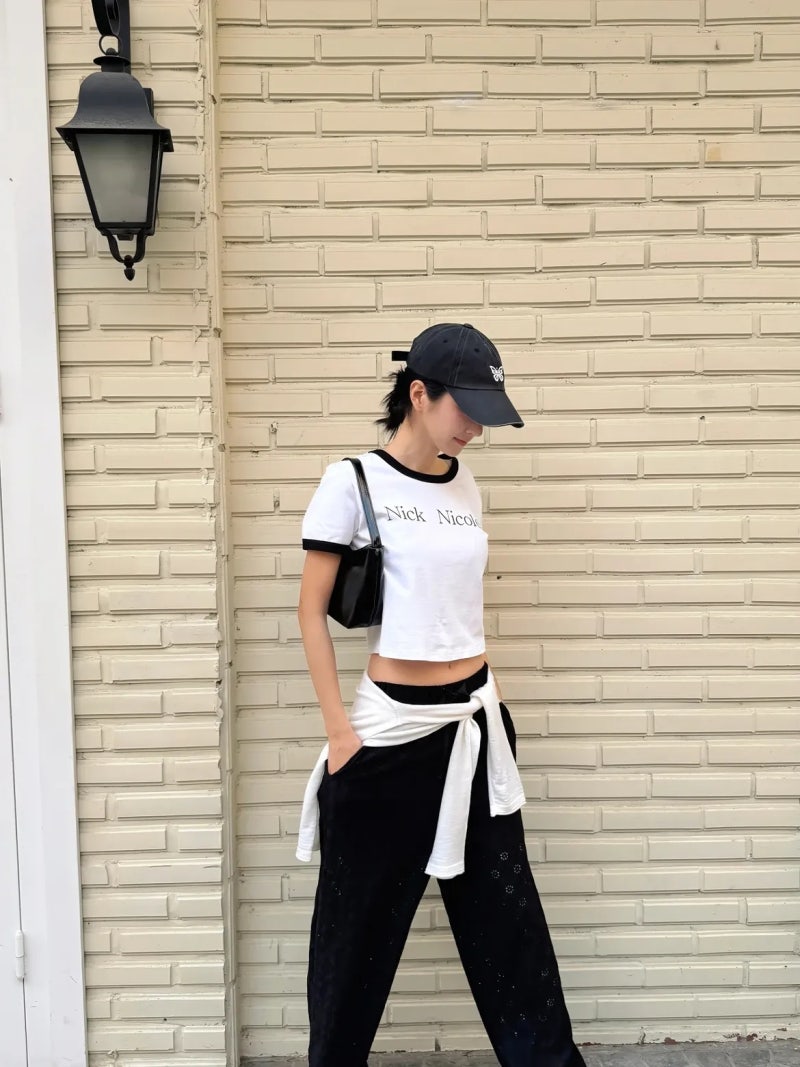
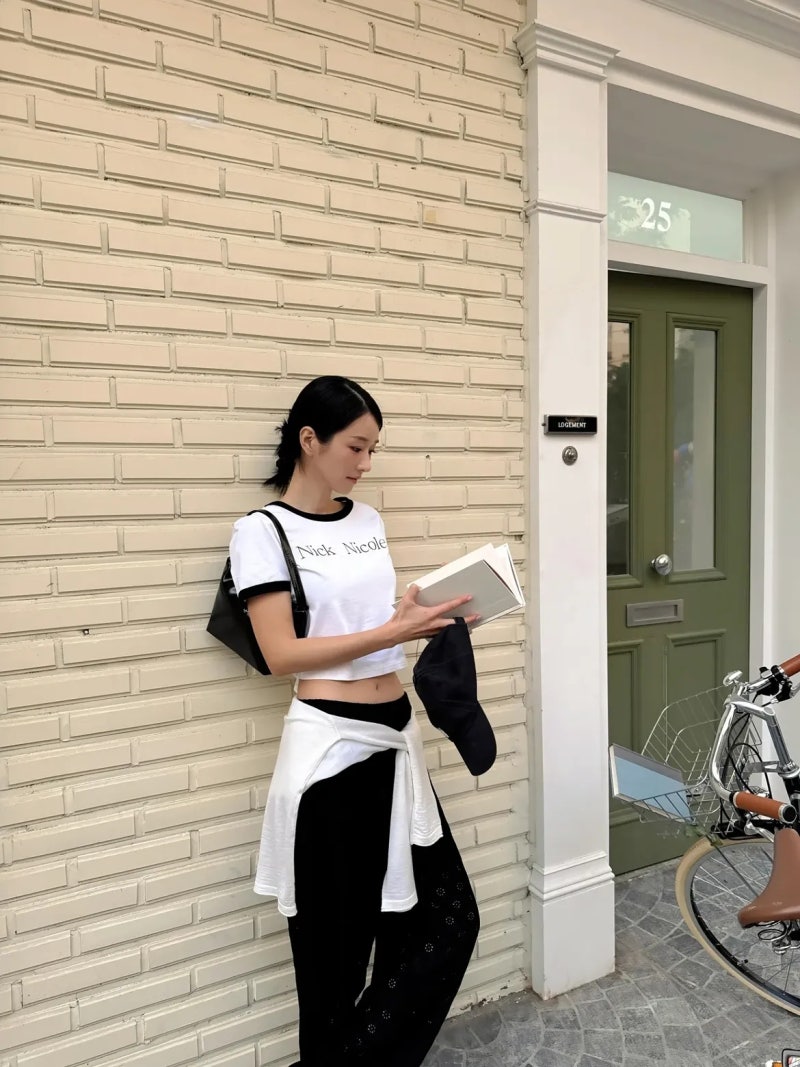
- White ringer tee, all black bottoms and cap, white shirt tied at waist, glossy black bag—texture variation within monochrome.
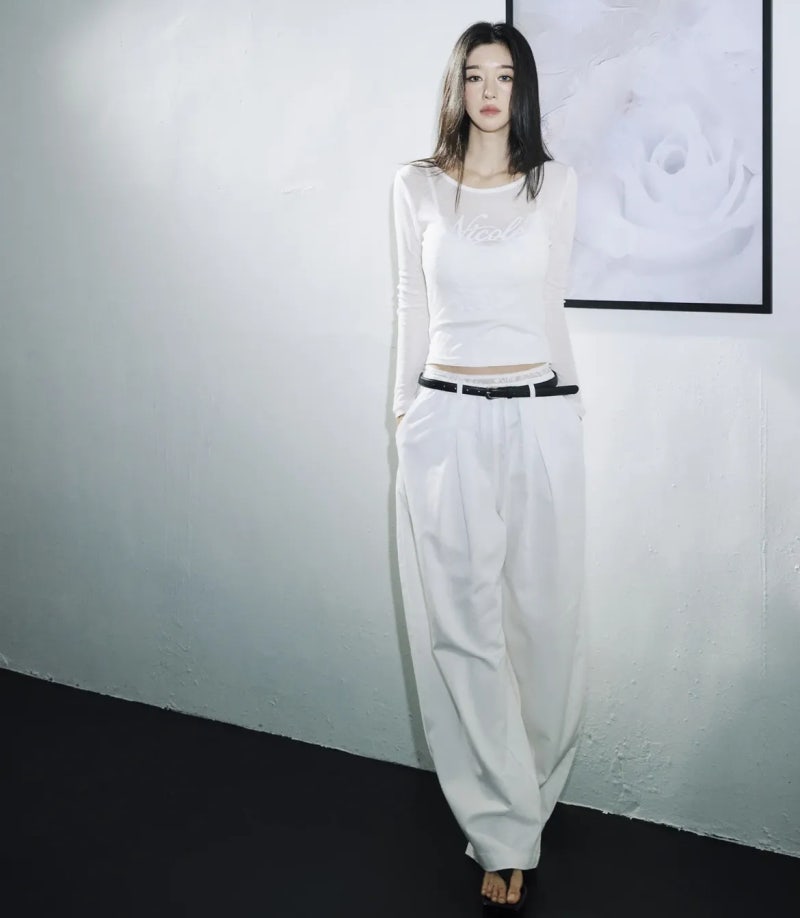
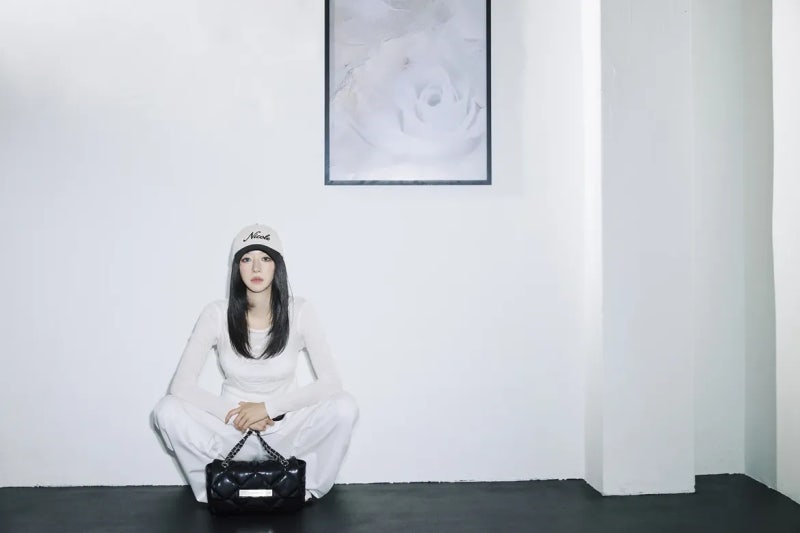
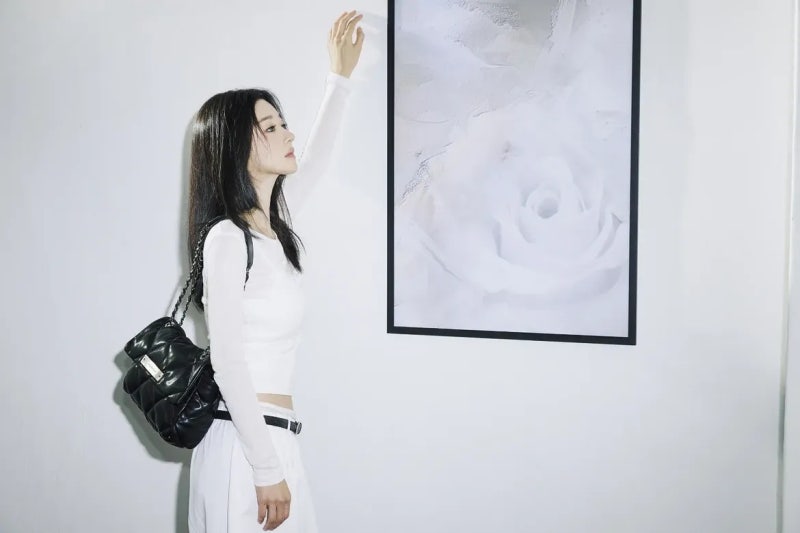
- All white with one quilted black crossbody bag as anchor—that single dark piece justifies the whole palette.
- Monochrome wins when you vary texture: matte, satin, glossy, quilted—all neutral, all speaking differently.
Seo Ye-Ji's arrival in Korean acting reads like a creative accident that became destiny. Spotted on a Madrid street, offered a three-month trial 'just to see,' she committed to acting fully, playing edges in 'Psycho But It's Okay' and 'Eve' that proved she could carry singular, complicated roles. Now she's moved into theater, playing Yun Sim-deok in 'Sympathy for Lady Vengeance.' Off-stage, her style mirrors that career philosophy: restraint as a form of control.
BLACK-AND-WHITE MINIMALISM IN TWO MOVES
① MONOCHROME ARCHITECTURE
Start with a white ringer tee (ringer = contrasting collar and sleeve binding, usually black). This one detail—the black ribbing—pulls the eye upward to your face. The 'Nick Nicole' lettering adds graphic weight without color noise. Pair with all-black bottoms and a black baseball cap. Already monochrome, already clean. But here's the upgrade: tie a white long-sleeve shirt around your waist like a jacket. That white horizontal line (visible from behind) creates visual rhythm and divides your lower half, making your legs read as more sculpted. It's a detail worth stealing.
Add a glossy black shoulder bag (not matte—the sheen creates texture differentiation in a tonal outfit) and you've solved how to wear neutrals without reading as stark or unintentional. Same color family, different finishes: matte, satin, glossy. That variation is what reads as sophisticated.
② ALL-WHITE WITH ONE BLACK ANCHOR
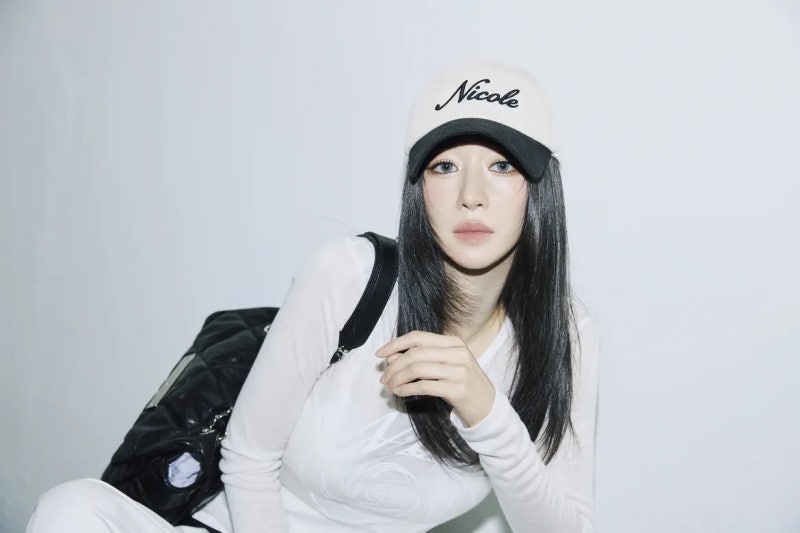
Now the inverse. White slim long-sleeve top, white tailored pants, both the same value. Ivory baseball cap with black-brimmed underside (seen from inside the cap, subtle). The full-white outfit risks floating away—you need ballast. Enter: a black quilted crossbody bag with real architectural presence. The puffing, the chain strap, the proportions—it's not an afterthought. It's a statement that justifies every white choice around it. By making the bag the only dark element, you create visual hierarchy instantly.
The all-white outfit needs one piece that says 'intentional.' Without it, white-on-white reads as an accident or a laundry day. With the bag, it's editorial.
THE MINIMALIST PRINCIPLE UNDERNEATH BOTH
Color economy creates clarity. When you remove the distraction of multiple hues, texture becomes the language: the ringer's contrast, the quilting's dimension, the leather's sheen. You're not working with less—you're working with restraint, which is its own form of abundance.
Both looks prove the same insight: fewer choices, stronger presence. That's the confidence that reads as effortless.
"When you remove color, texture becomes your language. Matte, satin, glossy, quilted—all neutral, all saying something different."