The Open Back That Actually Works: How a Sleeveless Cutout Carves Your Silhouette Without Trying
Stars are supposedly terrified of this cut. But the asymmetrical hem and drape-heavy fabric mean it actually reads narrower, longer, and more effortless than any fitted tank.
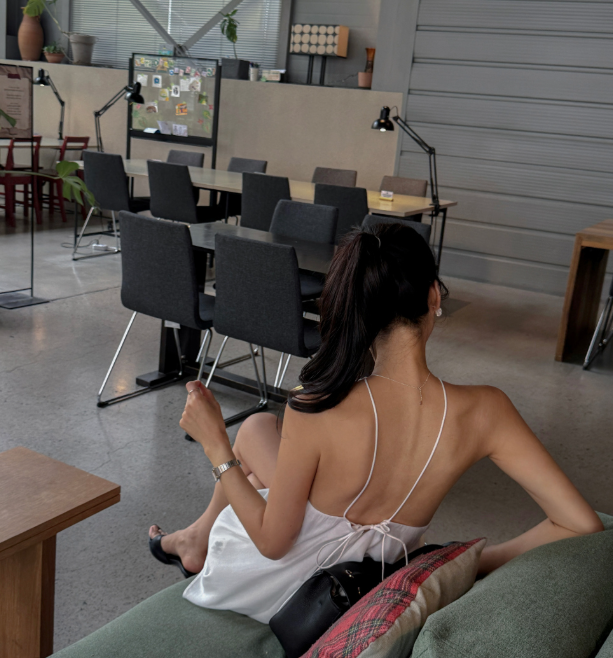
- Open back reads narrower because diagonal straps cut horizontally in half.
- Asymmetrical hem drapes low where you need coverage without saying it out loud.
- One silver chain, high ponytail, structured bag = your entire accessories edit.
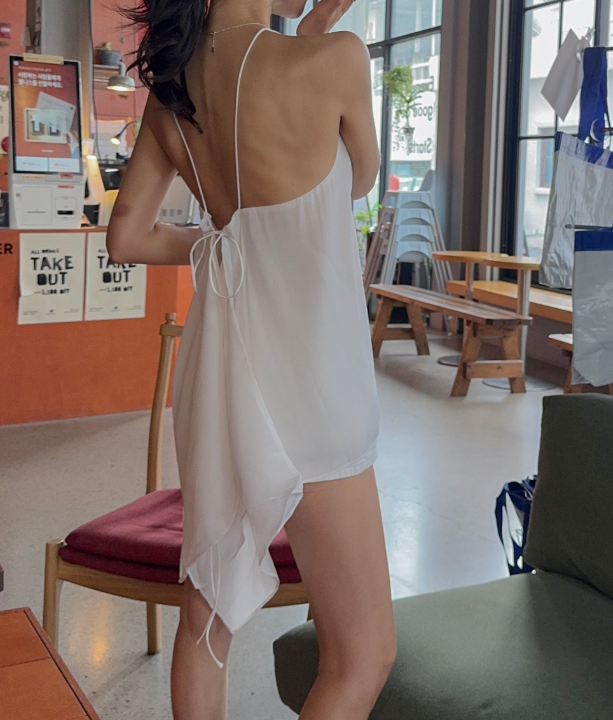
Your summer wardrobe has a glaring blind spot: almost every piece only thinks about the *front*. But here's the truth—your silhouette lives in the back. This sleeveless with the open back flips that. The front stays buttoned-up and appropriate all the way to your collar, but flip around and the back panel opens into a full U-shape. It's bold enough that even famous actors second-guess it. So let's actually decode how it works.
**Why Open Backs Don't Actually Make You Look Wider**
Logic would suggest: exposed back = broader shoulders. Opposite happens. Once your back is visible, people stop measuring *width* against fabric edges. Their eye follows the actual *line* of your body instead. You've got two thin straps creating an X down your spine, and those sightlines are diagonal—not horizontal. Diagonals cut mass in half. Your shoulders visually narrow; your neck reads longer.
The fabric is a drape-forward material—loose, flowing. Your upper back, side ribs, nothing clings or shows volume. You're literally *less* visible than in a fitted sleeveless, even though you're showing more skin.
Plus the sweat situation: a traditional sleeveless traps moisture against your back. This cardigan has the back wide open, so heat escapes. Summer comfort actually improves while the silhouette sharpens. Win-win.
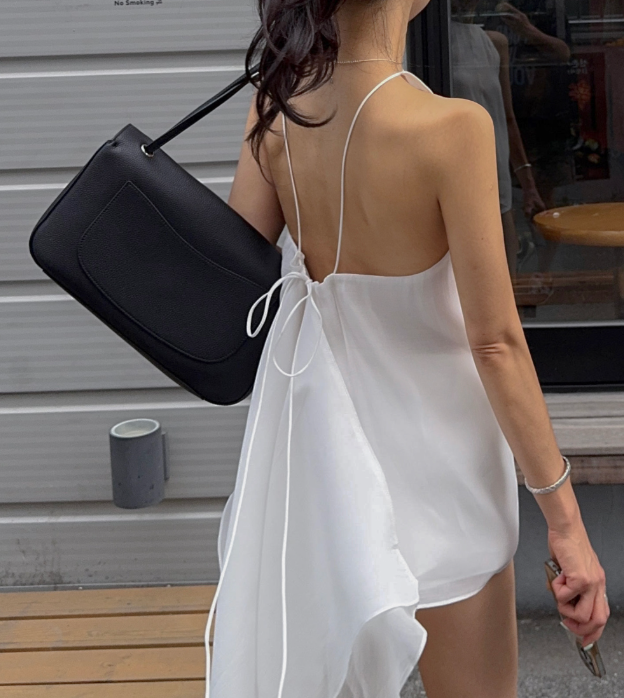
**Managing the Back Tie: Loose vs. Cinched**
The center back has a thin string tie. Cinch it tight and the back panel tightens, which changes how wide that U-opening reads—suddenly more controlled, more structured. Loosen it and the panels drape more freely, giving that "barely wearing this" ease. Both are one-handed adjustments taking five seconds, so you can swap between pool energy (loose) and restaurant energy (cinched) without changing clothes. Control your own silhouette throughout the day.
**Bra Visibility: The Practical Fix**
With that back open, underwear exposure becomes the question nobody asks but everyone wonders about. Strategy: strapless or bandeau only. No shoulder straps visible means no visual noise in the opening. You're already showing back; you don't need to advertise your bra label.
Internally, this means you need coverage that exists without being *seen*. A seamless bandeau means zero visual anchors, just clean lines.
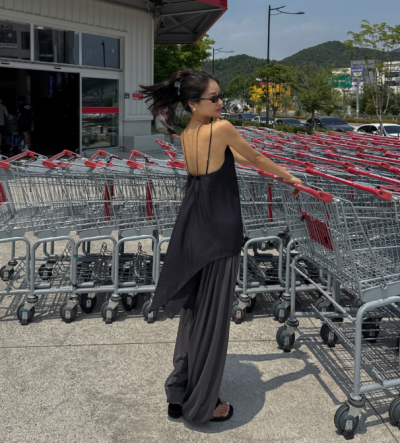
**The Asymmetrical Hem: Your Secret Weapon Against Midsection Self-Consciousness**
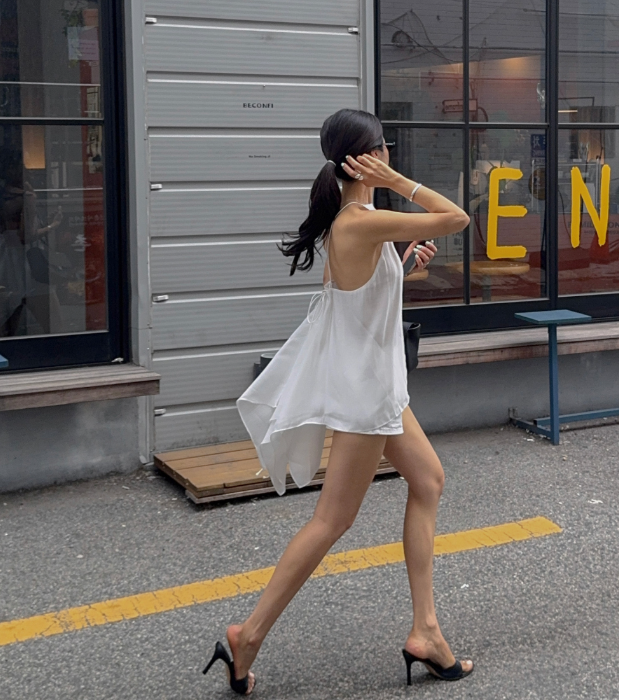
The hem is the genius move. Front is cropped short, but as you move to the side and back, it gradually lengthens. That sightline is one long diagonal, and it naturally drapes over your hip and across your rear. So even though fabric is scarce at the front, where people see your actual waistline, the diagonal hem covers what most people are self-conscious about without actually *saying* anything about it. It's visual mathematics, not flattery.
Pair it with high-waisted bottoms and the overlap point becomes completely invisible. Midsection solved without armor.
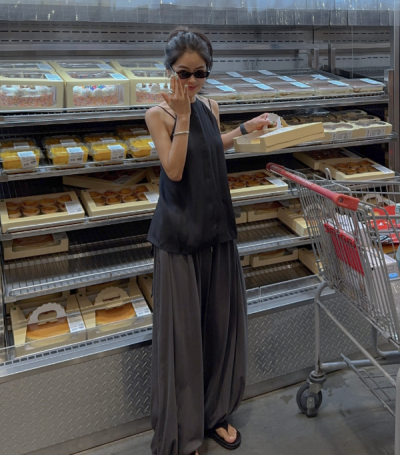
**Day vs. Night: One Garment, Two Complete Personalities**
During the day: throw white high-waisted cotton shorts underneath. The cardigan's back is the *show*, so your legs stay visible. From the front you read like a casual one-piece dress; from the back, you're basically in a bikini-adjacent top. Resort walking energy, maximum leg.
Switching to night: step into charcoal wide-leg pants (full length, hits your shoes). Now the silhouette reads as one vertical column from neck to toe. Same garment, completely different context—now it reads as a *blouse* instead of beachwear. Change your shoes from flat sandals to stacked heels and you've got date-night energy without changing the top.
**Hair and Accessories: Back-Focused Strategy**
Since your back is the main event, styling choices need to support that, not compete. Hair down = covers the whole production. So pull it up. Low ponytail, high pony, either works. Your nape, your back line, your actual shoulders need *visibility*. That's the whole point.
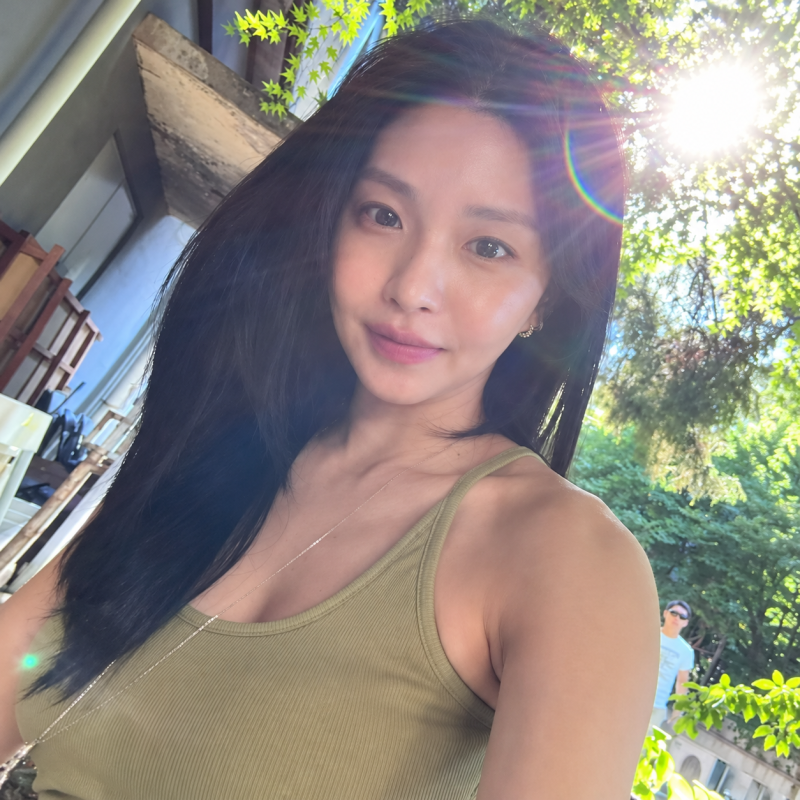
Accessories: one thin silver chain around your neck, nothing more. Maybe tiny studs in ears if you're into it. Your open back IS the jewelry. Stacking a layered necklace over that opening would drown the line entirely.
Bag: structured black leather shoulder bag, kept tight and compact. Soft or textured bags melt into your silhouette; you need *definition* in something else to balance a draped top. Black grounds the look without competing. Carry it on one shoulder, short strap, so it doesn't slide down your arm.
Final touch: flat slides or slip-on mules (not heels) for daytime, stacked-heel mules for evening. The heels visually lengthen your leg line; flat keeps everything grounded and vacation-coded.
**The Through-Line**
Body-conscious without clinging. Exposed without exposed. Opens in the back but closes in the front. That's architectural dressing—using shape and asymmetry to create something that reads effortless but is actually meticulously calibrated. If you've been avoiding backless cuts thinking they'll betray you, this one is the introduction. Let it do the work.
(All styling interpretation based on publicly available images.)
"Your open back IS the jewelry. Stacking a layered necklace over that opening would drown the line entirely."