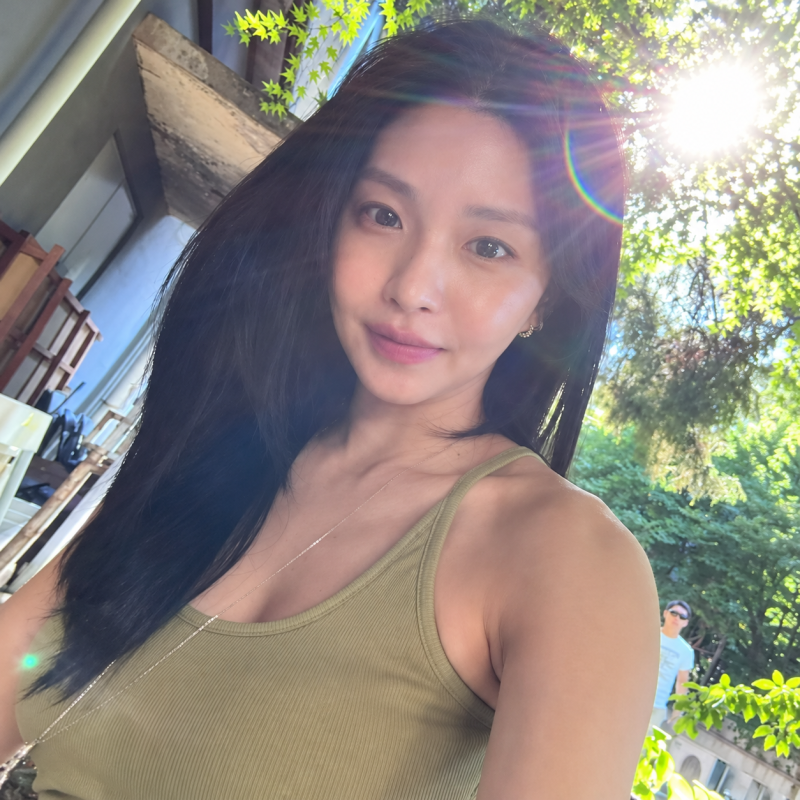
Writer-slash-actress Moon Ka-young dresses like someone who has read the room: five minimalist looks from someone with actual taste
Actress-turned-author Moon Ka-young's wardrobe reads spare, considered, and intentional—the uniform of someone building a quiet reputation on precise language. Her five daily looks prove that minimal beats complicated every time.
- Black serves as foundation; texture changes avoid monotony across five different silhouettes
- Proportions change how you read—exposed middle, leg emphasis, vertical lines, volume contrast
- Accessories anchor each outfit as single focal points rather than layered statements
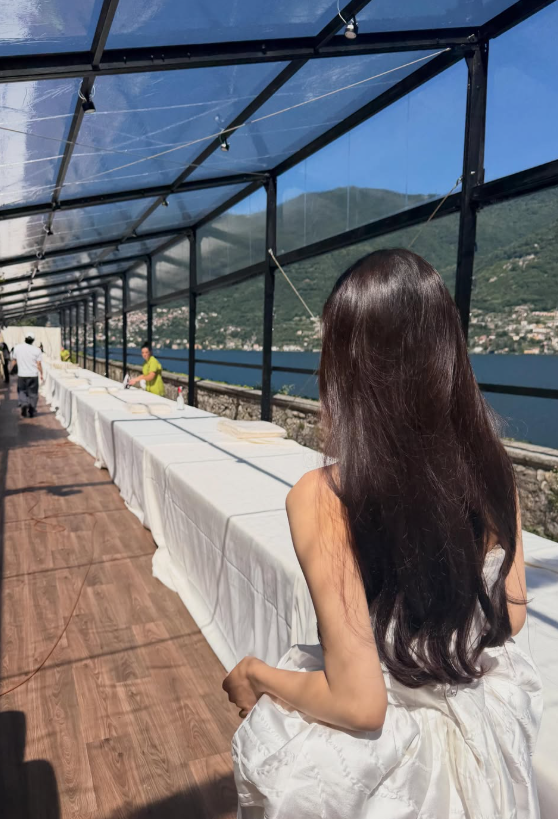
Moon Ka-young is both actress and author now—those two titles sit together naturally on her because she earned both. She started as a child actor, moved through dramas with different emotional temperatures (That Guy's Memory, True Beauty, The Romance of Tiger and Rose, Hometown's Embrace), then dropped her first essay collection, Pata, in 2024. The book cracked 10 printings and got a special reissue edition, which tells you something about how people responded to what she had to say.
Someone who writes unflinching observations about self and world probably isn't going to dress like she's performing for an audience. Her wardrobe reads quiet, organized, understated first. That's the vibe we're working with.
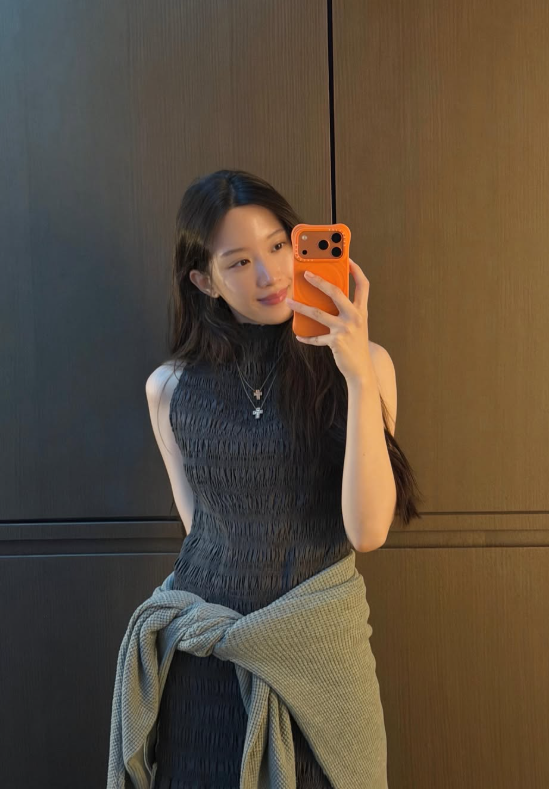
The first is an all-black halter-neck dress in gathered (shirring) fabric. Shirring is that technique where you bunch fabric into tiny accordion pleats, creating shadow and depth where otherwise you'd just have flatness. Same-color black reads one way smooth, another way totally different with this texture. The halter neck exposes your shoulders and collarbone in this clean way, keeping airiness even though you're going fully covered.
Here's the real move: she just casually ties a gray waffle-knit cardigan around her waist. This totally shifts the vibe from formal to casual just by its placement. That move—letting something sit at your waist instead of on your shoulders—actually divides your proportions visually; your legs read longer because you've pulled the eye downward. A thin gold layering chain at the collarbone fills the visual space that the halter neck left open. Black all-black with one texture change and one piece repositioned. That's how you do restraint.
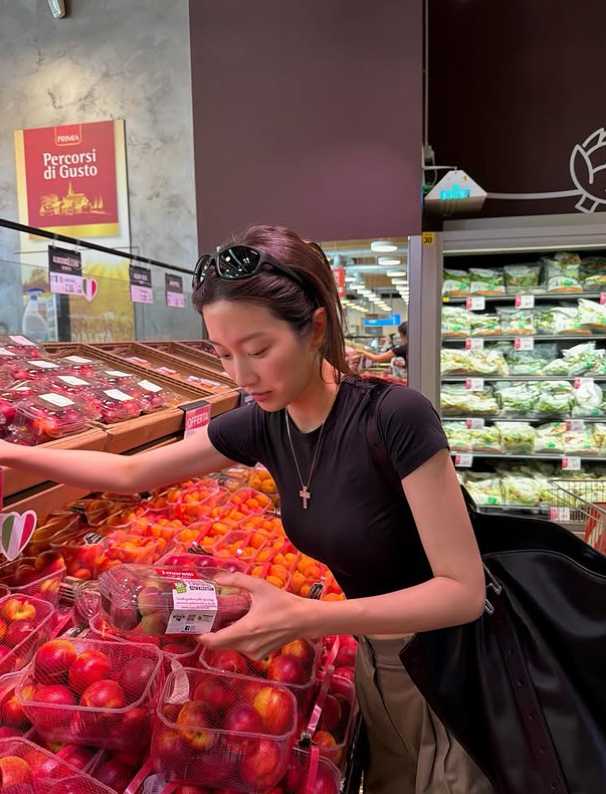
The second is a fitted black slim tee over beige pants—the most basic combination, which means everything lands on silhouette. The slim fit orders the upper body line completely. Beige on the bottom lightens the whole energy because brightness reads light. When your top is dark and bottom light, you're running a light-and-shadow play; the eye scatters naturally rather than sinking into one heavy zone. That's the baseline color formula.
Sunglasses pushed up on her hair and a thin chain necklace are just eye-anchor devices around the face. With minimal outfits like this, honestly? One neck accessory becomes the whole statement. Beige and black read so neutral that you actually can't fail here—it's beginner-proof in the best way. Travel outfit, errands, casual hangout energy.
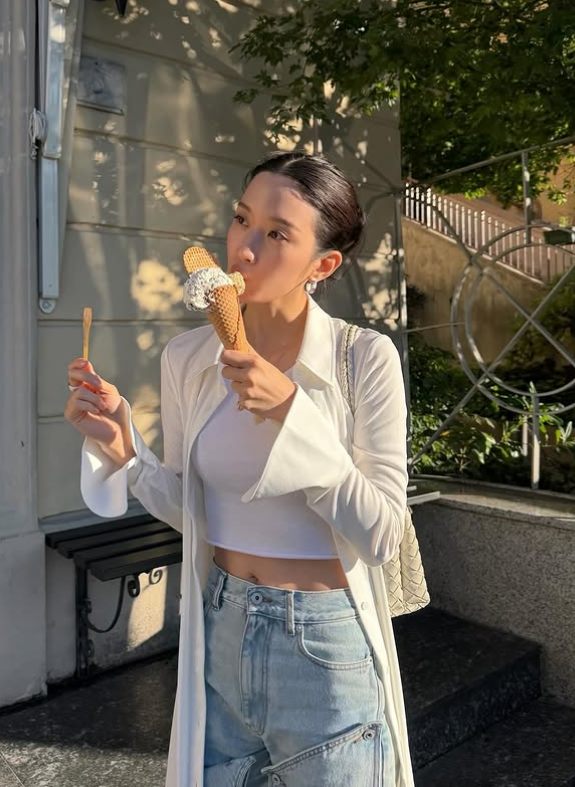
The third flips the script: white crop top under a white long-line shirt worn open, light-wash low-rise denim below. The secret is how much bare midriff she's showing—the crop shows your tiniest waist part, and the low-rise denim drops slightly below your natural waist, creating this extended horizontal strip of skin. That pulls vertical proportions long. A white long-line shirt worn open becomes a vertical line-maker when you wear it unbuttoned; your body gets two long geometric lines down the sides, making your silhouette taller and leaner.
Her hair's brushed back smooth, and a chunky earring pulls focus to her face—with simple tees like this, literally one face-frame accessory becomes the whole design. Whites and light-wash denim tone-matched reads summery and fresh, very seasonal.
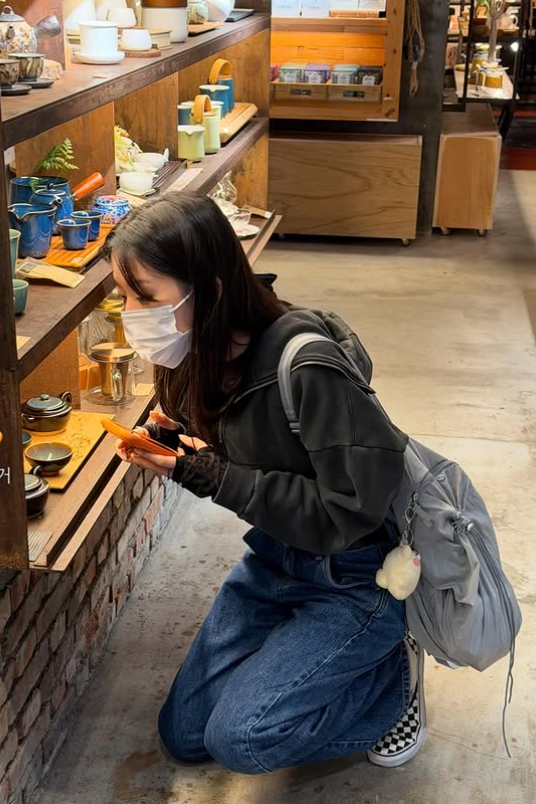
The fourth is oversized gray hoodie-zip with wide-leg denim—complete opposite energy. You're deliberately losing your body line here; everything sits loose and billowing. When you go full volume top-and-bottom, the trick is exposing your smallest parts (ankle, wrist) to remind people you actually have a body underneath. A gray backpack and checkered slip-on shoes keep the whole thing toned to one color family; when you're wearing oversized everything, the monochromatic palette keeps you from reading sloppy. That's calculated ease. You can throw this on with a mask and still read intentional.
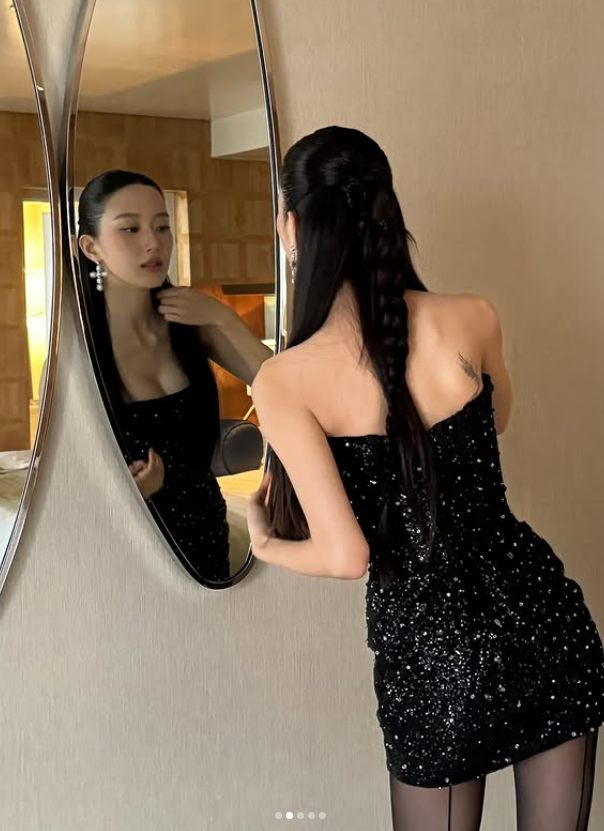
The last is a black sequin tube-top mini dress—full evening-energy flip. Sequins are basically the opposite of minimal (they're screaming for attention), but she's kept it black and monochromatic. One color, one material choice, and somehow it reads refined instead of loud. Black tights smooth the leg line, and keeping the whole bottom half black reads sleek. An elaborate braid swept to one side opens up her shoulders in a way that makes the exposed collarbone feel architectural. A drop earring adds one final shine echo near her face, tying to the sequin dress without overdoing it. Even at full-volume sparkle, she's left plenty of space and quiet.
The pattern through all five: restrained minimalism. Black and beige and white and gray are doing the heavy lifting. Same-color different-texture (shirred, slim, pleated, ribbed, sequin) creates dimension without color-adding. Small accessories (chains, one earring moment, a bag, a belt) provide the emotional punctuation instead of costume. Strong contrast in one area (exposed midriff, leg emphasis, sparkling detail) draws attention instead of spreading it.
Like someone who lives by language, she dresses with economy. Every piece serves the sentence. No excess words, no excess fabric. That's how a writer dresses.
"Like someone who lives by language, she dresses with economy. Every piece serves the sentence. No excess words, no excess fabric."