Thin cotton tees expose every ripple on your back? This summer cable knit is breathable, structured, and honestly looks expensive
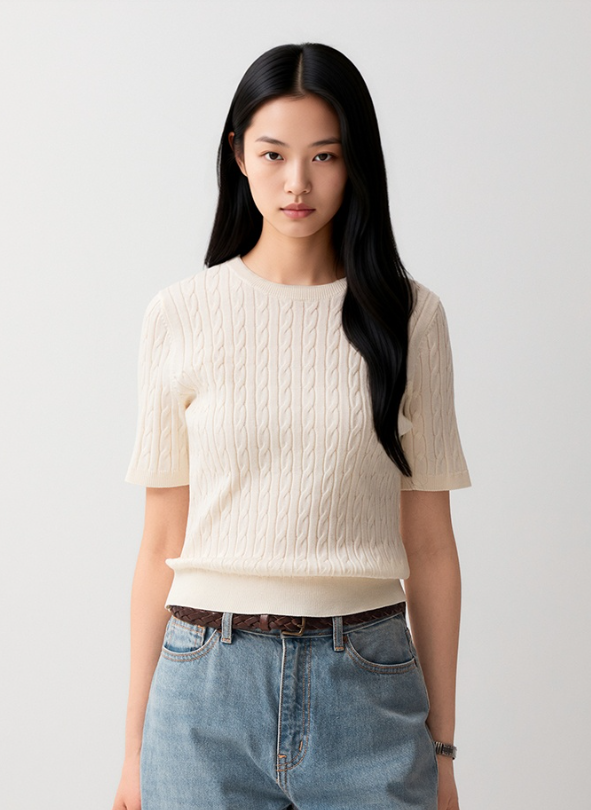
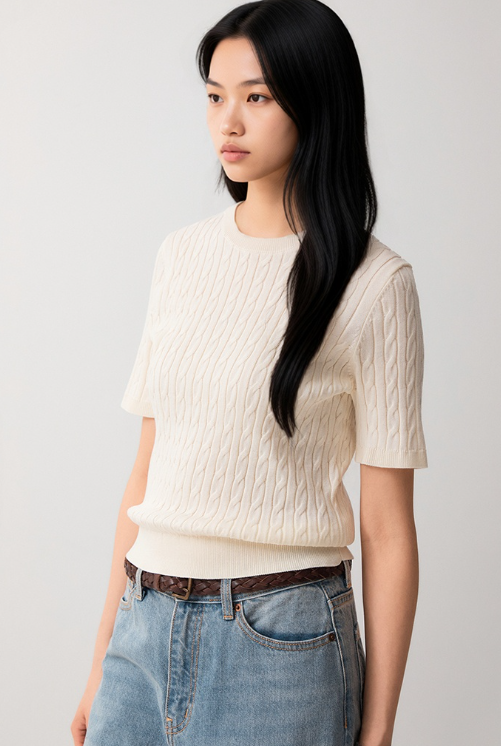
Everyone assumes summer knits mean hot and heavy, but a proper summer cable knit breathes like a t-shirt while actually having the architectural support to smooth your silhouette. The vertical cable pattern draws your eye up-down instead of side-to-side, while the V-neckline and carefully rolled sleeves keep you looking intentionally put-together without visible effort.
- Vertical cable knit patterns draw eyes up-down instead of side-to-side, making you look taller and narrower while the textured fabric hides what you want hidden without clinging
- A true summer knit stays cool because air moves through the knit structure itself, and the fabric never develops that gross damp-clingy feeling even when you're actively sweating
- A simple front tuck or hem roll repositions your visual waistline several inches higher, making your legs look dramatically longer and your whole silhouette more balanced
The eternal summer frustration is real: wear a thin t-shirt and suddenly you can see every soft curve, every bra line, every imperfection on your back. It clings in all the wrong places and gives you nothing. But the second you reach for an actual sweater in the summer heat, you're drenched before you even leave your apartment. So you're genuinely stuck choosing between exposure and discomfort, and neither option feels good.
But here's what most people don't understand about summer knitwear: it's genuinely designed differently from winter knits. A true summer cable knit is still made from thin, breathable yarn that actually feels cool against your skin. The structure comes from the knit pattern itself, not from heavy material. Let me break down why this completely changes the game.
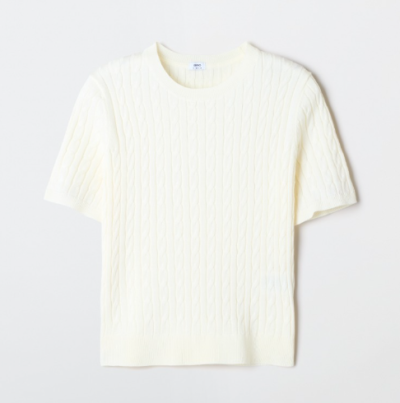
How does a cable knit pattern hide what you want hidden without making you sweat?
The beauty of cable knit is actually the geometry. Those vertical twisted patterns running down your chest and torso are doing serious optical work. Your eye follows those lines up and down, which means it's not tracking side-to-side across your body. That's the trick: horizontal lines make you look wider, but vertical lines make you look taller and narrower. A cable pattern is like built-in flattery that's happening at a structural level.
Meanwhile, because the knit pattern is tight and organized, the fabric itself has enough integrity that it's not clinging to every curve. Lumps and bumps that would be obvious in a thin tee just disappear into the texture of the knit. Your back stays smooth-looking even if you're carrying weight there. Your sides and waist look more proportional because the cables are doing the work of drawing the eye vertically instead of dwelling on horizontal fullness.
And the thing is, summer cable knits are made from yarn that's thin enough that air moves through the gaps in the knit pattern. You're not hot. You're not sweating through fabric. You're actually cooler than you'd be in a regular fitted summer shirt because there's literally space for air to circulate through the knitted structure itself. It's genius fabric engineering that makes zero sense until you actually try it.
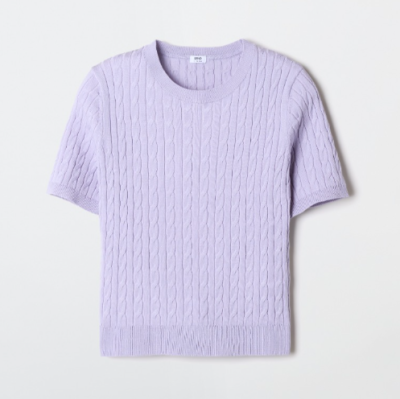
How does a V-neckline change everything if your neck is short or your shoulders are broad?
A lot of people don't realize how much a crewneck can actually work against you. When your neckline goes all the way up and around, it compresses your upper body visually. Your shoulders look heavier. Your neck looks shorter. Your whole upper half reads as one solid block. If you're already carrying weight in your upper body or dealing with that soft shoulder area that shifts with age, a crewneck is genuinely your enemy.
A deep V-neckline is transformative. It creates actual visual space between your shoulders. Your neck suddenly looks longer and more elegant. The soft angle of the V makes your face look less round and more sculpted. Everything becomes more refined. The trick is that you're using negative space—the absence of fabric—to create the illusion of better proportions. It costs nothing and requires zero additional styling. Just the neckline itself does all the work.
Add a casual roll to your sleeves—just one or two folds—and suddenly your wrists look slimmer and more delicate. You're not dressing up deliberately; you're just adjusting the sleeves for practical reasons. But that casual adjustment actually adds visible polish. That's the move.
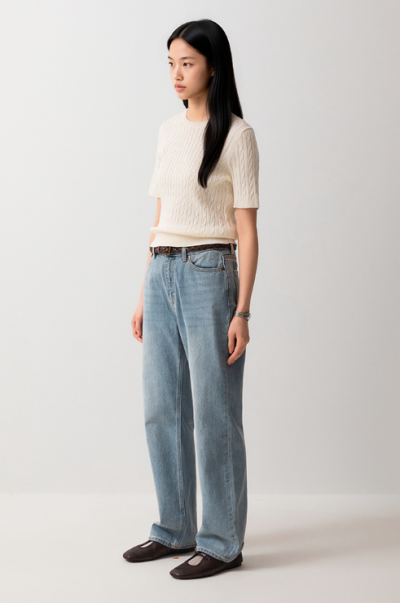
Why does this knit stay comfortable all day without sticking to your body even when you're sweating?
Here's the real question with summer knitwear: how much heat can you actually tolerate? The answer is: way more than you think, if the fabric is engineered correctly.
These summer knits are made from specially sourced yarn that just feels cool the second it touches your skin. It's soft enough that it feels gentle against you, but the structure is rigid enough that the material maintains its shape instead of stretching out or sagging. When you sweat even a little bit, the texture of the knit works with your body instead of against it. Nothing gets that gross clingy feeling where fabric is plastering to your damp skin. You get the crisp, clean aesthetic of a solid knit without the thermal nightmare.
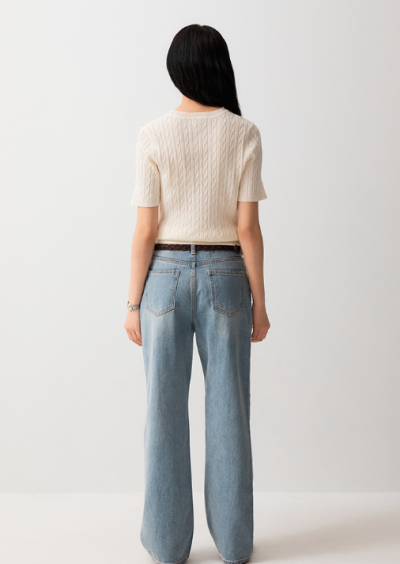
Because the pattern has inherent texture, wrinkles don't show the way they do on smooth fabrics. You literally just wash it, hang it to dry, and throw it on the next day. No ironing required. For someone with a busy life, that's genuinely huge. You're not starting your day earlier just to deal with garment maintenance.
How do you dress this up for the office versus casual versus actually-try-hard moments?
Wear this with structured pants—something with actual pleats and a clean crease, like wool-blend trousers—and suddenly you look like someone who knows what they're doing professionally. Add minimal jewelry and you're office-ready without looking like you tried too hard. The knit is already doing the work of looking elevated and intentional.
Switch to well-fitting jeans—especially in that faded blue wash that reads as lived-in—and you've got something casual and approachable. You look like someone who's comfortable in their own skin instead of someone who's trying too hard. It's that perfect relaxed-elegant balance that's actually impossible to fake.
For situations where you want to actually look polished—dinners, events, slightly formal moments—pair this with a floor-length pleat skirt or something in soft fabric that moves when you walk. The structured quality of the knit pairs beautifully with fluid fabrics below. You look intentional and refined without being overdressed.
What's the move with the hem so your legs look longer and your waist looks smaller?
This is crucial: if you let the knit hang down past your hips, you're actually working against yourself. Your legs look shorter and your proportions read as clunkier. But the hem on this knit has a ribbed element—those fitted edge details—that's actually strategic.
The move is to tuck just the front part of the knit into your bottoms while letting the back flow freely to cover your rear. This repositions your visual waistline several inches higher, which makes your legs look dramatically longer. It's not a full tuck, so it doesn't feel stiff or uncomfortable. Or, if you want even less commitment, just roll that hemmed edge up one fold and let it sit at your hip. That gentle cuff instantly lifts where your waistline appears to be.

This is one of those tiny adjustments that changes everything about how proportional you look, and it takes literally five seconds. You're doing something that's physically comfortable while simultaneously looking like you know how to style yourself. That's the sweet spot that actually matters.
"You're not hot. You're not sweating through fabric. You're actually cooler than you'd be in a regular fitted summer shirt because there's literally space for air to circulate through the knitted structure itself."