
One Magazine Cover Changed Everything—Shin Ye-eun's Trench Coat Mastery, From Tartan to Camel to Statement Red
A magazine cover turned casting call, and now an actress who knows exactly how to let one bold piece anchor an entire mood.
- Shin Ye-eun builds every outfit around one hero piece—jacket, coat, or luggage—then controls everything else
- Red tartan needs all-black support. Camel trench needs silence. Red luggage needs neutral gray
- Magazine cover to casting to actress: she learned early that presence comes from editing, not adding
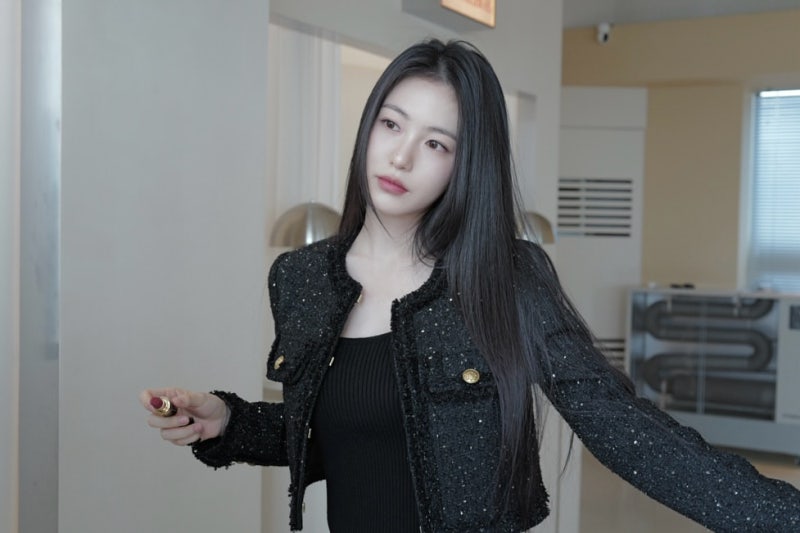
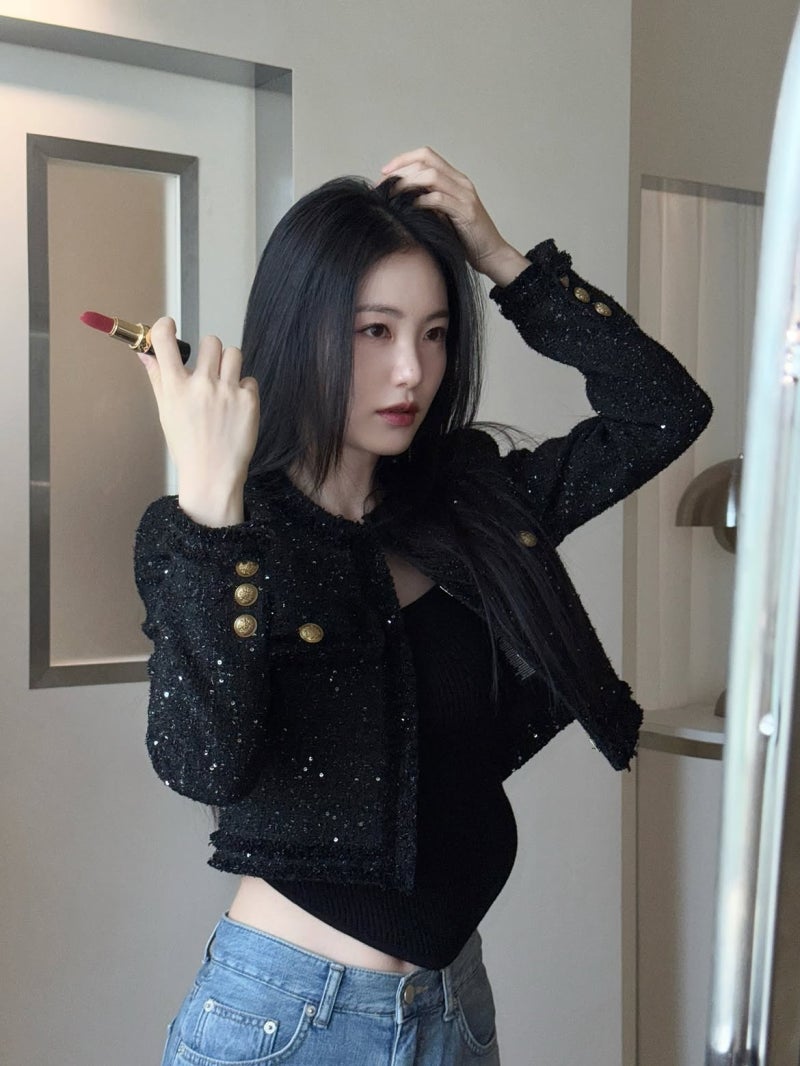
There's a story about an actress who walked into a university magazine shoot, and that single cover photo changed everything. JYP saw it, called her directly, and suddenly she was auditioning her way into acting. That's Shin Ye-eun. She started in web dramas, then played Da-hye (the eldest daughter) in Parasite—a film that became a cultural event. Later she showed up in The Glory as young Moon Dong-eun, and people started paying attention. She took on opera training for The Apothecary Diaries, then landed a lead in the ENA series Doctor Summerboyae. When you look at how she dresses, you see someone who knows the power of one statement piece surrounded by complete control. Let's pull apart three fits that prove her point.
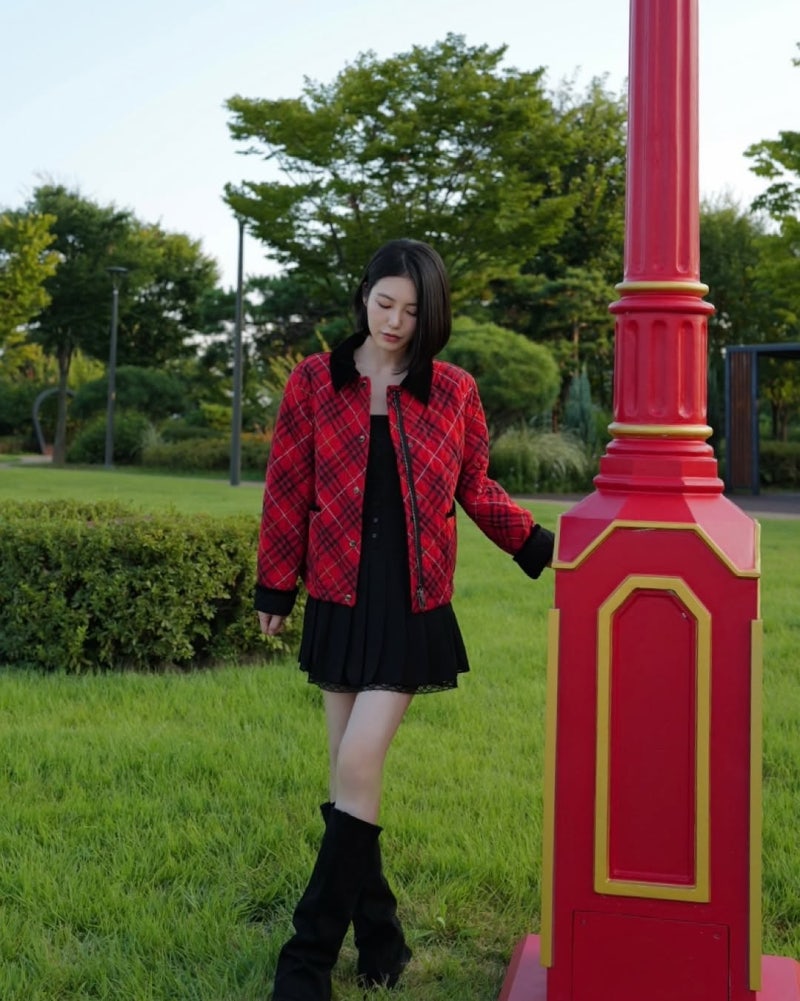
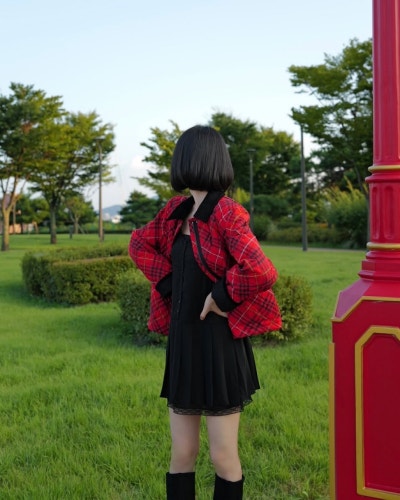
Red tartan quilted jacket with black velvet collar—the strong opening
Here's the first thing that hits: that red tartan is not messing around. Red, quilted, with a black velvet collar detail that adds weight and formality. Structured. Serious. Inside she's placed a black mini dress with a pleated hem and lace trim peeking out—which softens the hardness of the tartan just enough. Black long boots running down to close out any skin. The entire look reads crimson and black, nothing else. The outfit was built around letting that jacket become the entire conversation, and everything supporting it just got blacked out. That's the move.
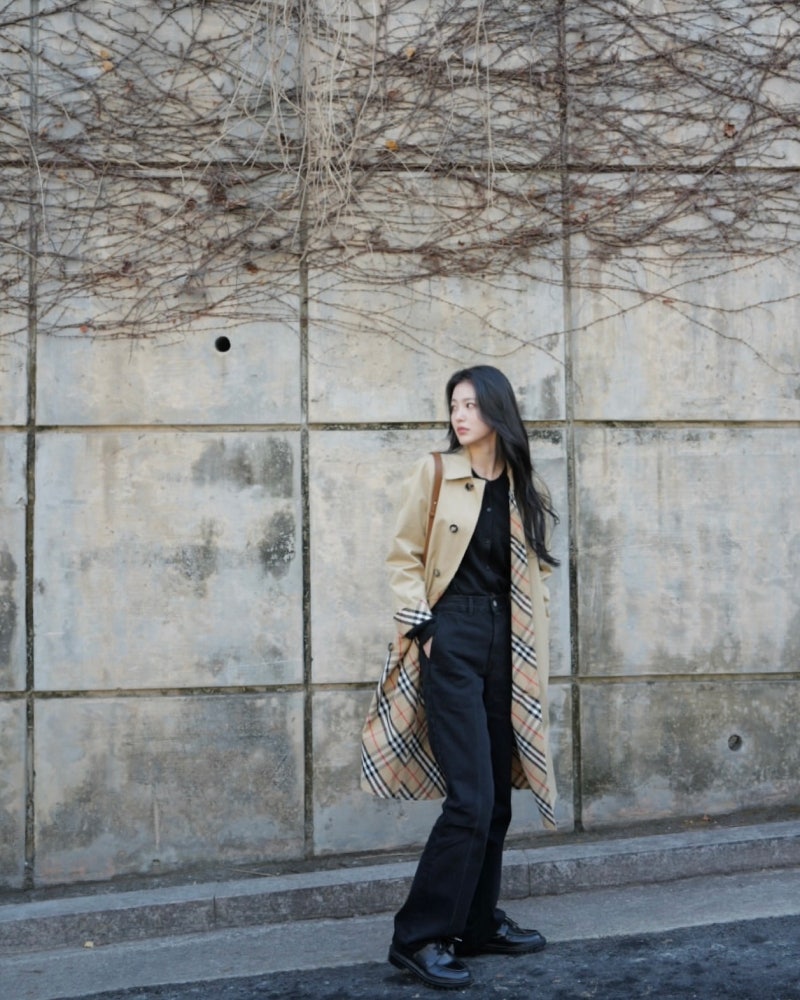
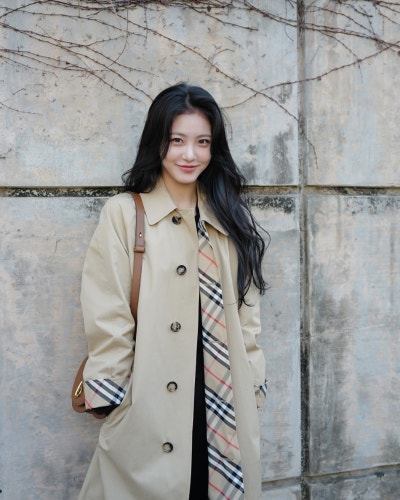
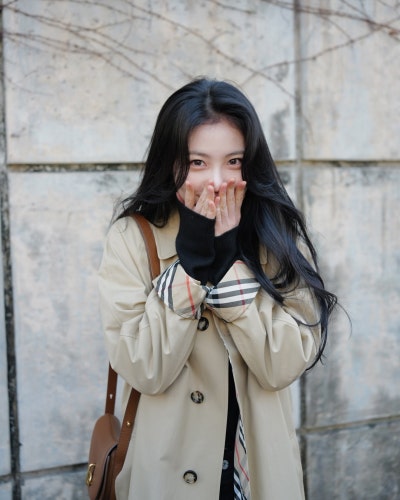
Burberry trench in camel, the classic anchor
Now shift to restraint. This is a Burberry trench—you can see the check lining moving in the breeze with each step. Camel, obviously. She kept the inside completely silent: black button-up shirt, black wide-leg trousers, black loafers. No contrast anywhere. The only other element is a brown leather saddle bag across her body and the nova check detail on the lining that you catch when she moves. That's editorial-level thinking—the luxury piece is allowed to speak because nothing else is competing. The formula is almost boring on paper, but in motion it reads like the definition of chic.
Gray oversized suit with Rimowa luggage as the real star
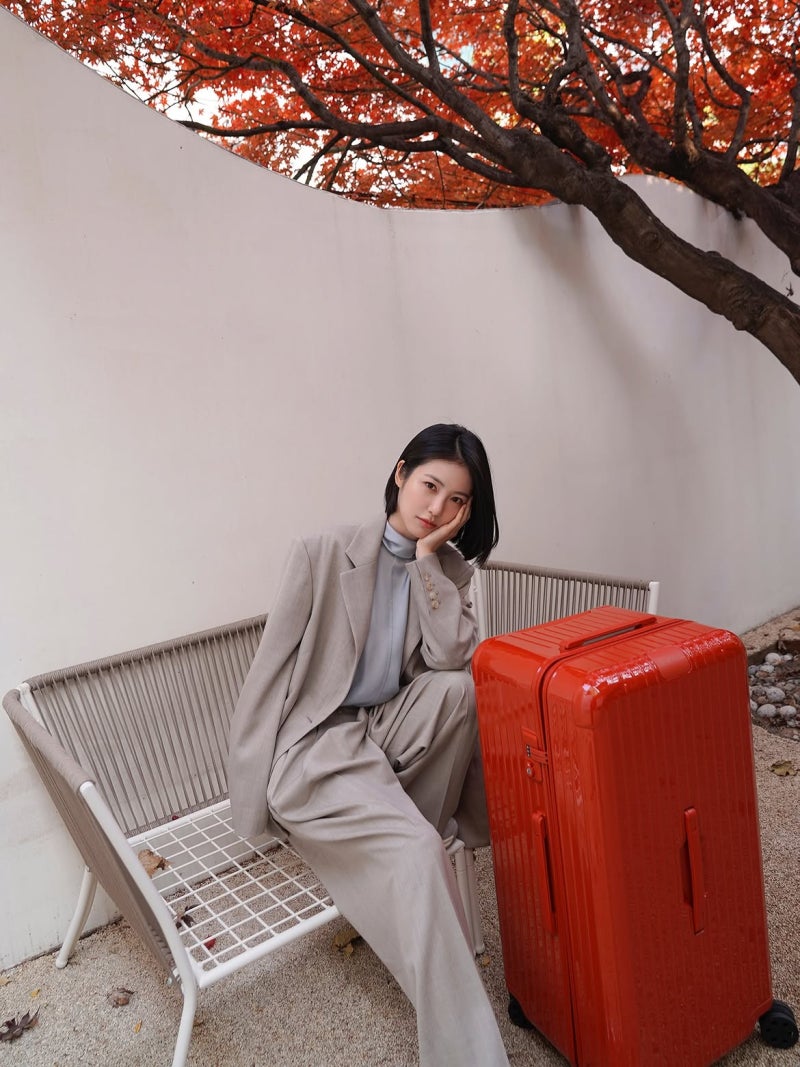
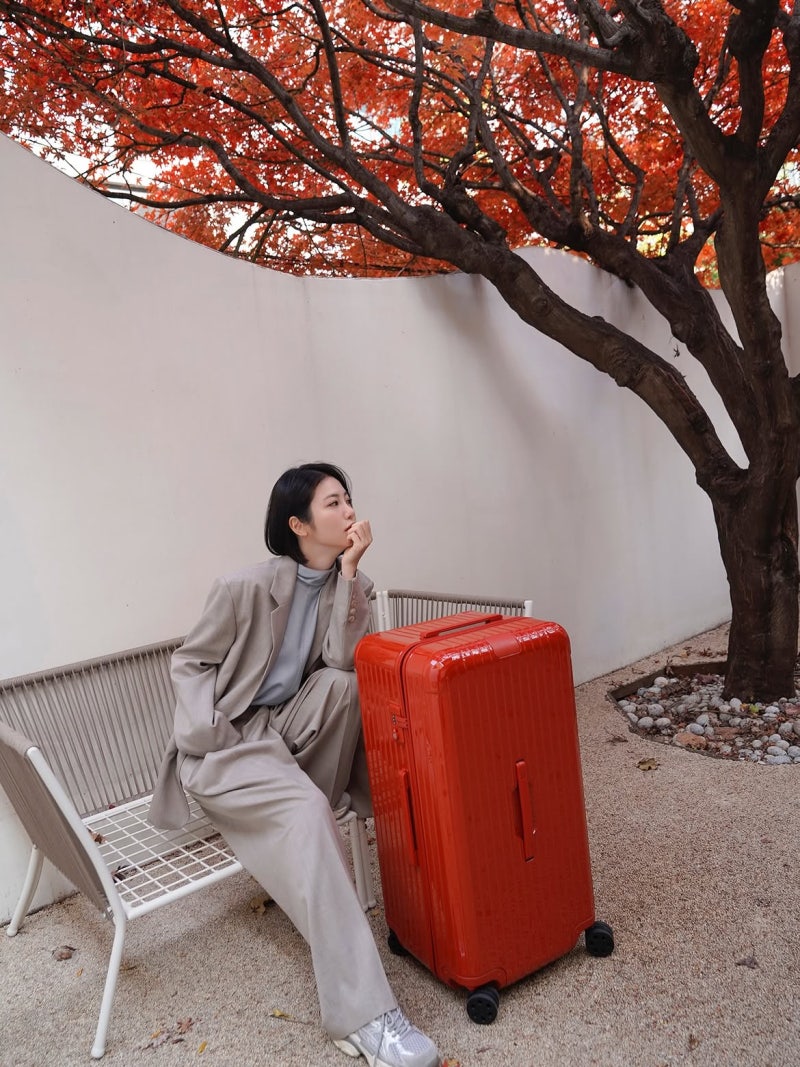
Final look: gray double-breasted jacket matched to gray wide-leg trousers, light gray turtleneck underneath, and white sneakers grounding it all. On its surface it's monochromatic and soft. But the scene-stealer is the luggage—a bright red Rimowa with those iconic groove lines cut vertically into the aluminum. She's against fall foliage and blue sky, and that red case is practically vibrating against the palette. One tone for the outfit, one shock of color for the accessory. It's the opposite of the tartan look, but the thinking is identical: control everything else so the hero piece becomes inevitable.
Step back and here's the thesis: She finds her power piece first—whether it's a statement jacket, a luxury coat, or a luggage color—then she makes every other decision in service of that. Red tartan demands all-black support. Trench deserves silence inside. Red luggage needs a neutral suit. It's a top-down decision tree. If you're learning this, choose your statement first. Then ask: what does this piece need to sing? Sometimes the answer is nothing else. Sometimes it's the opposite color. Sometimes it's just black. But make it intentional, and nothing reads uncertain.
"She finds her power piece first—whether it's a statement jacket, a luxury coat, or a luggage color—then she makes every other decision in service of that."