Accidentally Won a 30,000-Person Face Contest and Proved Style is About Subtle Power: Kim Ok-bin's Layered Genius
From Park Chan-wook masterpiece to romantic comedy breakthrough, this actress shows that real style isn't about standing out — it's about knowing which details carry the weight
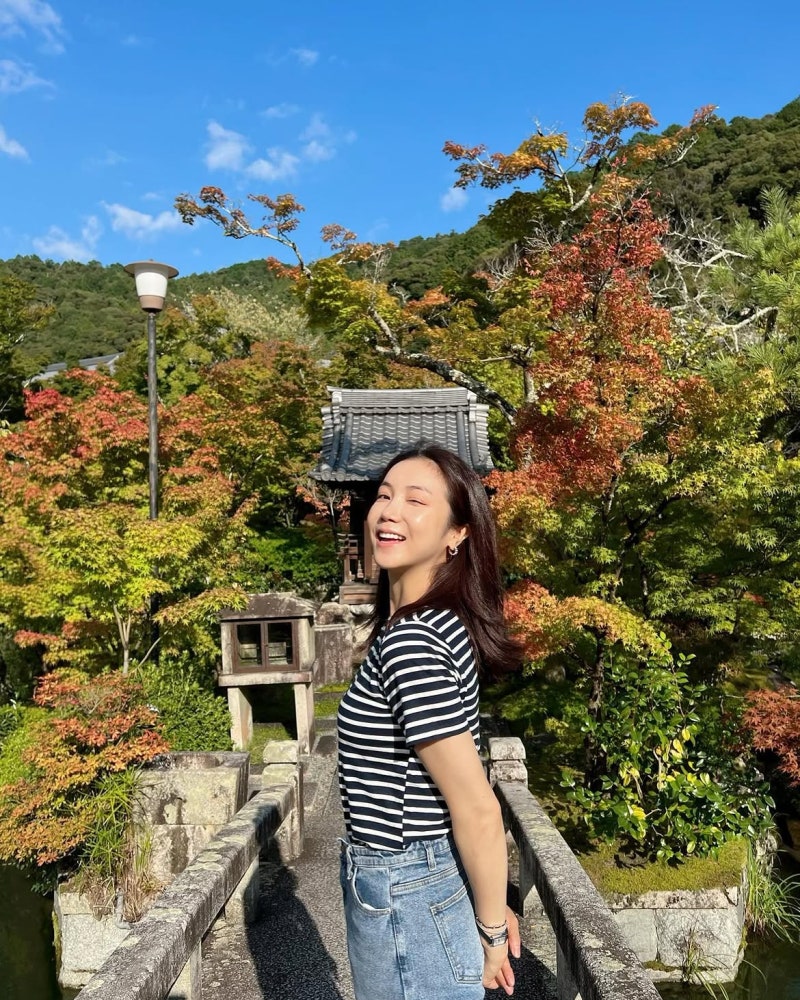
- Black-white stripe tee + light-wash denim + minimal jewelry = timeless travel ease
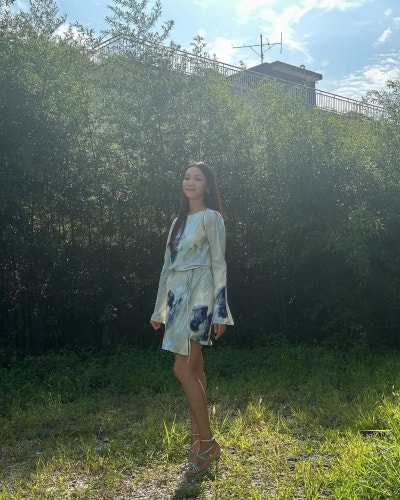
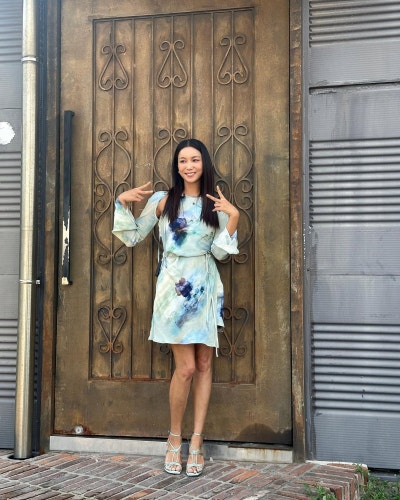
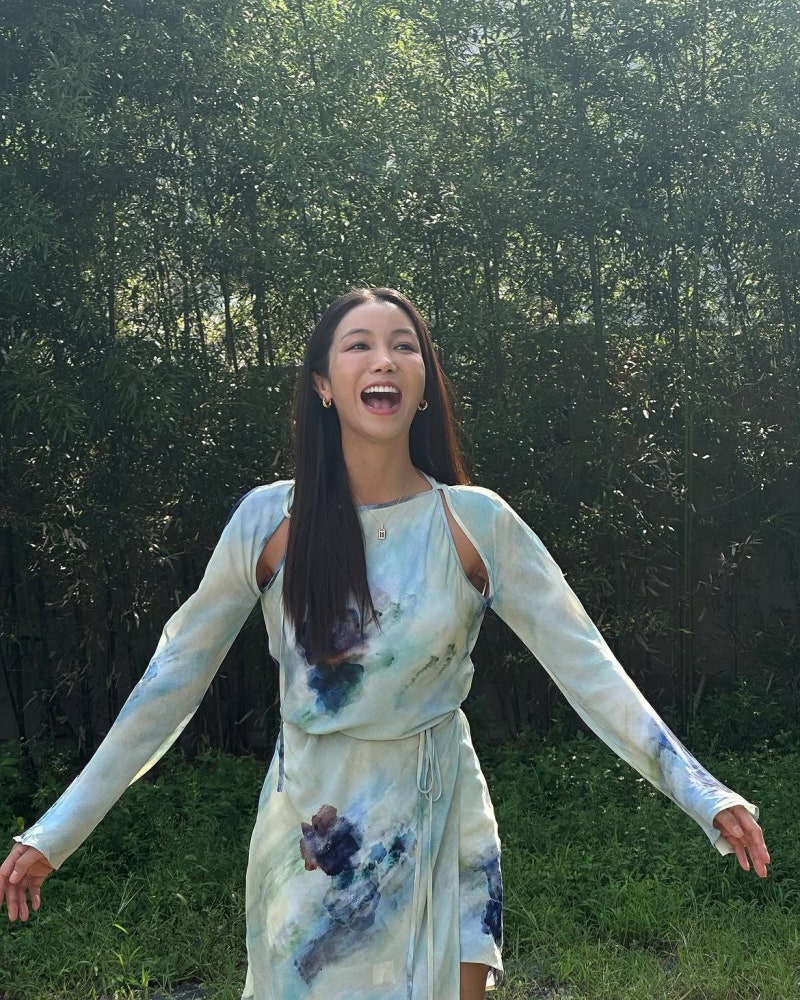
- Blue watercolor mini with bell sleeves + soft tie waist = ethereal garden perfection
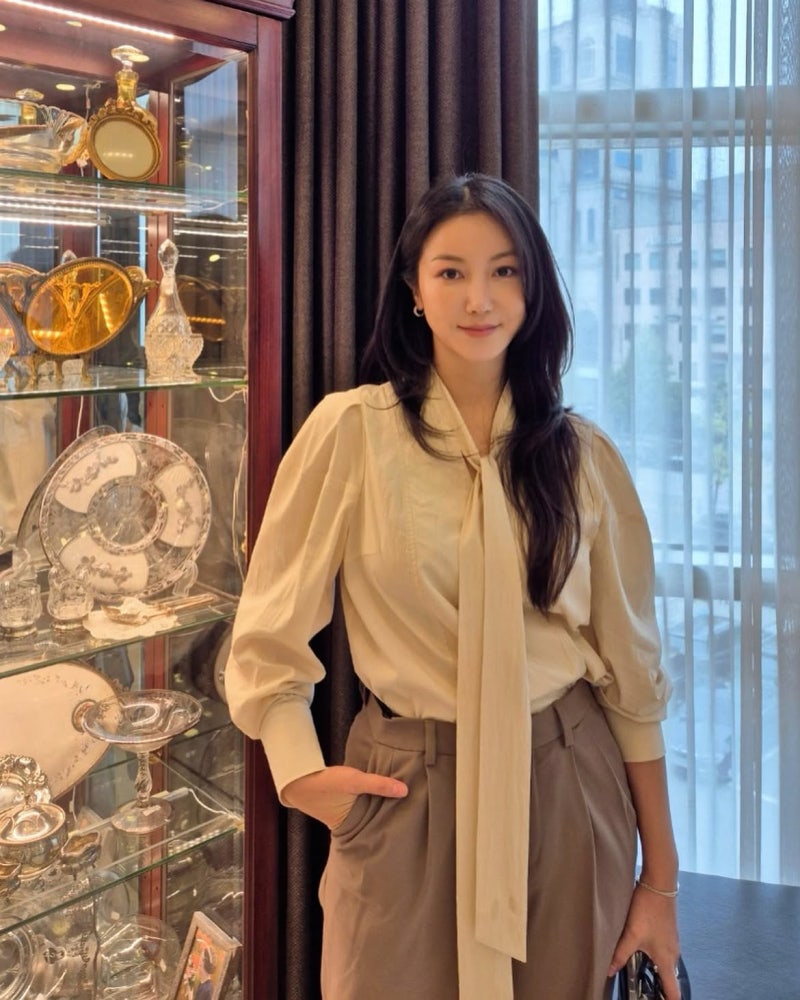
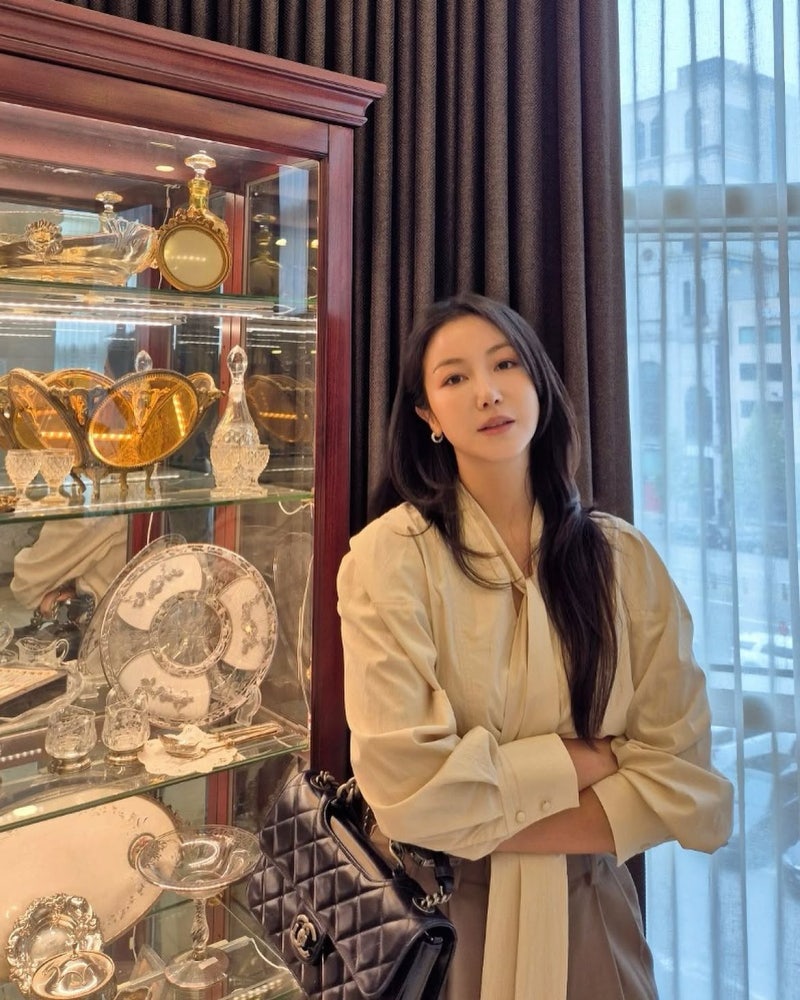
- Cream bowtie blouse + brown slacks + Chanel quilt bag = refined elegance mastery
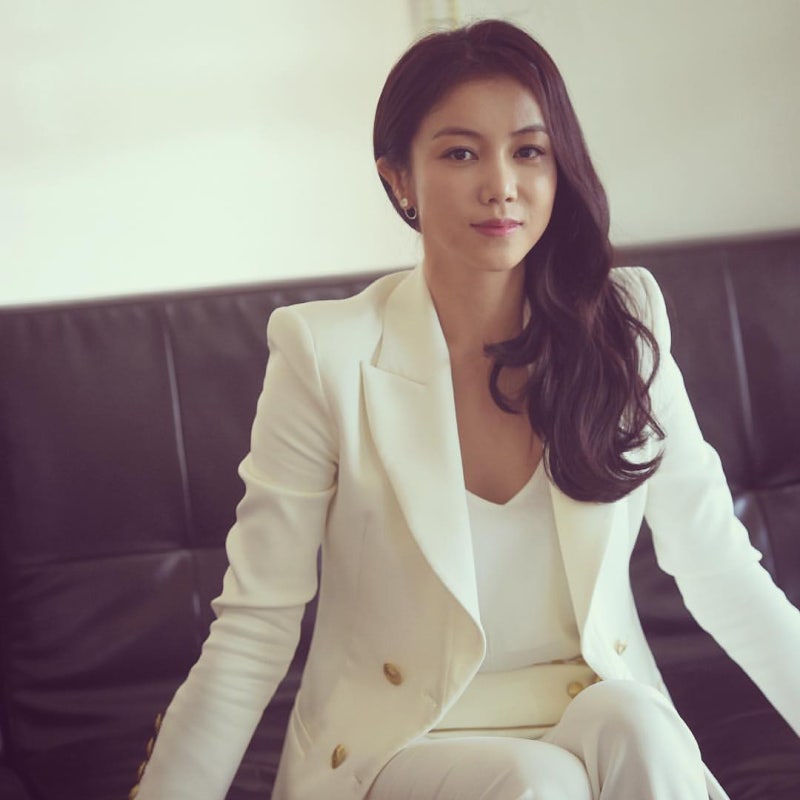
Here's a wild fact: Kim Ok-bin posted a photo kind of as a joke to some random face contest thing, and 30,000 people voted and she just... won. Like, didn't think about it, posted it casually, won by a landslide. That's not the point of this breakdown though. The point is what that photo tells us about her entire approach to everything — from acting to styling to just existing in the world. She doesn't perform. She just is.
You probably remember her from the Park Chan-wook film Thirst, where she left an absolutely scorching impression. Or maybe from Evil Female, or that intense arc in Arthdal Chronicles. She's the kind of actress who can disappear into any role but also carries this unmistakable presence. Even in romantic comedy — which she didn't do until Netflix's Love Unfolded last year, and it absolutely clicked — she brings this quiet intensity that makes everything feel more real. Oh, and she just got married to a non-celebrity, which somehow makes her feel even more grounded and real.
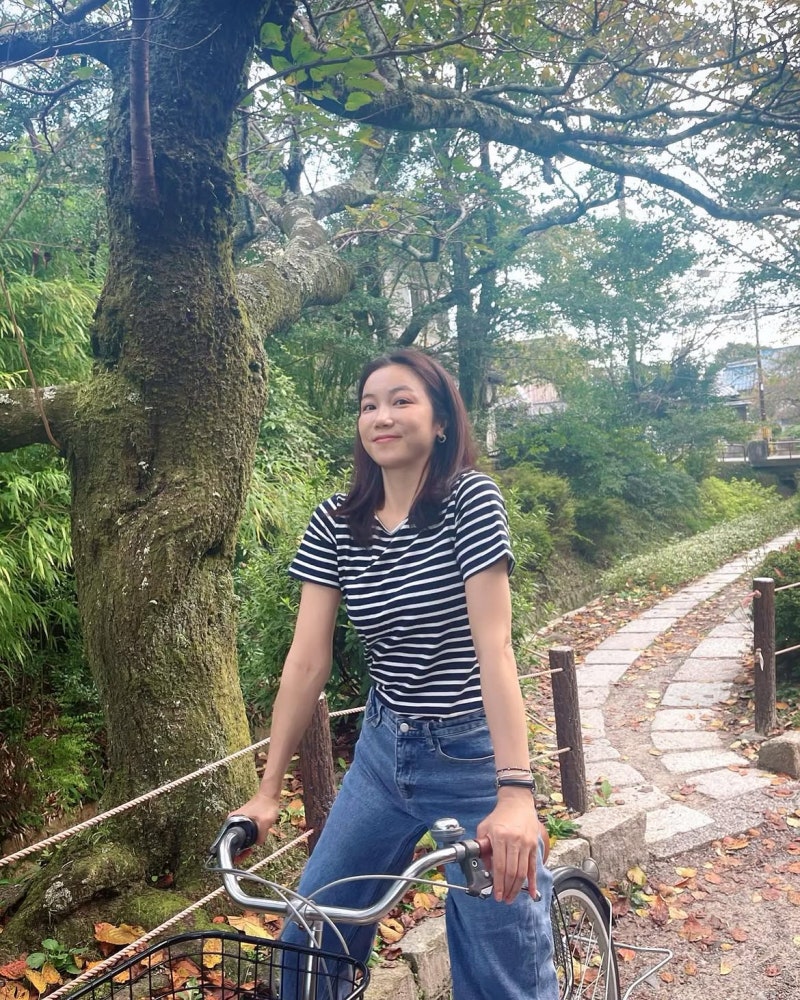
Let's start in Kyoto, where she was basically the best advertisement for understated travel dressing. Black and white horizontal stripe short-sleeve tee, light-wash wide-leg denim, sitting on a bike. This combo should be boring. It almost is. Except it's not, because the styling is about what's missing, not what's there. No jewelry except tiny thin bracelets. The empty space around her actually becomes the focal point. She's sitting in this beautiful Japanese garden setting with all these architectural elements, and instead of trying to compete with the backdrop, she just lets herself become part of it. The stripe tee is the only print-thing happening, and it's so classic it barely registers as a statement. The denim is so well-fitted and light-washed that it reads as effortless travel wear. When she's leaning against the bike, the whole thing photographs like a scene from a really good indie film — comfortable, present, not trying. That's the actual skill here. Most people look stiff in photos like this. She looks like she belongs.
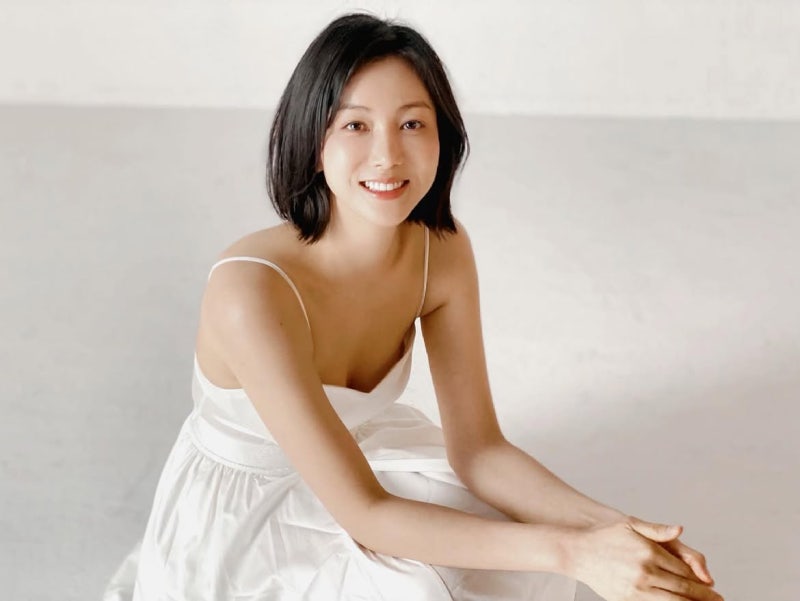
Then she went somewhere with dappled light and gardens, and the watercolor mood completely shifted. Blue watercolor print mini dress with bell sleeves and a tie at the waist — and this is where you see her actual range. The print is delicate, almost abstract, like someone took watercolor and let the pigment bleed across fabric. It's the opposite of the structured stripe, but it's still minimal in its own way. The bell sleeves add an ethereal quality without being over-the-top. The waist tie actually pulls the silhouette in, giving it shape despite the soft fabric mood. She poses in backlit situations where the light just glows through the fabric, and in front of dark gates where the watercolor print reads crisp and clear. Same dress, two totally different vibes from the light and backdrop alone. This is the outfit for when you want to feel like you stepped out of a dream — soft and feminine and completely in control of it.
But the outfit that really shows her whole philosophy? Cream-tone beige bowtie blouse with an actual structured tie detail hanging from the collar, brown tailored slacks, black quilted chain bag that's unmistakably Chanel (we're talking caviar skin, gold chain, the real deal). She's standing in front of antique furniture and period pieces, and suddenly she's not just dressed — she's composed. That bowtie detail is where the whole thing lives. It's not precious or fussy, it's just this elegant focal point that says you don't need much to look completely put-together. The chain bag is the only other real statement, and it's the kind of statement that says I've thought about this and I know what I'm doing. When she's in that space, everything reads as refined and intentional. Her shoulders are set differently. She looks different. And it's purely because she's leaning into elegance instead of comfort.
Okay, so here's the pattern in Kim Ok-bin's actual approach: she basically never commits fully to one mood. She doesn't have a signature look in the way we usually talk about signature looks. What she has is this shape-shifting ability to understand what a moment calls for and then edit absolutely ruthlessly to just that. In Kyoto, it's minimal travel ease. In gardens, it's ethereal softness. In antique settings, it's refined elegance. But the throughline is never about being fancy or trying hard. It's about picking one key element — the stripe, the watercolor print, the bowtie — and letting everything else step back and support it.
If you want to steal this approach: stop trying to have one signature look. Instead, develop one skill: the ability to choose one item that's going to carry the whole outfit's energy, and then make every other choice a form of edit, not addition. You wearing a striped tee? Okay, then socks, loafers, and literally nothing else. Wearing a watercolor mini? Then bells sleeves and a waist tie and that's the poetry right there. Wearing a bowtie blouse? Then tailored slacks and one great bag and you're done. That's Kim Ok-bin's whole thing. She's not showing you complexity. She's showing you clarity.
"She doesn't have a signature look. What she has is the ability to understand what a moment calls for and edit absolutely ruthlessly to just that."