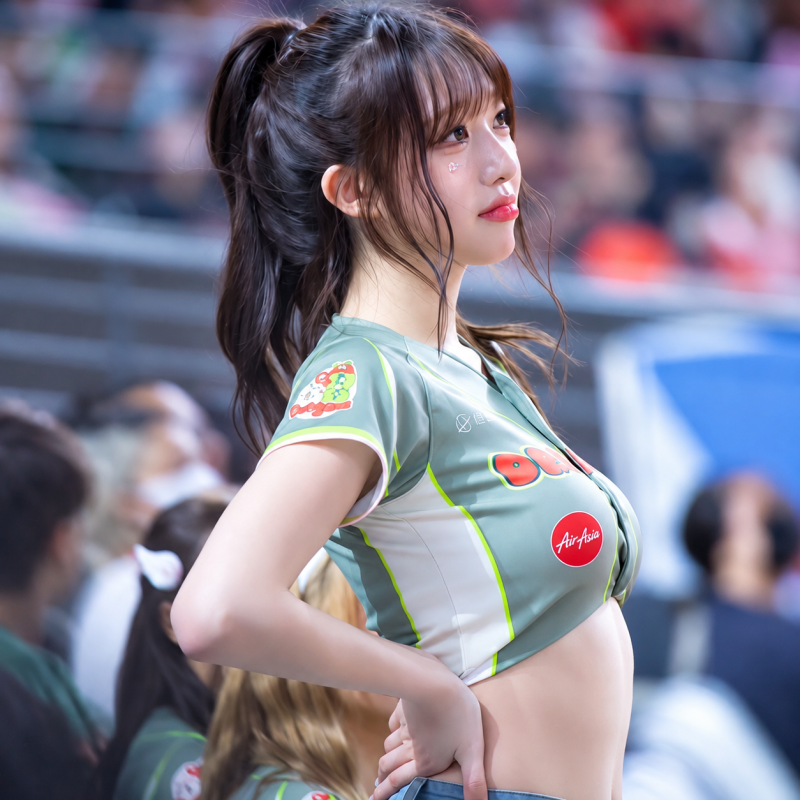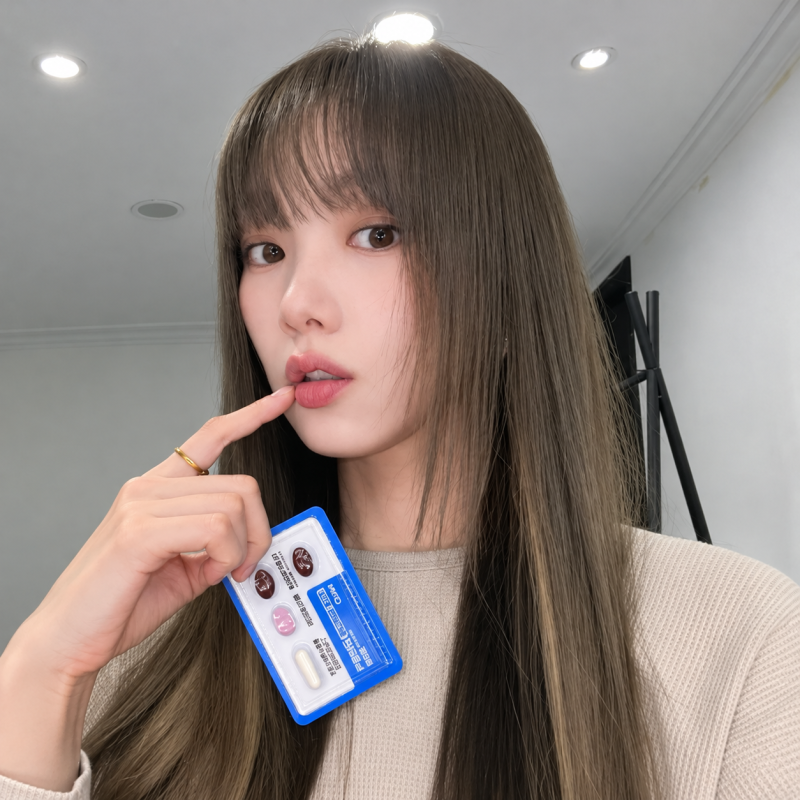
From K-drama to Running Man MVP: How Kanghan-na Mastered the Effortless Check Shirt
The actress who accidentally became variety show royalty shares four looks that prove casual doesn't mean careless
- Kanghan-na balances structured pieces like black suits with loose, oversized fits
- She layers casual check shirts with satin slip dresses for unexpected contrast
- Texture and proportion, not logos, drive her entire styling philosophy
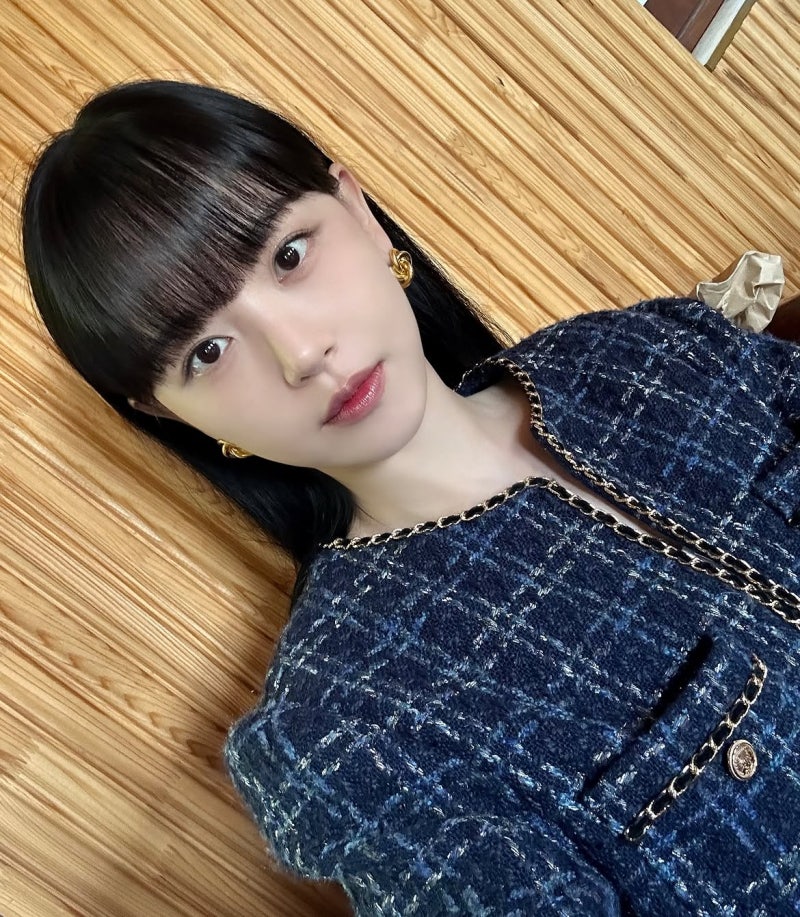
Here's a fun fact about Korean entertainment: there's apparently a quota for actresses on Running Man, and Kanghan-na has somehow claimed it all by herself. The woman started classical ballet at five, pivoted to acting in middle school after hitting her growth ceiling, and has quietly built one of those careers that makes you forget she started from scratch. She broke through with Miss Korea as the villain, did those memorable stints in Something About 1% and Startup, nabbed an acting award for Scarlet Heart, and recently proved she can hold her own against romance on Netflix with her role as a love catalyst.
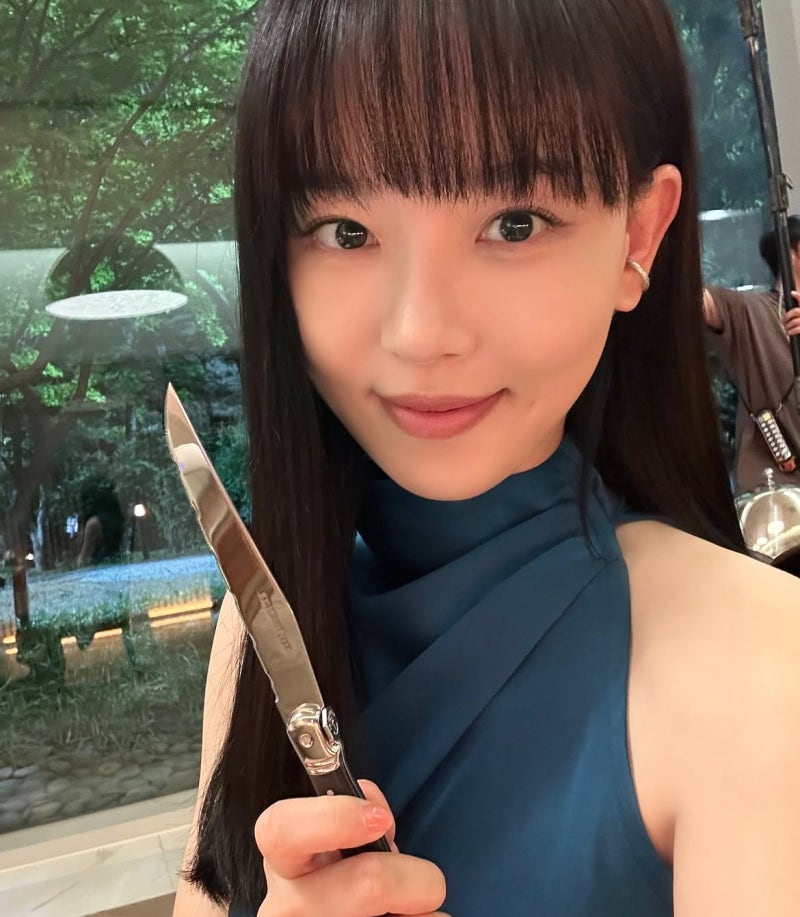
But the real story? It's not the credits. It's how she moves through the world when nobody's watching—or rather, when everyone is, but she's not performing. Let's break down how she actually gets dressed.
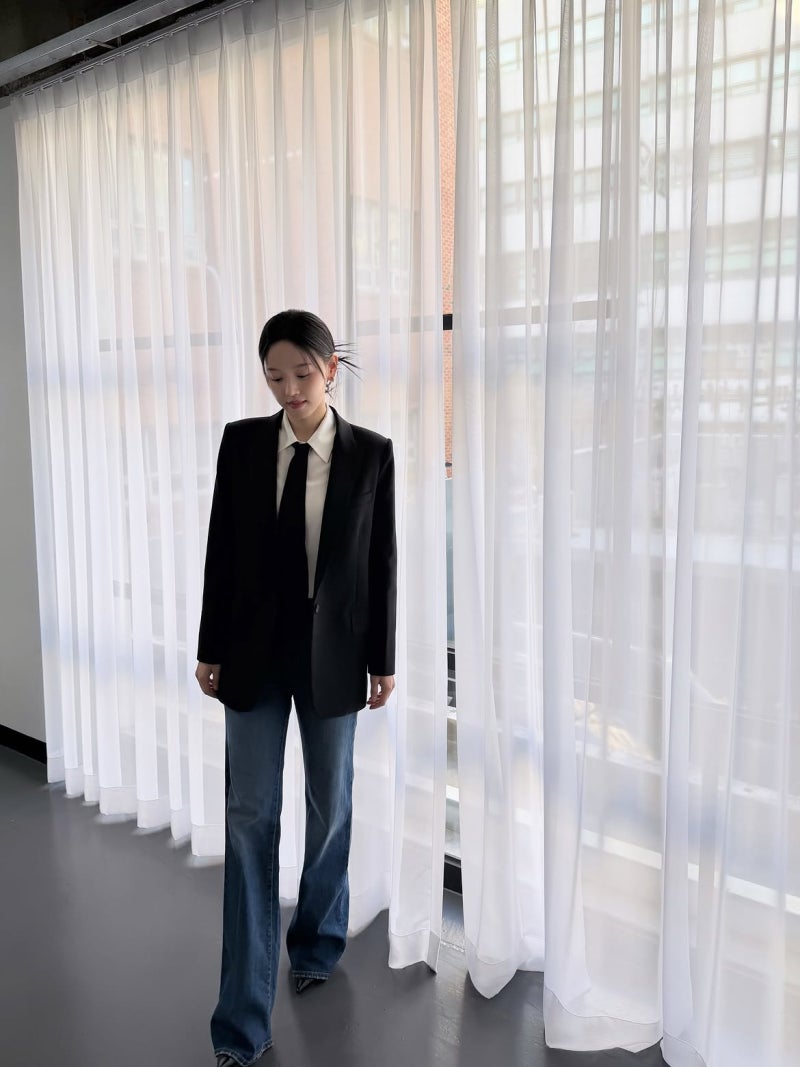
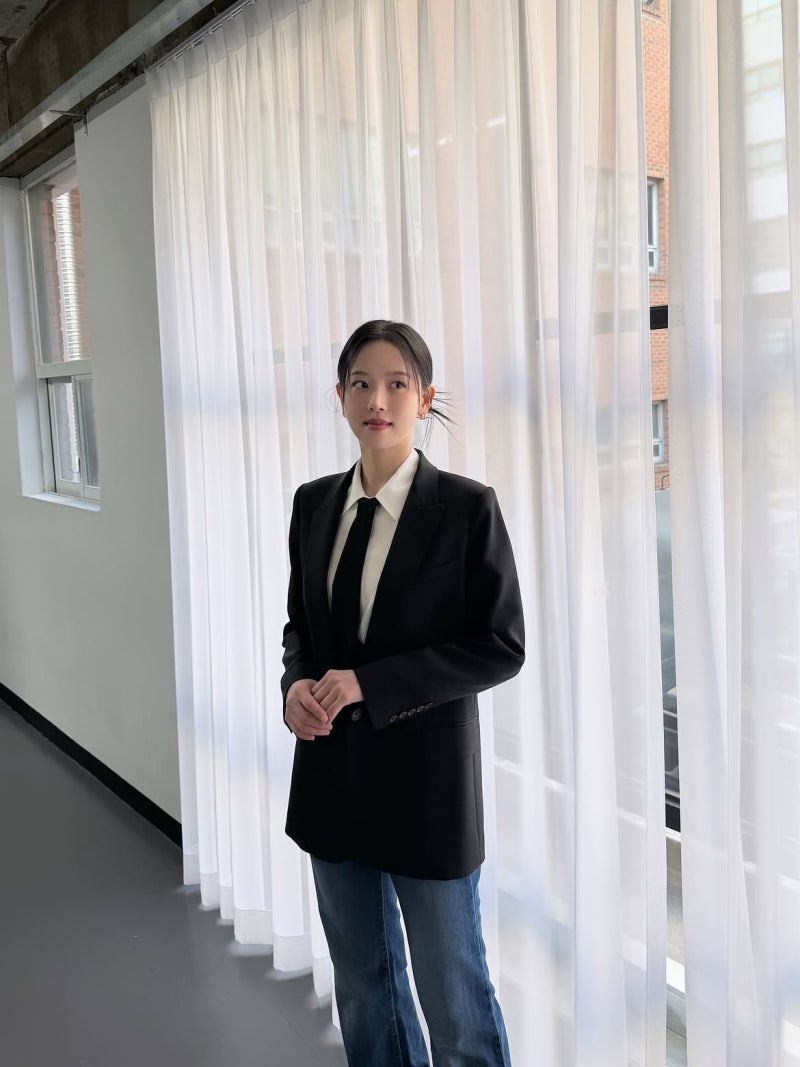
First look: The Boardroom Power Move. Standing in front of this translucent curtain, she's serving full black suit energy—oversized black blazer, crisp white shirt underneath, and a necktie that actually looks intentional. The magic is in how she's left that tie loose enough to breathe. It could've read as stiff or corporate, but the generous blazer cut softens everything. Her shoulders drop just past the frame; there's room to move. Pair it with blue boot-cut denim and you've got this perfect balance between formatted and free. The way she's swept her hair back shows she knew exactly what silhouette she was selling—long, lean, confident. That's not accidental.
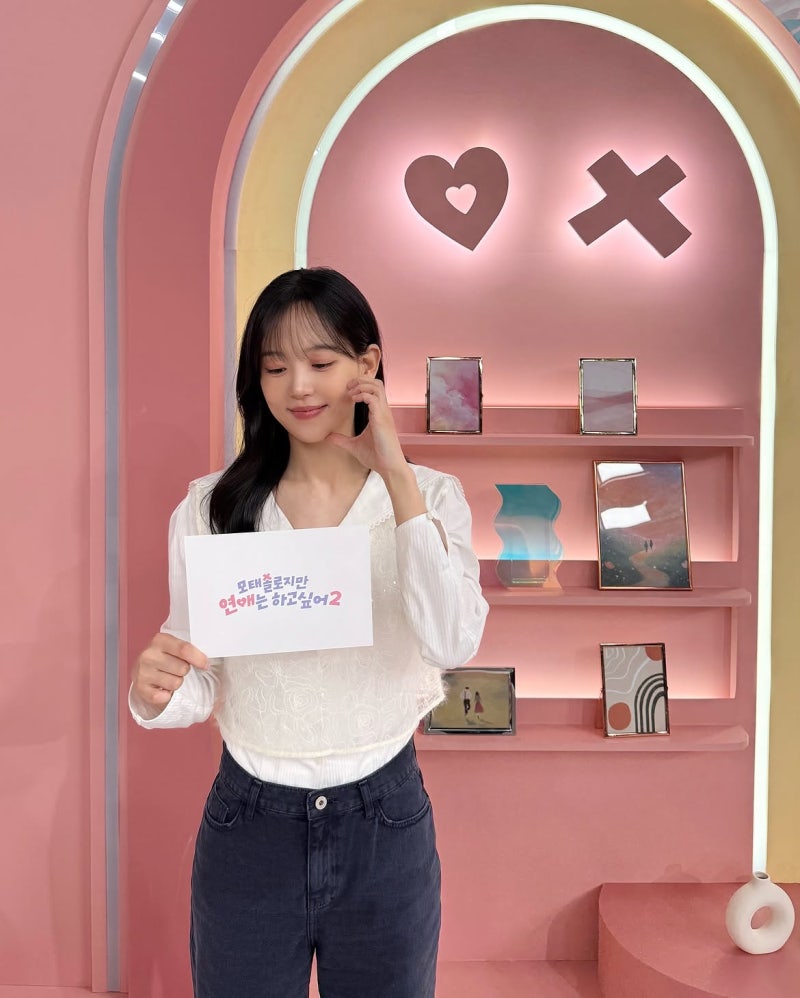
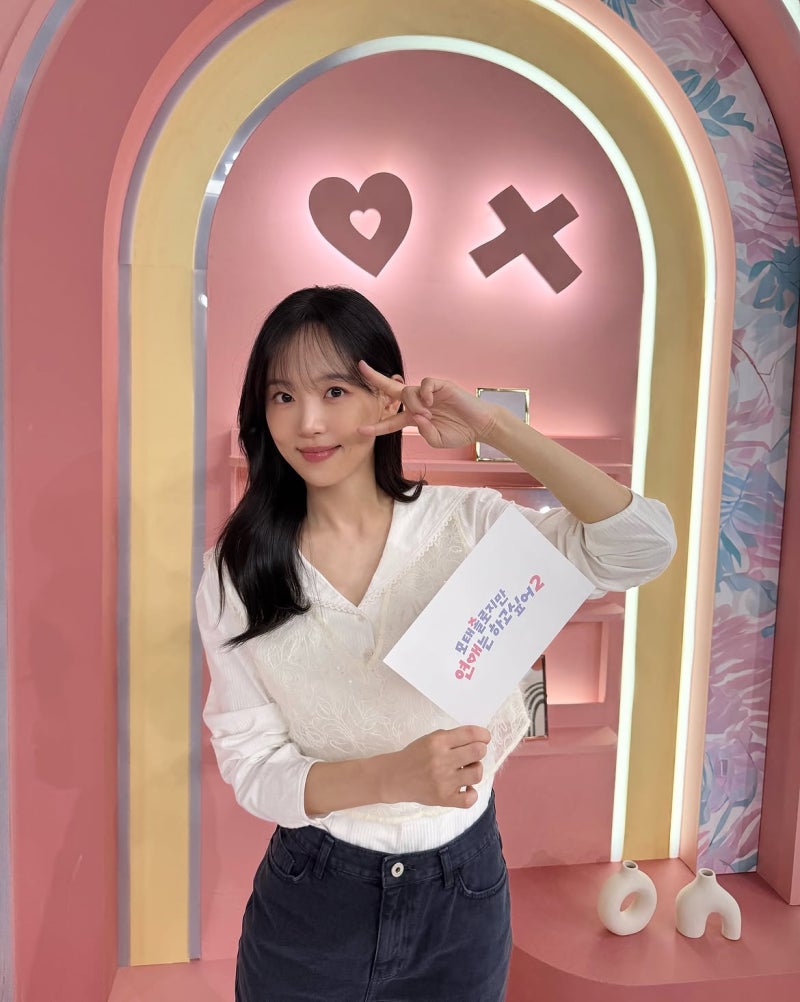
Second look: The Set Visit Soft Moment. A white lace blouse where the lace actually matters—the texture isn't hidden under layers of tulle or pretense. It's just there, romantic and straightforward, with subtle ruffles doing the heavy lifting on femininity. Paired with navy trousers in clean lines, it reads as exactly what it is: someone who showed up to work looking put-together but not trying. The way her hair falls into a natural wave? It's the kind of detail that makes lace blouses work instead of look fussy. No statement jewelry. No need.
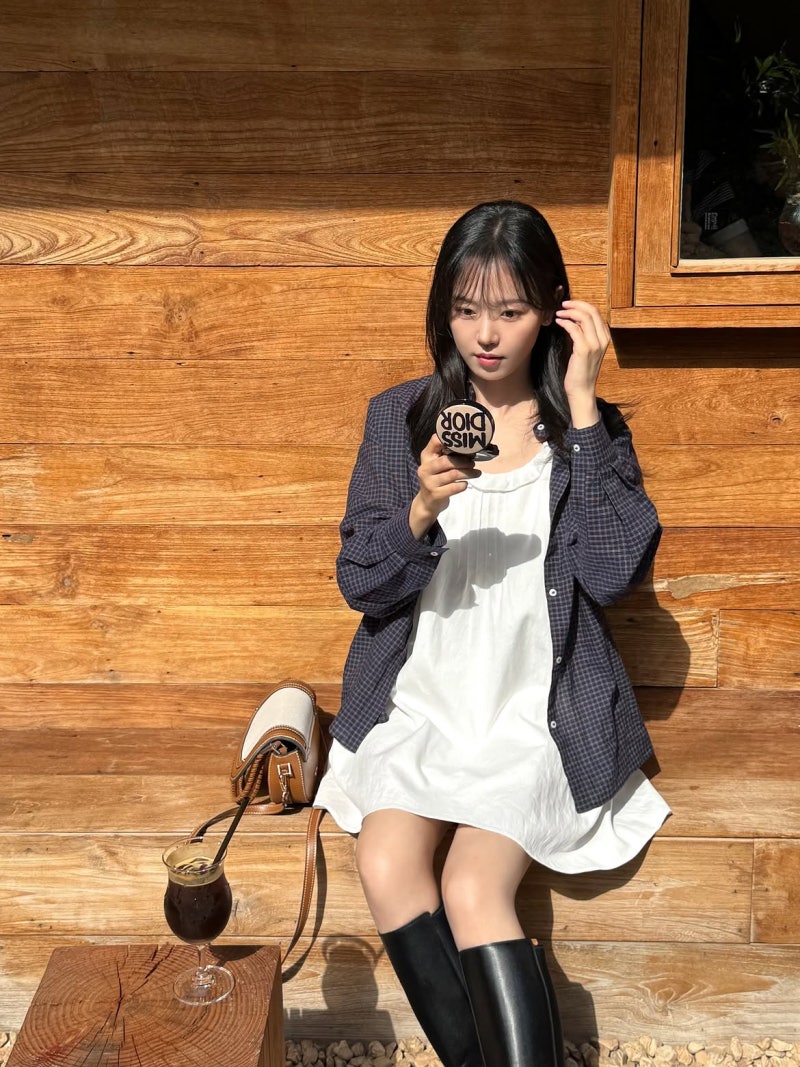
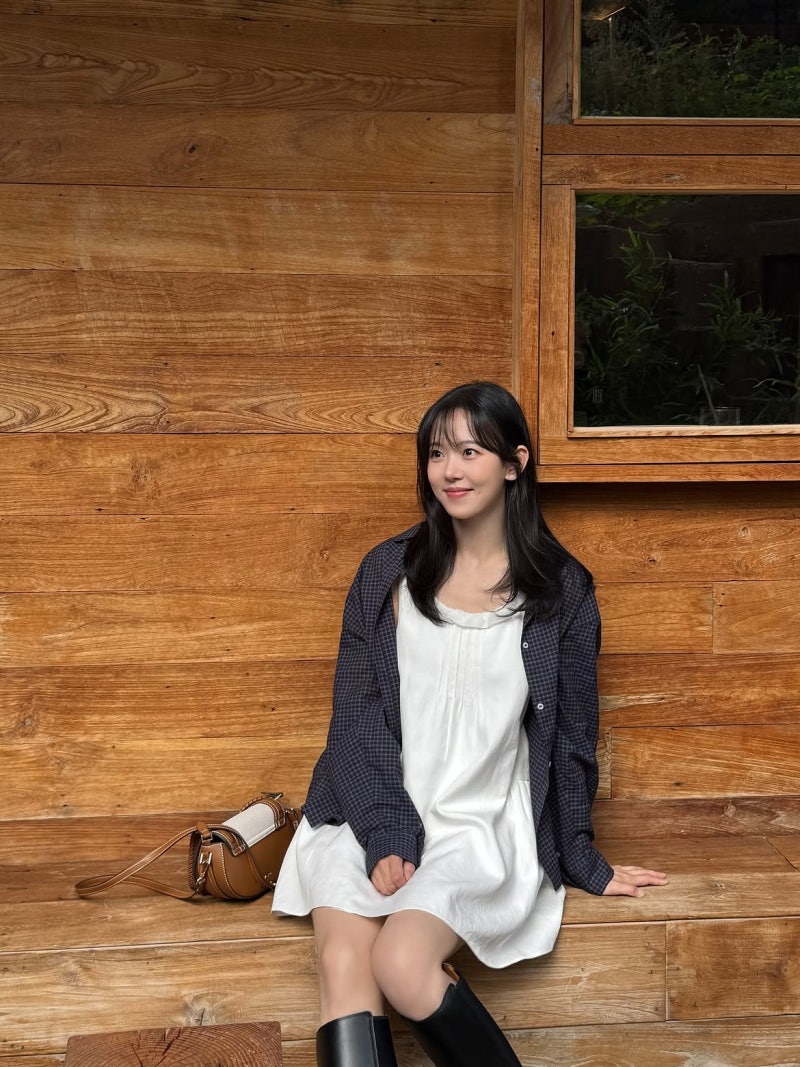
Third look—and this is where it gets interesting—takes the navy check shirt, the kind of thing you'd grab for a farmer's market run or to throw over a sundress, and she's layered it over a white slip dress with pintuck details. The slip underneath has that subtle satin finish, so it catches light in ways that pure cotton never could. Against the casual check pattern, it creates this unexpected contrast. She's added a canvas-and-brown-leather cross-body bag with what looks like handmade crochet detailing—the kind of piece that whispers rather than shouts which label it is. Black boots to elongate the leg. And that natural backdrop? The wooden tones reinforce the whole autumnal ease of it.
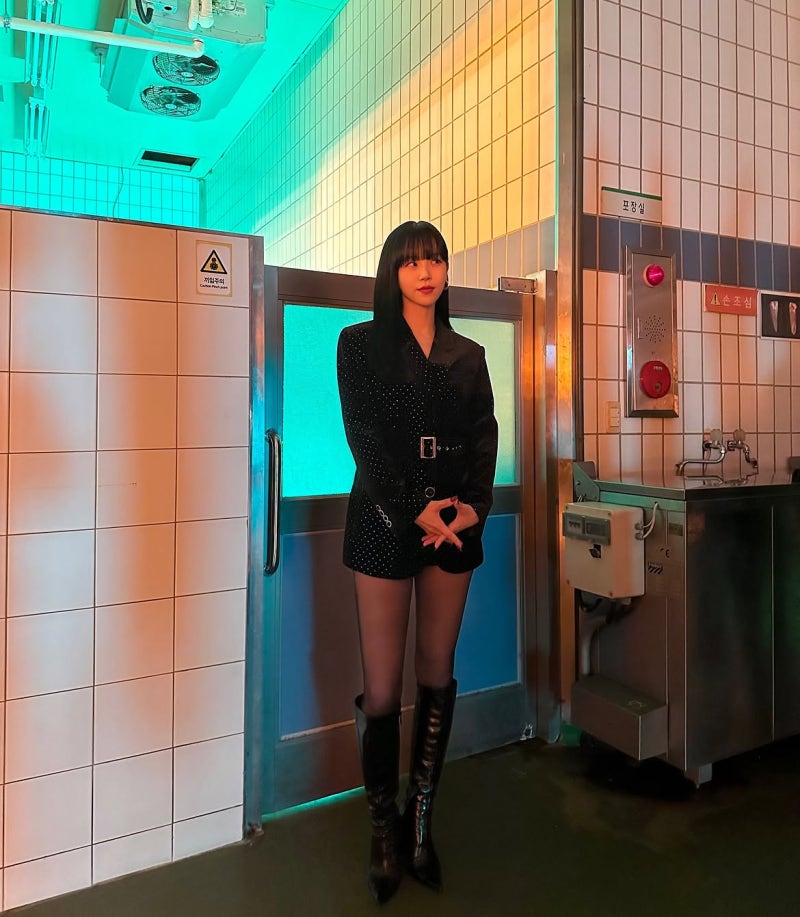
What's the connective thread? She uses fabric and proportion to do the talking. When something could look stiff—a tie, a structured suit—she undoes one button, pulls one thread, leaves one thing deliberately loose. When something could read as casual—a check shirt, cargo vibes—she threads in something with sheen or texture to prove she made a choice. The accessories aren't there to compete; they're there to confirm she thought it through. If you're trying to add shape to your own daily rotation, this is the formula: pick one item that's inherently soft, one that's structurally tight, and let them negotiate with each other.
"When something could look stiff, she undoes one button, pulls one thread, leaves one thing deliberately loose. When something could read as casual, she threads in something with sheen to prove she made a choice."