Southeast Asia's Number-One K-Celebrity: Song Ji-hyo's Smart-Casual to All-White Edit
The Running Man ace went from being casting-director material to basically owning an entire region—here's how she actually dresses when the cameras aren't rolling.
- Striped tee with matching-color bag proves accent unity beats pattern chaos
- Pearl necklace on a street-casual outfit creates that missing intellectual edge
- All-white dress with cut-outs proves monochrome can feel editorial, not sterile
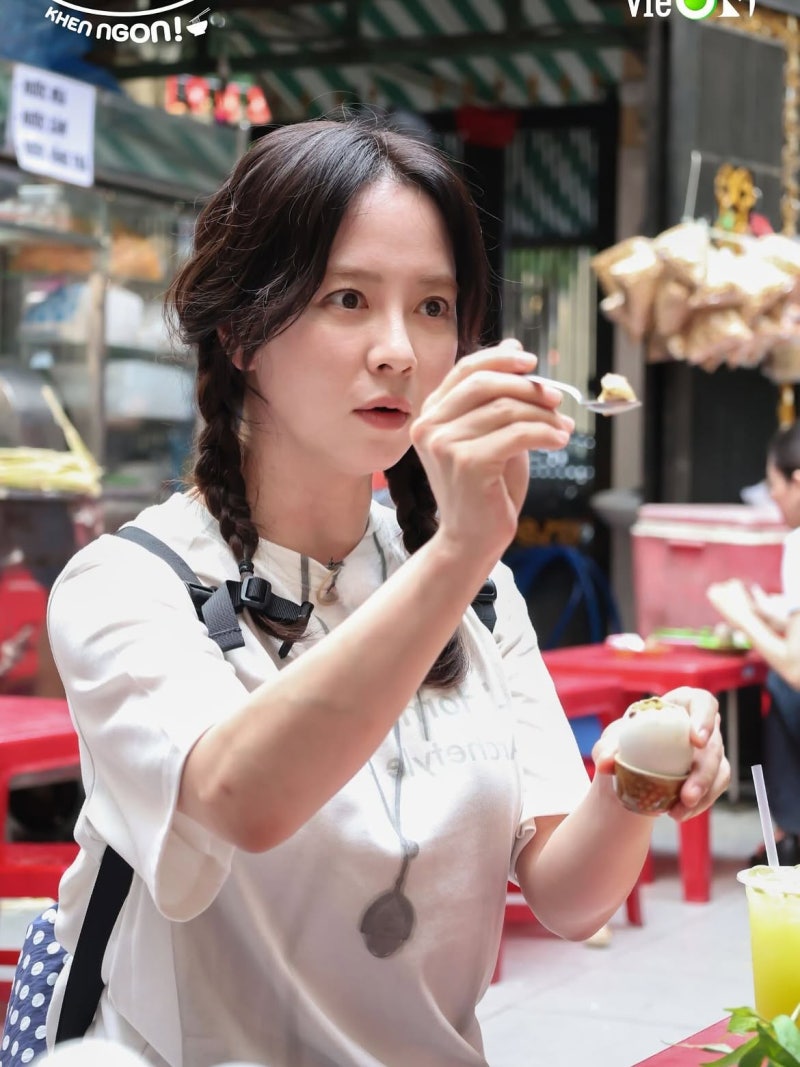
Number one most-wanted-to-meet Korean celebrity across nine Southeast Asian countries. That's Song Ji-hyo. It's kind of wild that one person could become basically iconic across an entire region because of a single television show, but that's what happened. Her popularity isn't just domestic—it's genuinely regional.
She started as a magazine model back in 2001, was already doing commercial work, then pivoted to acting and built a film base. 2006—Tazza, debut in the lead's romantic interest role, and people immediately understood her appeal. Melodramas, independent films, hit projects. But then 2010 changed everything: Running Man. She joined the cast as an actress, and by episode two, she'd basically become the ace of the entire show. Sheer game sense, zero vanity, just pure competitive energy. The contrast between her on-screen persona and her actual persona became iconic. That's the power she carries now. And beyond acting, she's actually running a business—an innerwear brand called NINA SONG that she owns outright.
When you're known for being effortlessly excellent, what does your personal style actually look like?
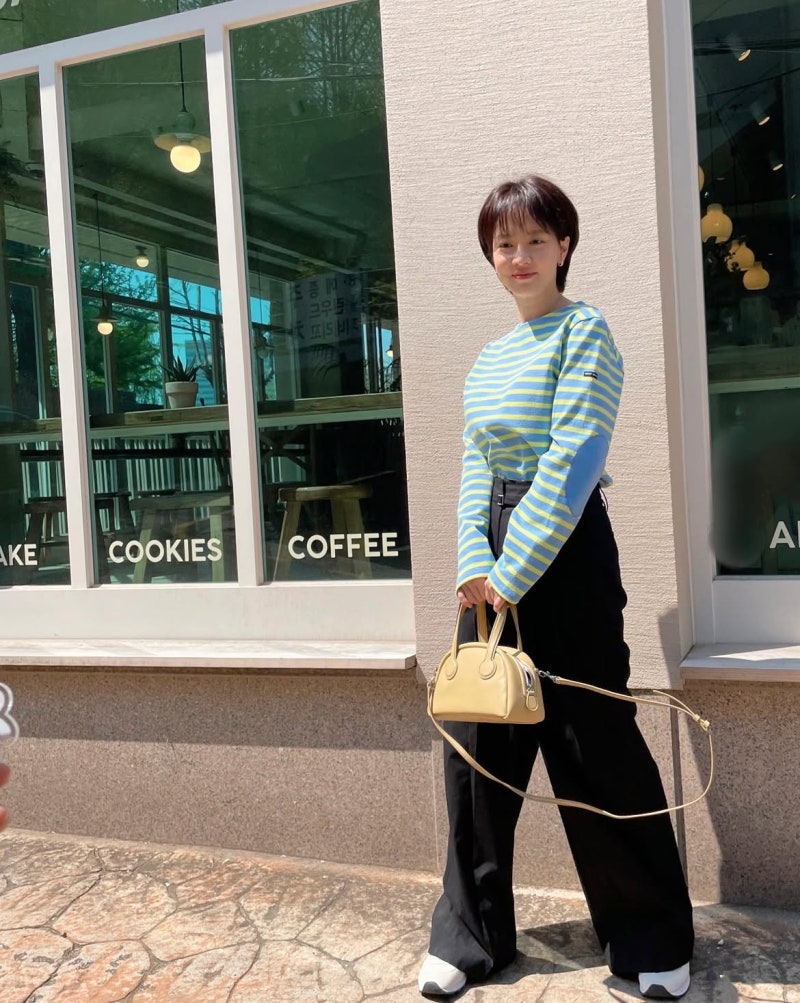
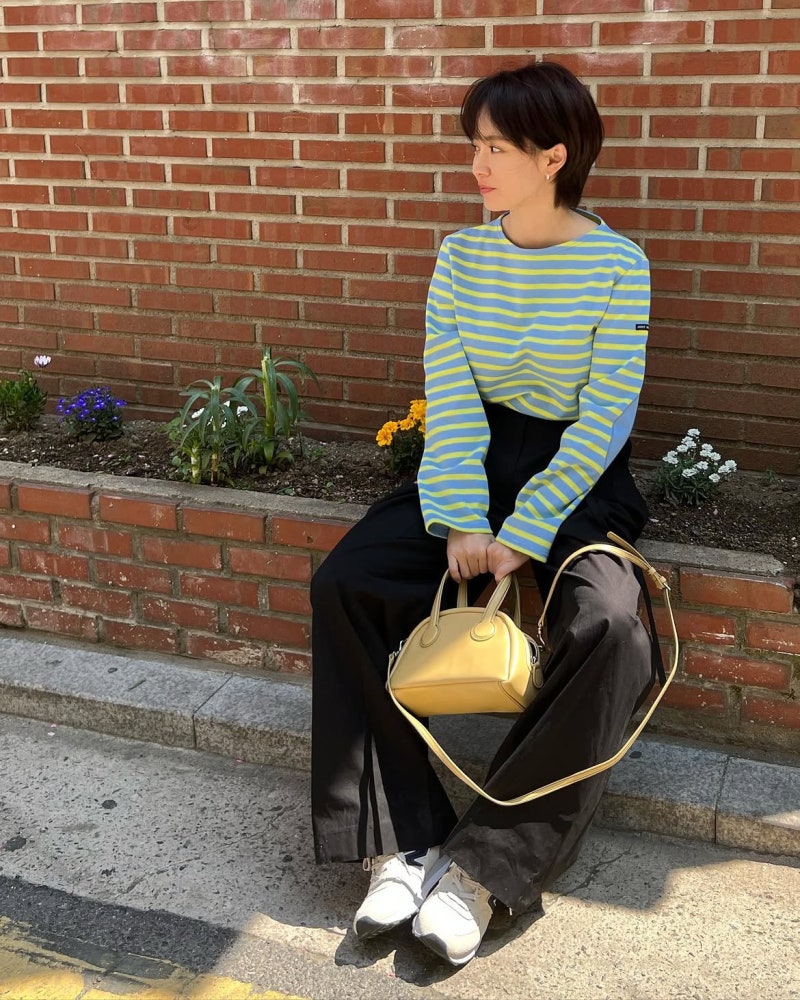
Start here: blue-and-yellow striped long-sleeve tee. Top is bright, carries the color energy. The yellow from the stripes matches the pastel yellow mini Boston bag she's carrying, so you get unity without uniformity. The bottom is black wide-leg pants—completely neutral, completely grounding. White sneakers finish it off. You're reading maybe four pieces and they're all doing exactly one job each. Pastel yellow reads fresh, spring street energy. The stripes could feel young or beach-casual, but the black pants and oversized fit keep it rooted in adulthood. That's restraint.
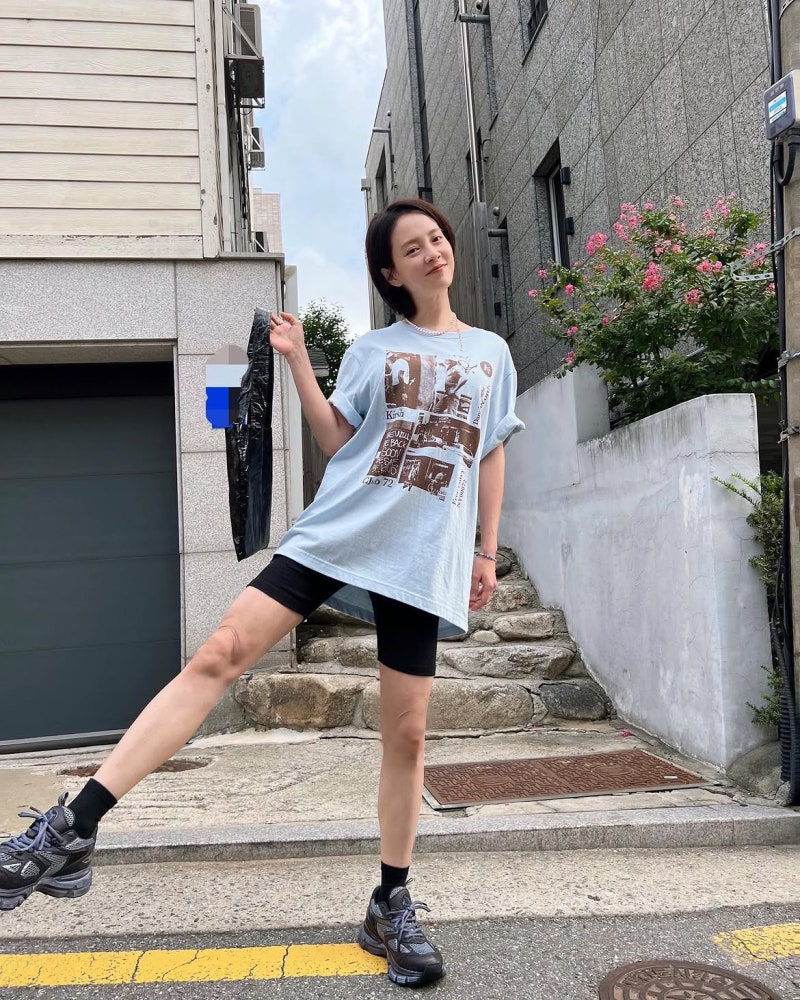
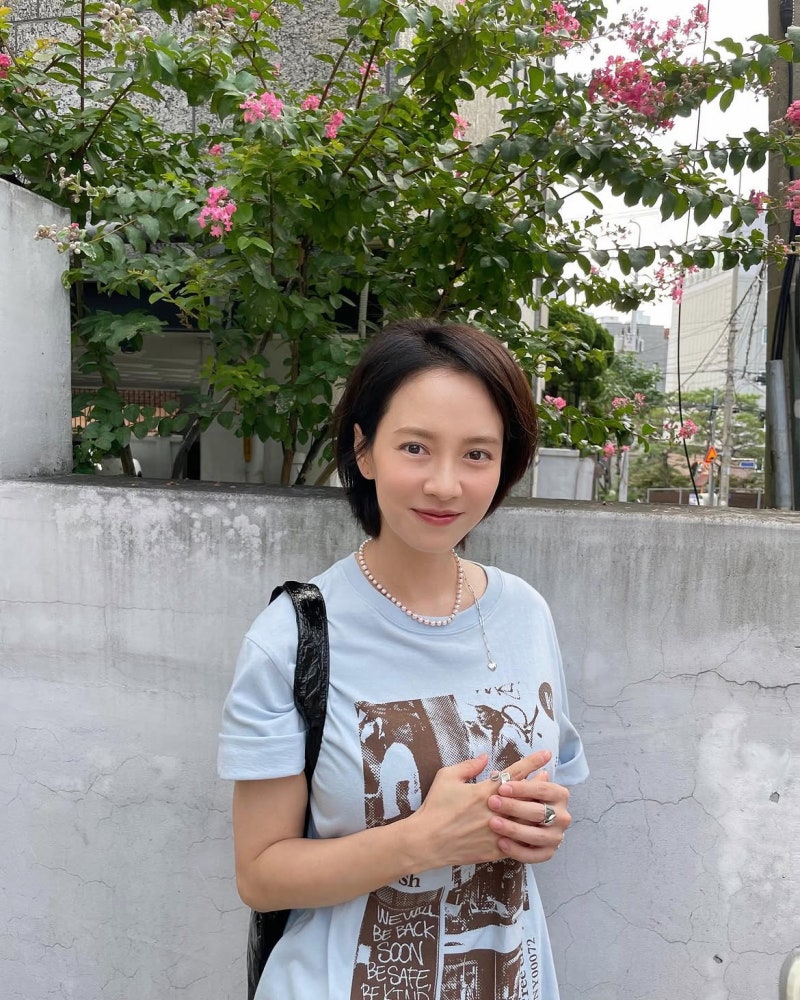
Then summer energy: pale sky-blue oversized graphic tee, black biker shorts fitted to the leg, black chunky sneakers, black socks. The volume on top means the tight shorts don't read as bodycon—it's actually balance. And here's the detail that saves it: pearl necklace. A classic, minimal pearl at the neck of a streetwear outfit sounds like it shouldn't work, but it creates this tiny moment of contrast that makes the whole thing feel intentional instead of like you just rolled out of bed in gym clothes. That's the difference between effortless and trying-and-appearing-effortless. Black mini crossbody finishes it off. It's a casual frame that's actually been thought through at every single point.
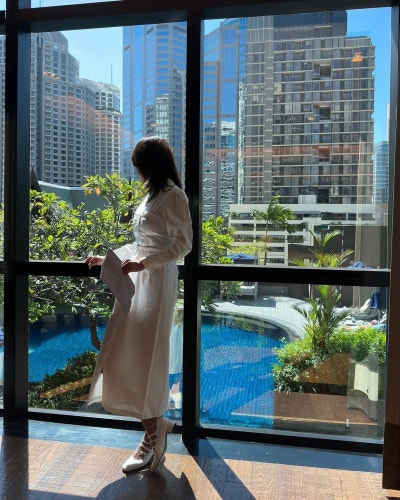
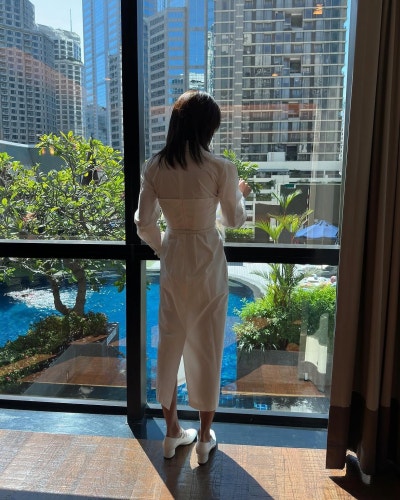
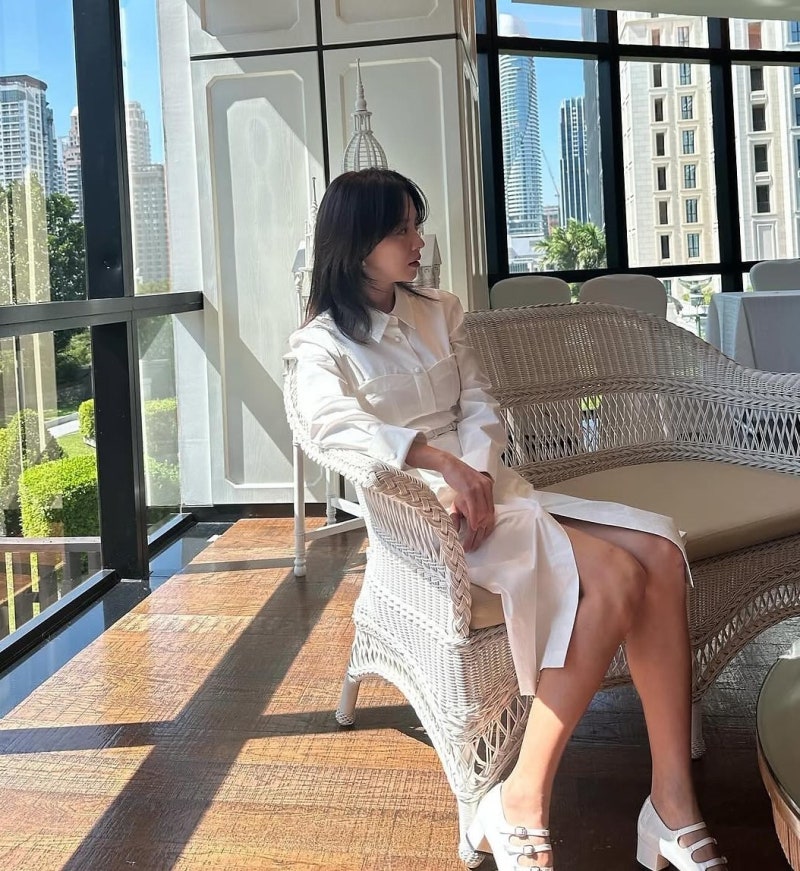
Then Bangkok, and she's gone full white button-up shirt dress. One piece. One color. Complete. The shirt has a bust cut-out that creates visual interest and line definition, the hem has a slit so legs read as part of the composition instead of hidden. White Mary Jane heels tie it back to the all-white family. Standing in a Bangkok hotel window looking out at the skyline, and this singular commitment to one color carries actual sophistication. Most people would see all-white and think summer or nurse or blank canvas. But when you hold a line that tight, when you refuse to break it, suddenly it reads as editorial. Refined. A statement.
Here's the Song Ji-hyo principle: either you take one bright point—striped top, yellow bag—and neutralize everything else below it, or you take one accent—pearl necklace, belt, one thoughtful piece—and let everything else read as casual. Or you go monochrome and let the composition be the story. She's basically operating from the understanding that personality comes from commitment, not from accumulation. One striped piece well-paired. One pearl necklace in an unexpected place. One color pushed all the way through. That's someone who understands that editing is stronger than adding.
"Personality comes from commitment, not from accumulation. One striped piece well-paired. One pearl necklace in an unexpected place. One color pushed all the way through."