Jang Yun-jeong at 46: How Korea's Trot Queen Turned Backstage Armor Into Day-to-Day Minimalism
Twenty years of trot stages taught her one rule: one bold piece, kill everything else. At 168cm, she built a wardrobe that reads director more than performer—and it works.
- Learned from 20 years of trot performances: one bold piece, then silence everything else
- Armor strategy—tailored jackets transform stage pieces into day wear in seconds
- High-waist placement and grayscale palette (black, white, neutrals) create authority without loudness
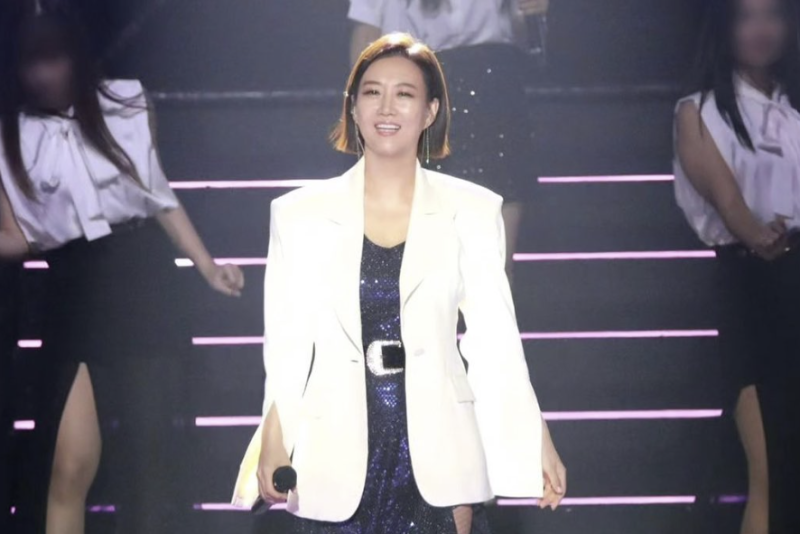
Jang Yun-jeong is the reason Korea still remembers trot. That one song—Eomeona (roughly: Oh My)—dropped in 2004 and didn't stop being played. For two decades, she's performed at weddings, corporate galas, regional festivals, anywhere a microphone exists. She's mentored on Mis Trot and Mr Trot. Just recently (December 2025) she announced she's launching her own label to develop new trot artists. At 46 (born 1980, measuring 168cm), she's spent more time in stage makeup than most people spend awake.
But here's what's strange: her off-camera wardrobe looks nothing like her stage costumes. No sequins, no jewel tones, no drama. Instead it's this studied, architectural thing. Black and white. Tailored silhouettes. Every fabric choice and button placement deliberate. Twenty years of trot stages apparently taught her the opposite of what you'd expect: less is more.
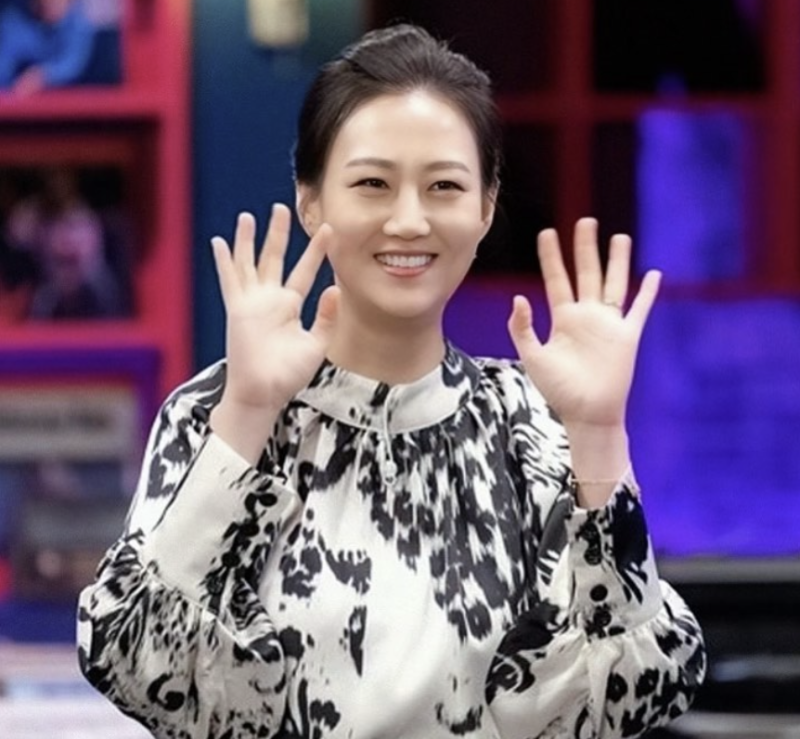
① She wore a white satin blouse with black brush-stroke marks scattered across it—houndstooth-adjacent but organic. High collar, puffy sleeves. Backstage at what looks like a TV shoot. The outfit teaches a lesson: when the garment itself is busy, do nothing else. Thin bracelet, hair back, no accessories. Black and white read clearly under stage lights even though this is just a dressing room shot.
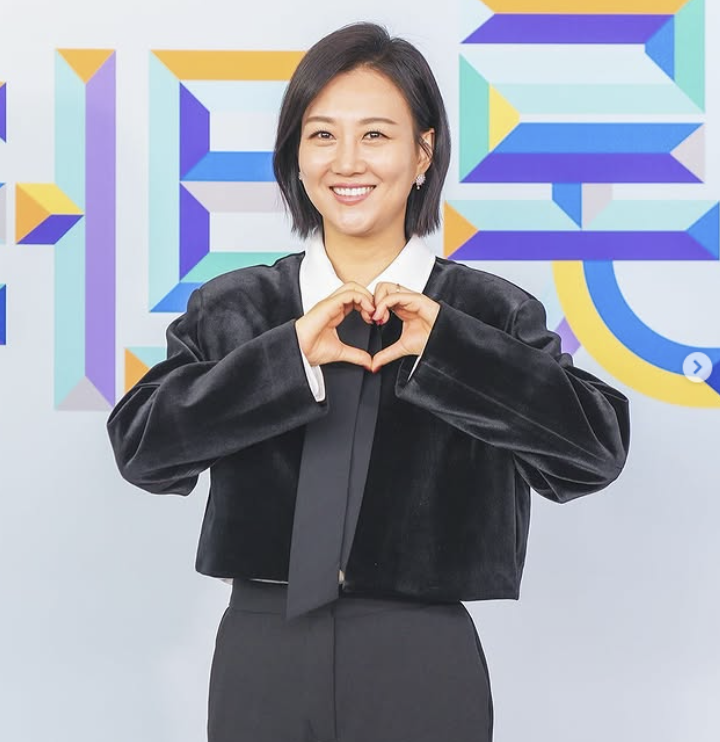
② Photo-wall moment: black velvet crop jacket (hits right at the waist), white collar shirt, black long tie, black wide-leg slacks. Short bob, severe and clean. Crop jacket on tall people creates the optical break that makes limbs read longer. White collar and tie draw the eye up to the face. The cut itself is so crisp and masculine—director energy. This is her interview-panelist look, the one where she judges younger trot hopefuls.
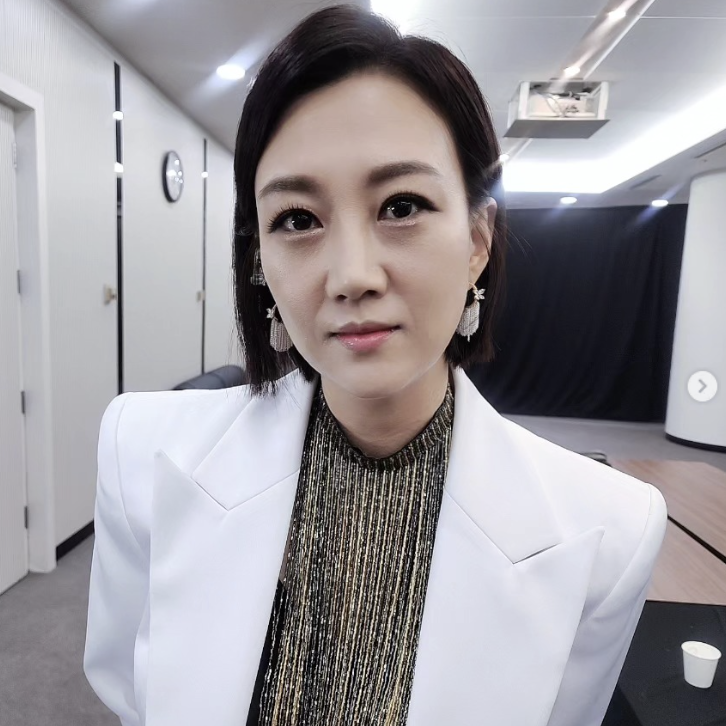
③ Dressing room mirror: white tailored jacket (sharp shoulder seams), gold-and-black vertical-striped high-neck top underneath. Long drop crystal earrings. Short hair swept naturally. The white jacket is what could read boring, but the gold striped insert gives you stage-ready shimmer without screaming stage. She can remove the jacket and hit the stage, or keep it on and do press. Functional wardrobe engineering.
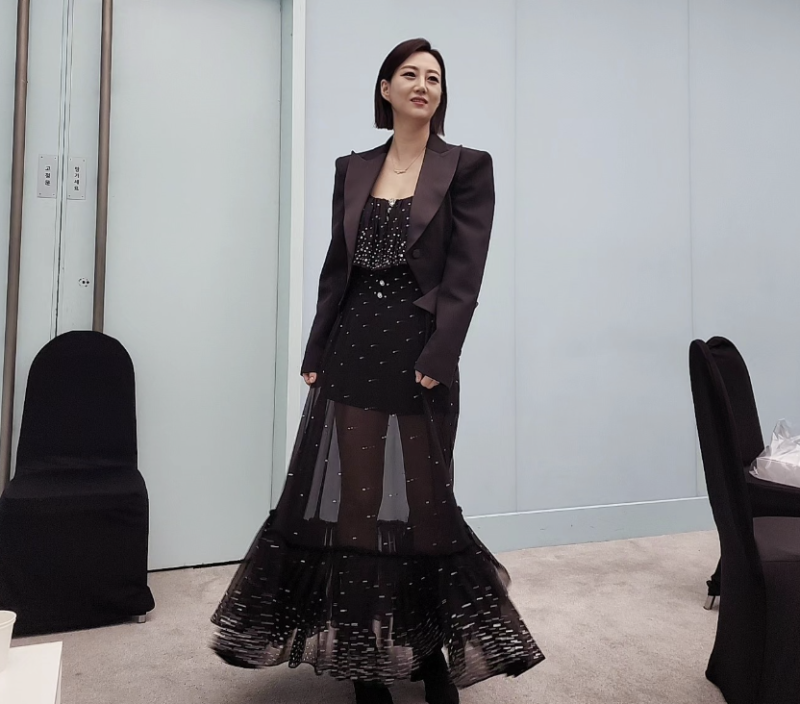
④ Waiting to perform: black tailored jacket, black tulle dress underneath (tight bodice, full mesh skirt below knee). Gold sparkle scatter across the fabric. Black boots. Thin gold necklace. Long wavy hair. The dress alone is stage costume. Jacket over it becomes evening wear. One jacket—that single item—transforms a stage outfit into a party look. The silhouette is most dramatic here: tall frame, long tulle falling, architectural cut of the jacket.
The throughline is almost corporate: one bold element (striped top, patterned blouse, tulle dress, velvet fabric) then everything becomes grayscale. She spent twenty years on trot stages where everything is ornate. Her solution isn't to wear ornate things casually—it's to wear them behind armor. A tailored jacket that can go anywhere. A black and white palette. No competing accessories. When you know you're going to perform, every piece has to multitask. The wardrobe of someone who checks her phone for a gig anywhere in the country and knows she's got 45 minutes to get there.
Small-crop jacket and slacks is your autumn office fit. Toss on the dress-plus-jacket combo for year-end parties.
"One bold element then everything becomes grayscale. She spent twenty years on trot stages where everything is ornate. Her solution isn't to wear ornate things casually—it's to wear them behind armor."