Jeon Mi-do's Off-Screen Secret: 12 Million Viewers Saw Her in Palace Hanbok. In Real Life? Pure Minimalist.
For two hours she was a palace maid in ancient costume. The other 22 hours of her day? Grayscale, single-color, ribbon-as-decoration.
- Gray long-sleeve top and blue-gray satin maxi skirt with silver metallic bag—grayscale cool, elegant proportion
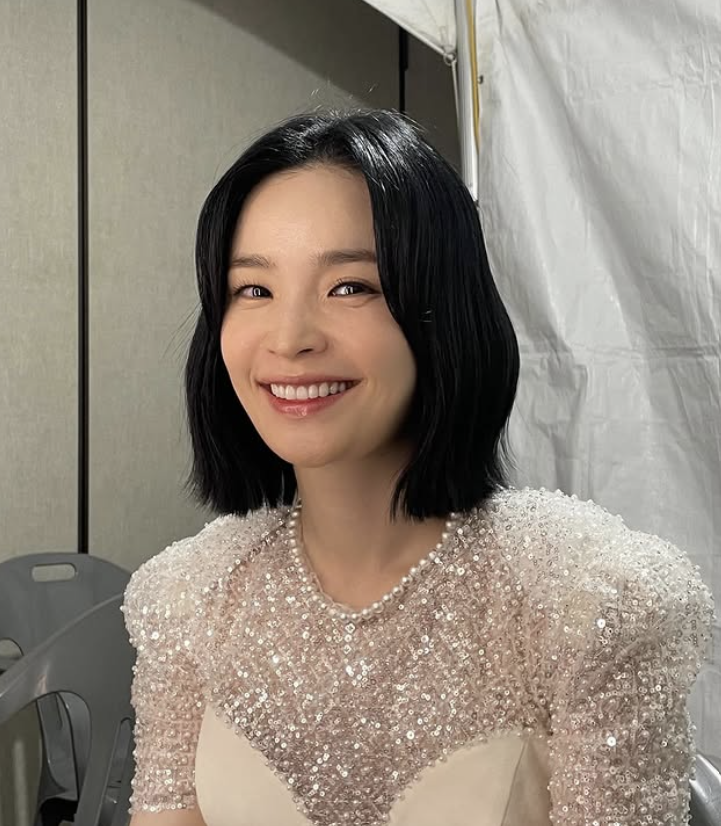
- White sequin-beaded dress with white pearl necklace—monochrome sparkle, tonal restraint, face-forward
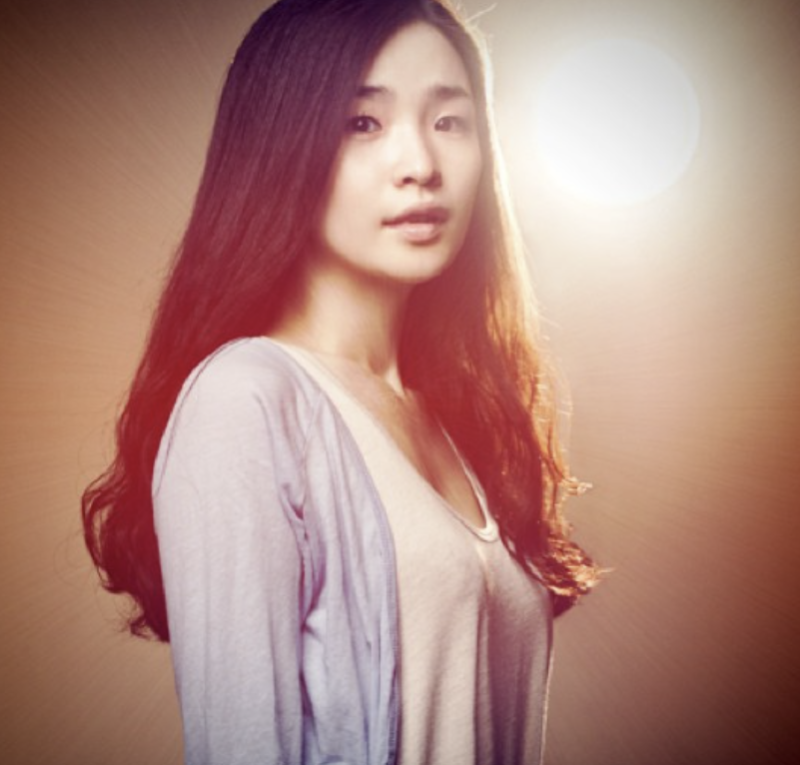
- Lavender cardigan over beige top, long waves—pastels only, same color discipline across decades
Jeon Mi-do came to the industry via musical theater in 2006 and spent 12 years performing exclusively on stage. She won the Korea Musical Awards Best Actress award two years running. Then in 2020 she made her drama debut as Cha Song-hwa in Life, where she played a neurosurgeon. The character was so iconic—short hair, glasses, surgical precision in every movement—that the image stuck. In 2024 she moved to SBS drama Connection and played a reporter, collecting an SBS Award for Excellence in Acting. This year, 2026, she drew 12 million viewers to the film King and the Man, where she played Maehwa, the palace maid who stood faithfully beside King Dangjong. She spent the entire runtime in simple, understated hanbok. Offscreen, though? Her Instagram reveals a completely different visual language. She's 44 this year, born 1982, stands 162cm, and has the kind of stage discipline that carries into real life. Let me break down her actual closet.
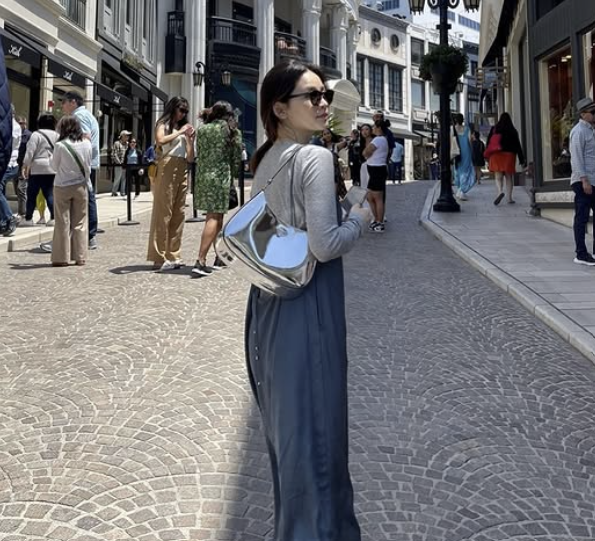
**Look 1: Grayscale Elegance Abroad**
First photo appears to be from an overseas shopping street. She's wearing a gray long-sleeve top with a blue-gray satin long skirt. Head to toe, everything is in the cool gray family. The only disruption is a silver metallic shoulder bag that catches light like a mirror and actually saves the entire look from flatness. At 162cm, a maxi skirt could overwhelm her frame, but because the top is fitted close to the body it holds the waist, and the satin creates a vertical sheen that actually makes her look taller. The silhouette reads downtown and sophisticated, not pageant-ready.
**Look 2: White Sparkle, White-on-White**
Second photo is from what looks like an event waiting room. White sequin and beaded dress, pearl necklace, shoulder-length bob. The entire piece sparkles, but because it's one unified white tone it reads elegant instead of overwrought. The pearl necklace echoes the dress fabric in the same tonal family, so it extends rather than interrupts. Her short bob frames the face, making it the focal point. The dress-necklace combination tells you everything you need to know about her philosophy: decoration yes, but only in one color lane.
**Look 3: Lavender Nostalgia, Archival Soft**
Third photo looks like an older profile shot from her theater days. Long wavy hair, lavender cardigan layered over a beige top. Compared to her current short bob, this reads much softer and younger—full of movement. But the color discipline is identical to now: pastels only, two tones maximum, no saturation. Even back when her hair was long and her energy was ingénue, she was already committed to tone and restraint.
**Look 4: The Ultimate Reduction**
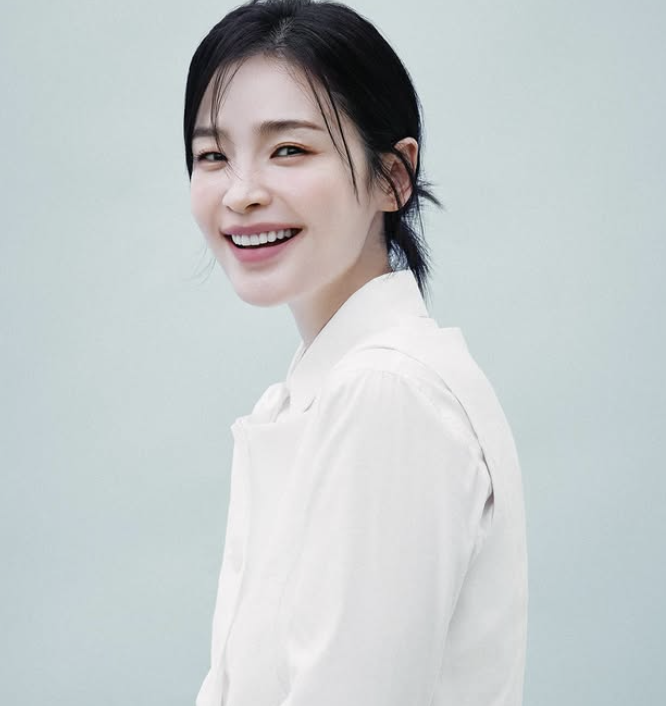
Last photo is a white button-up shirt, nothing else. Hair pulled low into a bun with face-framing wisps, face-forward smile, plain background. No jewelry. No second layer. Just the shirt, the smile, the clarity of her face. This might be the most complete statement of her style philosophy: the fewer elements, the more you actually see the person wearing them. She's spent a career in costume—theater hanbok, drama gowns, medical scrubs, palace-maid robes—but her real uniform is this: white, simple, nothing competing for space.
**The Pattern Across All Four:** Palace maid in King and the Man wore hanbok. In Life she wore medical scrubs. In Connection she wore reporter blazers. Every role cloaked her in different costume. What's remarkable is that off-screen she's chosen to wear almost nothing at all—grayscale, pastels, one-color moments. The actress who gets redressed for every character has decided her real self wears a uniform of simplicity. Twelve years on stage, then twenty more in film and television, and through all of it the through-line is the same: if you're going to wear something, let the person be louder than the clothes. That's her code completely.
"Every role cloaked her in different costume. Off-screen she has chosen to wear almost nothing at all."