The Bare-Face Gamble That Became a Wardrobe Philosophy: Bae Doo-na's 25-Year Minimalist Confidence
When Bae Doo-na said yes to going makeup-free on camera in 2000, she didn't just change her acting—she changed how she'd dress for the next two decades.
- In 2000, Bae Doo-na said yes to going makeup-free on camera—a decision that redefined her entire career approach.
- At 46, her wardrobe reflects that same bare-faced honesty: textured fabrics, minimal color, silhouettes that matter more than decoration.
- She's worked with international auteurs from Bong Joon-ho to the Wachowskis, teaching her that fashion must stay understated.
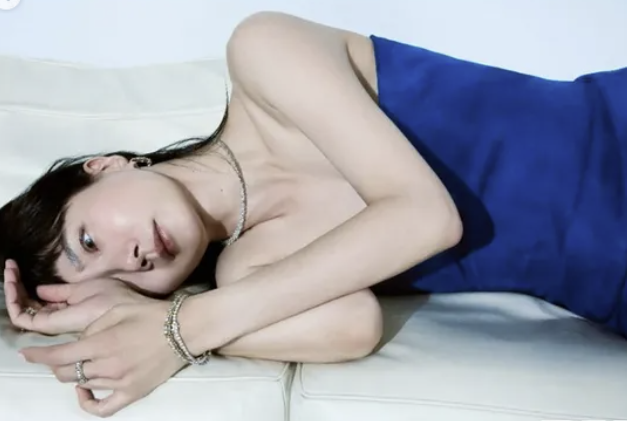
Bae Doo-na is 46 now, born 1979. And her career story is wild because it hinges on one gutsy decision that most actors would never take.
Back in 2000, she did this film called 'Flandersova' (Korean title: 'Plandersova'—it's about a painting). And get this: she went completely makeup-free for the role. Other actresses were dodging that assignment. Going on set with your bare face? That's a vulnerability not everyone signs up for. But Bae Doo-na just said yes. And then she actually talks about it in interviews—says that film was the moment she really understood herself as an actor. Like, that one choice rewired her entire relationship with the work.
And here's what's interesting: that same bare-faced honesty shows up in literally everything she wears. She doesn't do fashion in the decorative sense. She does it in the 'what's the fabric doing for my silhouette' sense. She's worked with both Bong Joon-ho and Park Chan-wook (Korean cinema's two biggest names—she's the only female actor to work with both). She's also done multiple international projects: Hirokazu Koreeda, the Wachowskis. That kind of resume teaches you that fashion needs to be subtle. You can't be loud if you're working with masters who use every frame with intention.
So her style became minimal, textured, architecture-focused:
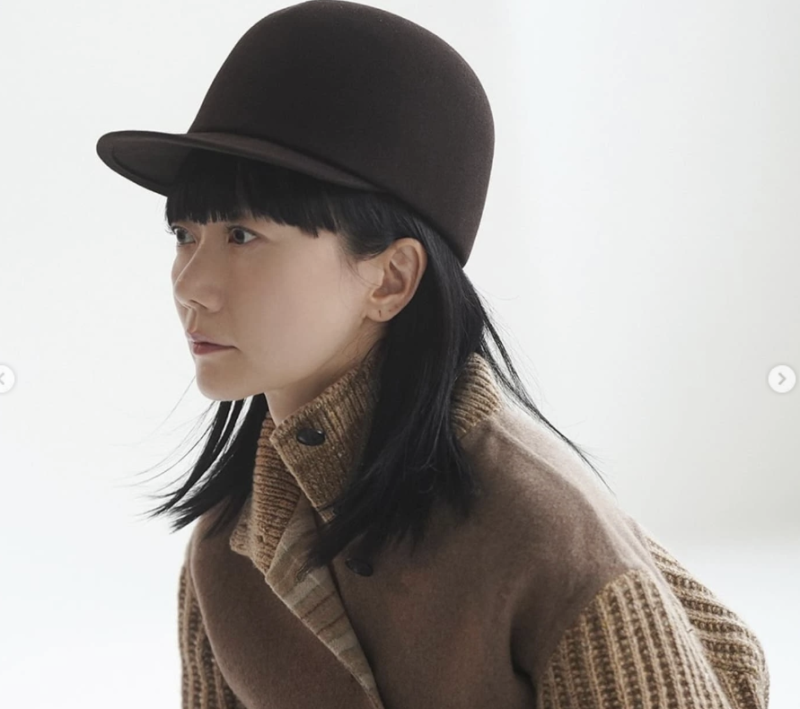
Brown cap, knit-collar coat, bangs framing the face. The mix of materials is interesting—knit trim on a coat usually feels textured and thoughtful. Monochrome background and she still reads as completely present. This is her in architectural mode.
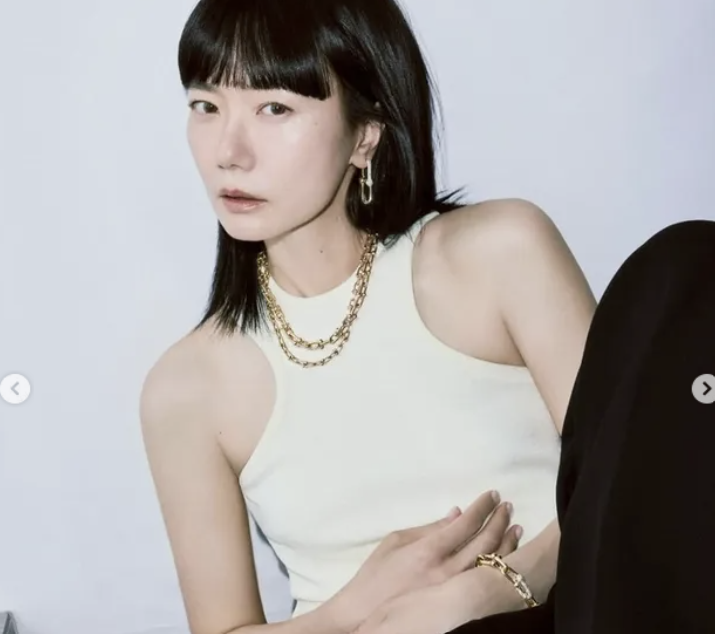
Ivory halter top with layered gold chain necklaces and rings. She's kept the top ultra-minimal, then lets two layers of chain do all the talking. Black pants underneath. The negative space is as important as the pieces. Clean, considered, restrained.
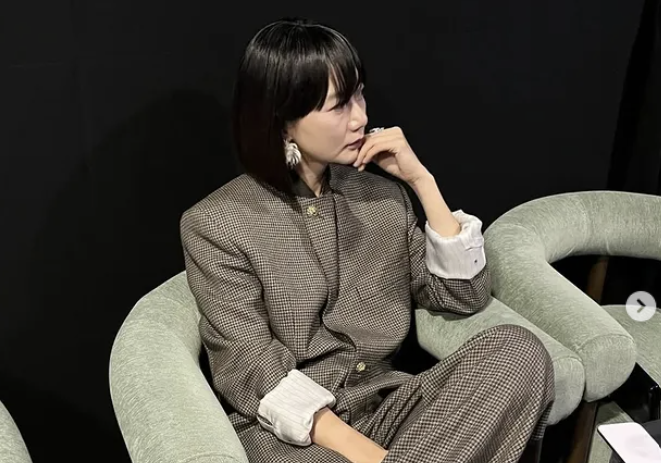
Broadcasting set moment—houndstooth check blazer and matching pants as a set. White blouse underneath, pearl earrings. The fact that she's sitting casually in a studio and the styling still holds? That's polish that doesn't depend on movement or posture.
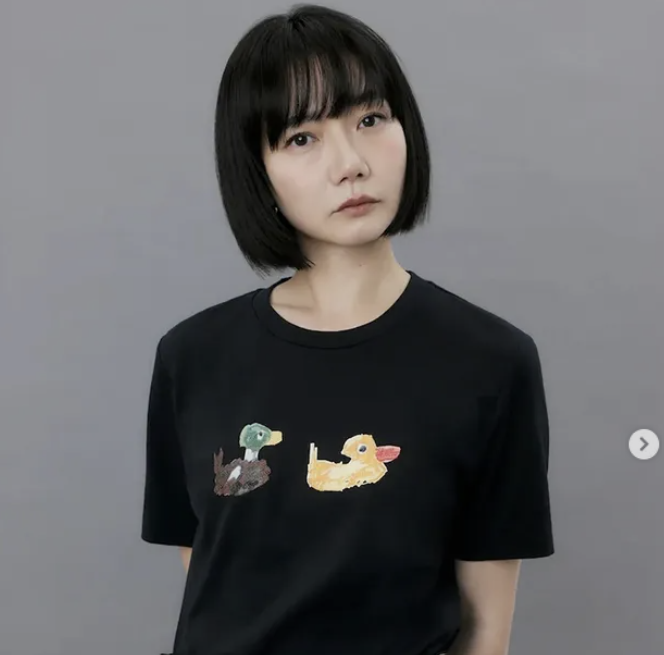
Black t-shirt with a duck illustration printed on it. Short dark hair with bangs. Just a casual, everyday moment. And even stripped down like this—no accessories, no styling pretense—she has this presence. That's the marker of someone who's built their whole approach on the actual body and face rather than on decoration around them.
The throughline here is everything: she's not doing color blocking, pattern mixing, statement anything. It's single colors, intentional proportion, fabrics that have actual weight and texture. Just like her decision to go makeup-free on camera taught her to trust her own face, her fashion teaches her to trust the actual silhouette. No one looking at her is thinking about the clothes first—they're just seeing a composed, confident human. That's exactly what minimalist dressing is supposed to do.
"Just like her decision to go makeup-free on camera taught her to trust her own face, her fashion teaches her to trust the actual silhouette. That's exactly what minimalist dressing is supposed to do."